Electric Blue Hap: Description and Origin
The Electric Blue Hap, also known as Ahli or Haplochromis ahli (Sciaenochromis fryeri), is a freshwater ray-finned fish from the Cichlidae family. This species is endemic to Lake Malawi in Africa, a lake renowned for its remarkable diversity of cichlid species. In nature, it typically inhabits depths of 10-40 meters, forming loosely distributed but quite numerous populations.
This fish is exceptionally beautiful and can enhance any appropriately sized aquarium. In my experience, the Electric Blue Hap is one of the most visually striking Malawian cichlids, consistently capturing the attention of visitors.
Appearance of the Electric Blue Hap
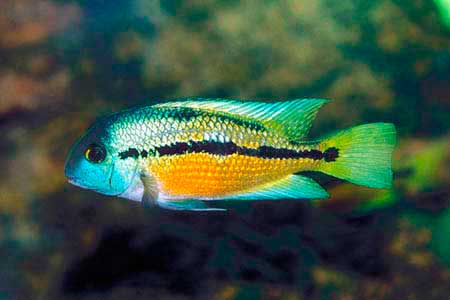
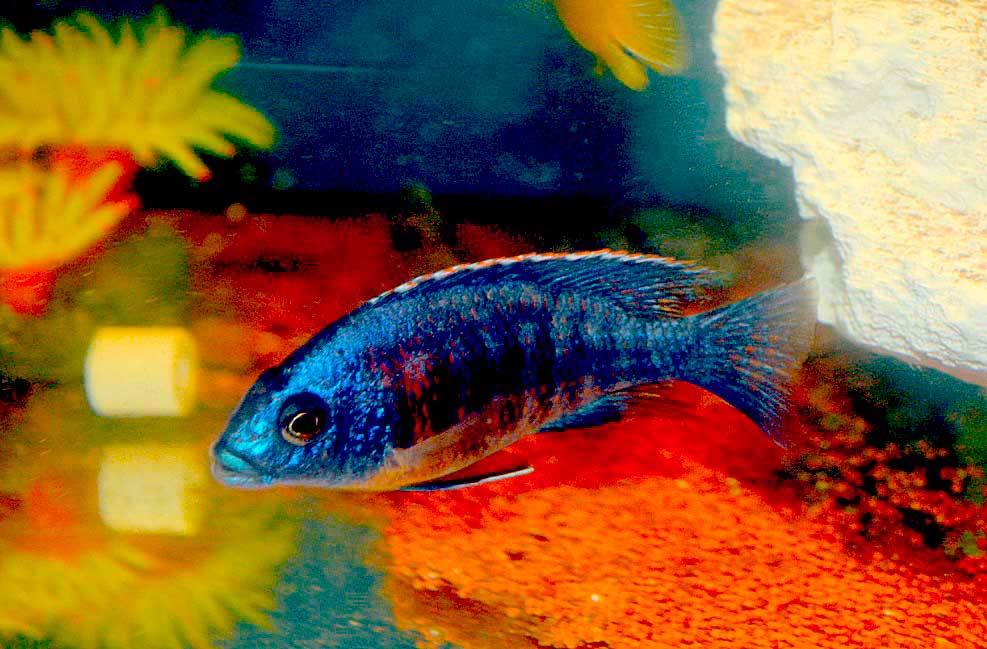
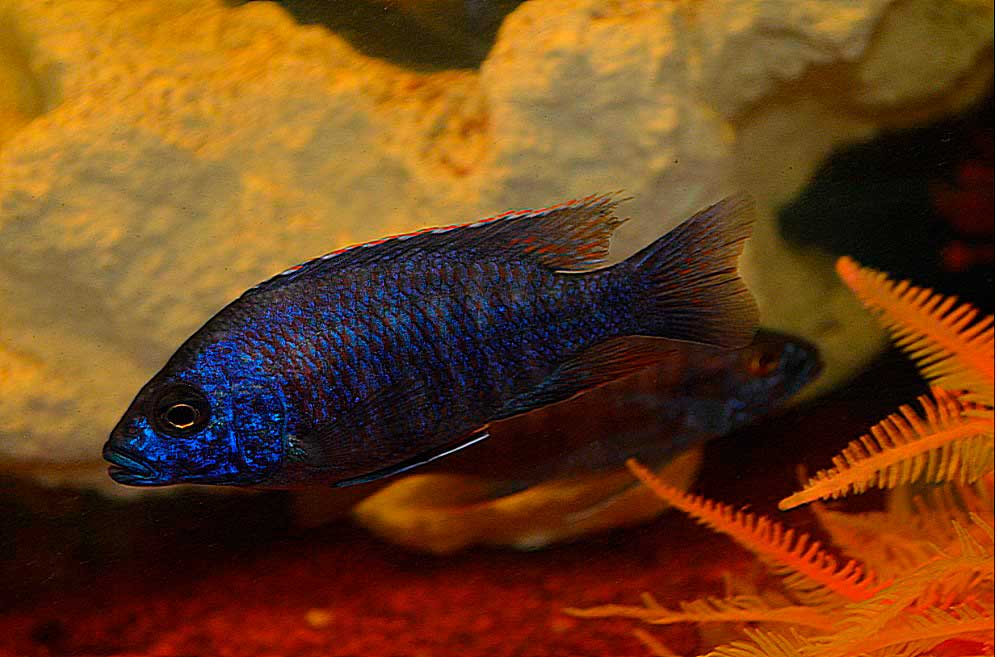
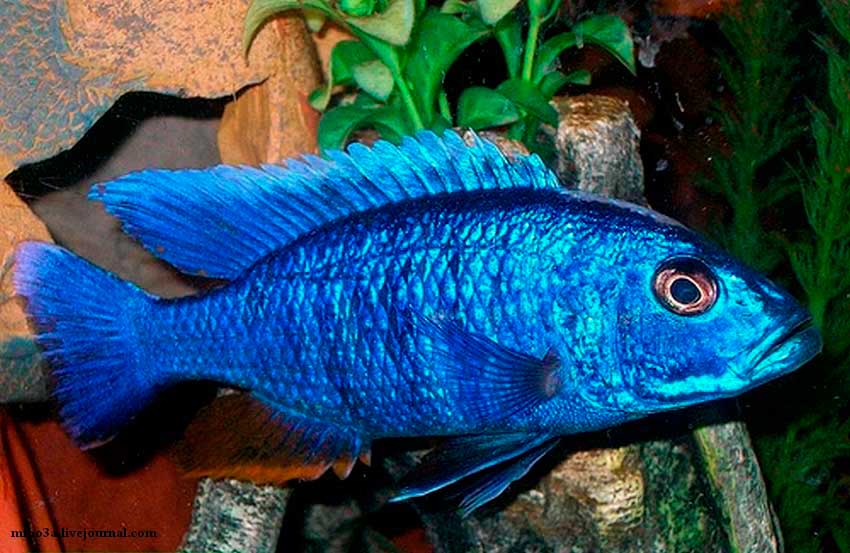
The main attraction of the Electric Blue Hap is its coloration: a brilliant blue or electric blue with a characteristic metallic sheen. This extraordinarily beautiful color, reminiscent of cornflowers, inspired the fish’s common name.
From head to tail, dark vertical bars run along the sides. These bars are clearly visible under normal conditions but nearly disappear during spawning, when the male’s coloration becomes more uniform. Dark vertical stripes also indicate that the fish is experiencing stress.
Males display a white edging on the dorsal fin. The anal fin is red or yellow with distinctive egg spots. Female Electric Blue Haps have a grayish-brown body with a slight bluish tint. The head and jaw area show blue coloration.
In the wild, adult males reach lengths of up to 20 cm, with females achieving similar sizes. In aquarium conditions, they typically grow somewhat smaller—15-17 cm.
| Parameter | Value |
|---|---|
| Scientific Name | Sciaenochromis fryeri |
| Family | Cichlidae |
| Origin | Lake Malawi, Africa |
| Size | 15-20 cm |
| Lifespan | 5-8 years |
| Temperament | Semi-aggressive |
| Water Temperature | 24-28°C (75-82°F) |
| pH | 7.5-8.5 |
| Hardness (GH) | 8-20° |
| Minimum Tank Volume | 250-300 liters (65-80 gallons) |
Electric Blue Hap Care in the Aquarium
The Electric Blue Hap has a relatively peaceful temperament for a cichlid and coexists well with other cichlids of similar size. However, it can display aggression during spawning periods, which is typical behavior for most Malawian cichlids.
In nature, this fish doesn’t form schools and lives solitarily, but in aquariums you can keep multiple specimens together. For each male, you should maintain at least 4-5 females—this harem-style setup prevents conflicts between males.
Tank Requirements
The minimum tank volume for a group of 2-3 fish is 250-300 liters (65-80 gallons), with length and width being far more important than depth. Tank length should be at least 150 cm (60 inches).
The aquarium should feature multi-level hiding spots and rocky structures. Small caves and grottos are beneficial as they replicate natural habitat conditions. For the Electric Blue Hap, ample open swimming space is essential, so decoration efforts should focus on the lower level: the substrate typically consists of a layer of sand with secure stone or wooden hiding places created from rock formations, stone piles, and driftwood.
Substrate should be smooth without sharp edges—sand, gravel, or rounded pebbles work well. An abundance of rocks in the aquarium will distract Electric Blue Haps from digging behavior. During spawning, females deposit eggs directly on rocks rather than in pits. Between these rocks, they will also seek shelter from other fish while mouthbrooding.
Once an Electric Blue Hap grows beyond 7 cm, it may destroy live plants. I recommend offering them plant matter in the form of blanched lettuce leaves—this somewhat reduces their interest in aquarium plants.
They primarily swim in the middle and lower portions of the tank.
Water Parameters
For optimal fish health, maintain the following water parameters: pH 7.5-8.5, GH 8-20, temperature 25-28°C (77-82°F). Water should be alkaline and moderately hard—typical conditions for Malawian cichlids.
These Malawian cichlids require clean water. Powerful filtration is an essential requirement for keeping Electric Blue Haps. You should also monitor nitrate levels to ensure their concentration doesn’t exceed acceptable values. In my experience, regular water quality monitoring is critically important for disease prevention.
Don’t forget regular water changes—one-third of the tank volume weekly.
Compatibility with Other Fish
The Electric Blue Hap has a reasonably accommodating temperament, allowing it to coexist with aquarium fish of other species of equal size (such as other cichlids) and similar temperament. Good tankmates include other Malawian cichlids of comparable size and disposition, such as Blue Acara relatives from the same African lake system.
Avoid housing large predatory species or various small fish with Electric Blue Haps, as such combinations will provoke unfriendly behavior between different species sharing the same territory. Small fish may be perceived as food.
I don’t recommend keeping them with large aggressive species like Eliot’s cichlasoma, as they belong to different cichlid groups with different water parameter requirements. Peaceful species are completely unsuitable for cohabitation due to differences in care requirements.
Feeding the Electric Blue Hap
Live food works best—in nature, these fish feed on insects and mollusks. They consume live, frozen, and dry foods with equal enthusiasm: various feeder fish, large crustaceans, bloodworms, chopped seafood, and even earthworms.
Unfortunately, Electric Blue Haps don’t know when to stop eating, making overfeeding a real risk. To prevent this, carefully portion food and schedule fasting days. In my experience, feeding once daily with one fasting day per week is the optimal regimen for these fish.
The most important rule is avoiding overfeeding, as they’re prone to overeating, which can lead to health problems.
Breeding the Electric Blue Hap
Electric Blue Haps can begin breeding from one year of age. Spawning typically occurs every two months, mainly during summer months.
The male prepares a spawning site, then begins attracting females there. During spawning, the female releases up to 70 eggs in succession. The male collects them on his anal fin and fertilizes them, after which the female gathers the eggs into her mouth for brooding.
During this period, the female doesn’t eat. You can identify her by her distended mouth. During this time, avoid subjecting the fish to stress, otherwise she may swallow or drop the eggs.
Incubation takes approximately 3 weeks, after which fully formed fry of considerable size emerge. Sciaenochromis fryeri produces 30-70 eggs per spawn.
From their first days, fry are ready to accept finely ground dry foods, artemia nauplii, and similar products. Artemia nauplii and live infusoria make excellent starter foods.
As Electric Blue Hap fry grow, you should sort them to prevent cannibalism. I recommend separating larger fry as soon as size differences become noticeable.
Lifespan
With proper care, Malawian cichlids live 5-8 years. The Electric Blue Hap, when provided optimal conditions, typically lives 5-7 years in aquarium settings.
Conclusion
The Electric Blue Hap is an exceptionally beautiful fish. Its unique electric blue coloration makes it extraordinarily popular among aquarists. Many Malawian cichlids inhabit aquariums, but this fish ranks among the most beautiful. Moreover, keeping this cichlid doesn’t present particular difficulties when basic water parameter and tank volume requirements are met.
Article updated: 2026-08-29