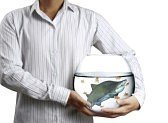
Aquarium care is a set of regular procedures that ensure the health of your fish and the beauty of your underwater world. In my experience, following straightforward maintenance routines prevents most problems and allows you to enjoy watching your aquatic pets for years to come.
Successful aquarium keeping requires consistency rather than perfection. The key is establishing routines that become second nature—weekly water changes, daily feeding schedules, and periodic equipment checks. This systematic approach creates a stable environment where fish thrive.
Preparing Water for Your Aquarium
Each fish species has specific water quality requirements. Tap water must be properly prepared before adding it to your aquarium. Traditionally, water should be left standing for at least 72 hours—this allows chlorine used for water treatment to dissipate naturally.
An alternative method involves heating water to 50°C (138°F) and allowing it to cool, which accelerates chlorine removal. Instead of standing water for days, you can use specialized water conditioners that neutralize chlorine and bind heavy metals instantly, making water safe for immediate use.
Regular Water Changes in Your Aquarium
Weekly water changes deliver the best results for most aquarium setups. I recommend replacing 20-30% of water volume every week. Before performing water changes, always remove uneaten food and dead plant matter from the substrate using a soil siphon.
For fish sensitive to frequent water parameter shifts, changing 15-20% is sufficient. Experienced aquarists note that in certain cases, small water changes spread throughout the week in smaller portions work better than one large weekly change. This gradual approach minimizes stress on sensitive species.
Dealing with Cloudy Water
Don’t panic if water becomes cloudy despite regular maintenance. The cause may be bacterial blooms or suspended food particles rather than serious problems. Try removing debris with a siphon and temporarily switching food types.
If water remains murky and develops unpleasant odors, comprehensive cleaning becomes necessary. Temporarily relocate fish to another container and introduce daphnia into the aquarium—these tiny crustaceans effectively clear water of suspended particles through filter-feeding.
Setting Up a New Aquarium
When establishing a new aquarium, wash it thoroughly without household chemicals. Change room-temperature water several times over several days—this process adapts the glass, reduces internal stress, and allows silicone seams to settle properly.
Next, add substrate and plant aquatic vegetation. Wait until plants establish roots—typically 1-2 weeks. In new aquariums, avoid water changes for at least the first 2 months while biological balance establishes. This nitrogen cycle maturation is critical for long-term stability. For more guidance, see our useful tips for aquarium beginners.
Introducing New Fish
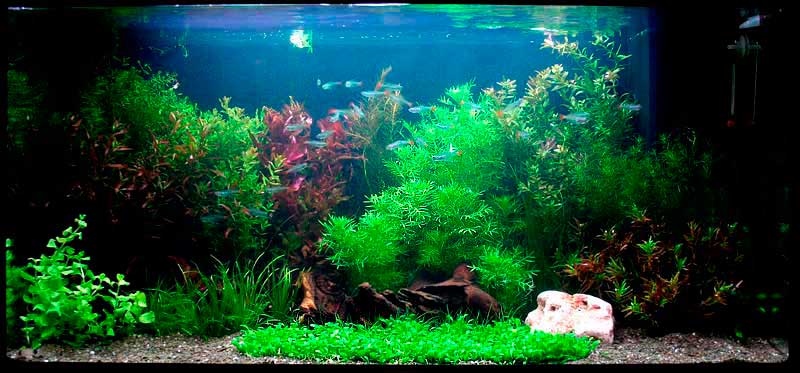
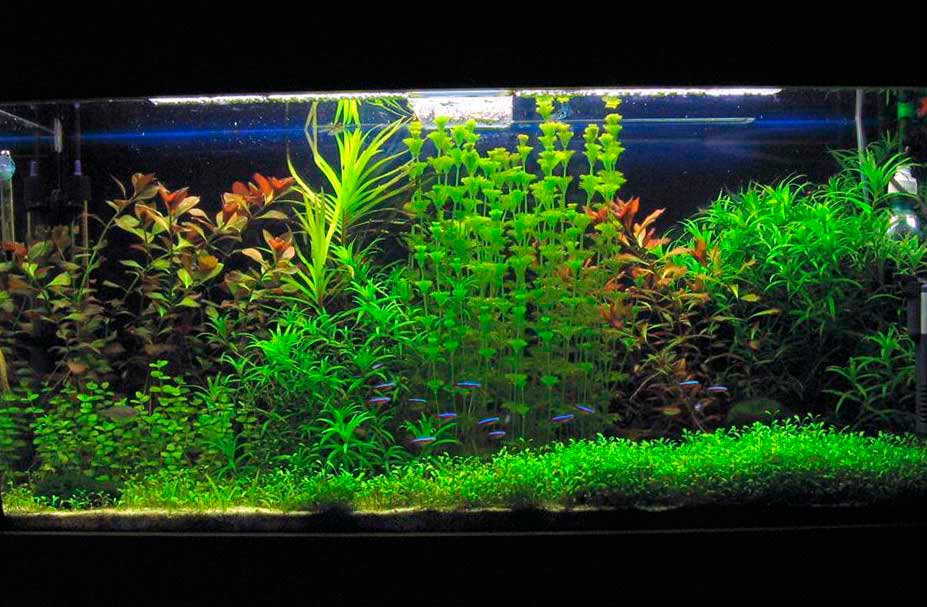
A well-maintained aquarium after proper cycling and fish introduction
Before purchasing, research species compatibility thoroughly. Fish of similar sizes with comparable habitat requirements and feeding preferences coexist peacefully. For example, guppies and goldfish require different temperature ranges and should never share the same tank.
Never add new fish directly to your main aquarium—they may carry diseases. Always quarantine newcomers for one week to one month. Only after new arrivals remain healthy and active should you introduce them to established residents. This precaution is essential to prevent fish diseases from spreading.
Filter Maintenance
Regular filter servicing maintains water quality and filtration efficiency. External filters typically require cleaning twice yearly, though frequency depends on stocking density and feeding intensity.
Experts recommend rinsing filter sponges in water removed from the aquarium during water changes—this preserves beneficial bacteria colonies essential for biological filtration. Internal filters need more frequent attention, approximately every 1-2 weeks depending on bioload.
Cleaning Glass and Decorations
Glass cleaning involves two approaches: clean external surfaces with standard glass cleaners, but clean internal surfaces only with sponges, scrapers, magnetic cleaners, or even plastic cards. Avoid metal implements that scratch glass and potentially introduce toxins.
Remove dead plant leaves regularly. Some aquatic plants require periodic trimming. If fish waste doesn’t provide sufficient nitrates for plant growth, supplement with specialized aquatic plant fertilizers to maintain healthy vegetation.
Aquarium Aeration
Install an aerator to ensure proper oxygen delivery. In my experience, air pumps should operate at least 8 hours daily, though continuous aeration benefits inhabitants without causing harm. Proper aeration is fundamental to maintaining life in the aquarium.
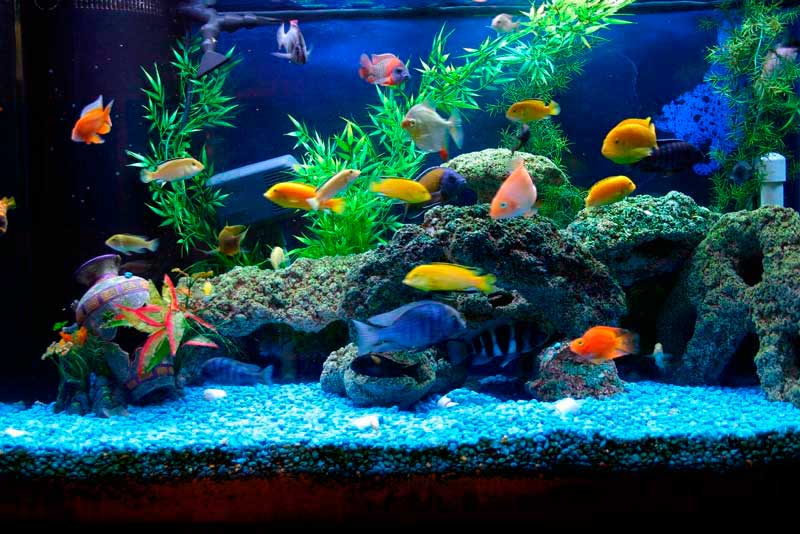
Proper aeration ensures adequate oxygen levels for fish and supports higher stocking density in the aquarium
Constant aeration allows increased fish stocking density since oxygen remains adequate for all inhabitants. This proves especially important in heavily populated freshwater aquariums where oxygen demand is high.
Daily Aquarium Care Routine
Daily maintenance typically requires only 10-15 minutes: enough time to feed fish and check equipment function. I recommend feeding at consistent times—this establishes routine and simplifies behavioral observation.
Check water temperature, filter operation, air pump function, and lighting. Observe fish behavior closely—lethargy, feeding refusal, or unusual activity may signal emerging problems requiring intervention.
Monitoring Water Parameters
Regular water testing represents one of the most crucial maintenance aspects: parameter monitoring supports fish health, plant vitality, and overall ecosystem stability. Test ammonia, nitrite, nitrate, pH, and water hardness regularly.
Nitrate concentration shouldn’t exceed 30 mg/L, and phosphate levels should remain below 0.5 mg/L. When readings fall outside acceptable ranges, increase water change frequency or volume to restore balance.
Building Long-Term Success
Aquarium fish are magnificent creatures capable of enhancing any home environment. The key is learning proper care techniques and consistently monitoring their habitat. Timely aquarium maintenance, regular aeration, and appropriate feeding ensure your aquatic pets enjoy long, healthy lives. Quality aquarium technical equipment supports these efforts by automating essential functions and maintaining stable conditions.