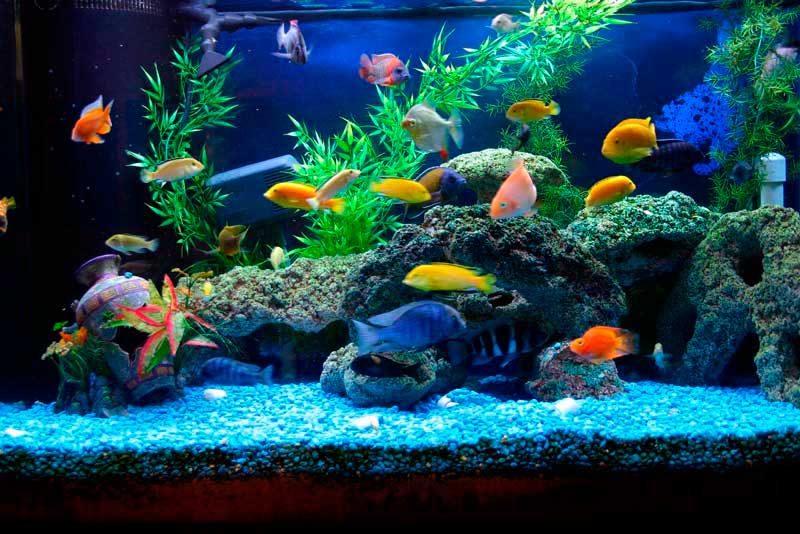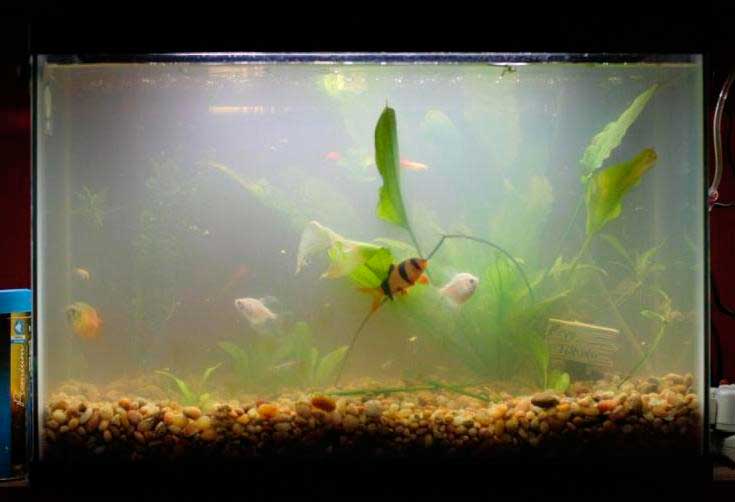
When aquarium water turns cloudy, it signals disruptions in the ecosystem. Beyond the unpleasant appearance, cloudiness can pose real dangers to inhabitants. In my experience, timely understanding of causes and correct actions allow you to quickly restore water clarity and preserve your pets’ health.
All reasons why water may turn cloudy come down to three main mechanisms: mechanical substrate disturbance, bacterial bloom, and algae proliferation. Each requires its own approach.
Main Causes of Cloudy Water
Mechanical Cloudiness
The safest variant is stirring of fine substrate particles. These particles are so small they can remain suspended for several days, causing the aquarium water to turn cloudy.
This most often occurs after launching a new aquarium if the substrate was poorly rinsed. Even substrate from reputable manufacturers requires thorough washing before use—this is always indicated in the instructions.
Such cloudiness is safe for fish, though some species tolerate it poorly. If you keep fish that enjoy digging in substrate—various goldfish varieties or American cichlids—they may raise new portions of cloudiness from the bottom for extended periods. With sufficient mechanical filtration power, this doesn’t require emergency measures, though crystal-clear conditions will only arrive after several weeks.
Solution: A powerful mechanical filter will handle the task. After some cloudiness settles to the bottom and fine particles are filtered, be sure to rinse the filter element under running water.
Bacterial Bloom in New Aquarium
If water turned cloudy immediately after setup, the cause is usually a bacterial bloom—this is a normal process of establishing biological balance. Water contains organic compounds and harmless microorganisms that, entering the aquarium, begin actively reproducing.
Bacterial growth can be so vigorous that the water becomes whitish, as if someone added a bit of milk. After consuming all available organics, bacteria partially die off, their population stabilizing at a level sufficient to process organics from food. Biological equilibrium establishes itself, which with proper care persists for years.
I recommend simply being patient: 2–3 days after cloudiness appears, biobalance will establish on its own and water will become clear again. Active interventions, especially complete water replacement, will only delay the process—it will start over from the beginning.
How to accelerate: Fill the new aquarium with some water from an old tank with established biobalance. This speeds reproduction of beneficial microorganisms that will compete for food with potentially pathogenic bacteria.
Disrupted Biobalance in Established Aquarium
Greater attention is required when aquarium water turns cloudy in a tank with long-established equilibrium. This indicates care errors over recent days or weeks.
First, determine the cloudiness color:
- Whitish cloudiness—bacterial bloom from excess organics
- Greenish—proliferation of unicellular algae
- Brownish—humic and tannic substances from peat or poorly prepared driftwood
- Substrate color—stirring by digging fish or decomposing decorations

Bacterial Cloudiness: Danger and Actions
Bacterial cloudiness in an established aquarium is usually caused by elevated nitrate and nitrite concentrations. The bacteria themselves are relatively safe, but the cause of their rapid growth is dangerous—accumulation of fish waste products.
By the time cloudiness appears, the most delicate fish may have already died. Act immediately:
- Urgently replace half the water volume with fresh dechlorinated water at the same temperature
- Rinse the filter under strong flow; biofilter may require restart
- Transfer fish to a clean container if possible
- In subsequent days replace 1/3 of water daily
Cloudiness here is merely an indicator of contamination with organic residues. Unfortunately, when it triggers, it’s often already too late. I strongly recommend acquiring test kits for nitrates, nitrites, and total ammonia, especially if you plan breeding or maintain a heavily stocked aquarium.
Green Water: Algae Bloom
Greenish cloudiness is usually caused by the unicellular alga Euglena viridis. Water blooms more often during hot seasons with excess light, elevated temperature, and oxygen deficiency.
Bloom causes:
- Excessive lighting (especially direct sunlight)
- High water temperature
- Excess nutrients (organics)
- Insufficient aeration
Solution:
- Shade the aquarium, reduce photoperiod to 6–8 hours
- Increase aeration
- Perform a series of 20–30% water changes
- Use fine-pore materials in filter for mechanical algae removal
- Add competitor plants (fast-growing species)
Simple darkening doesn’t always help: Euglena can lose color in darkness but doesn’t die, and upon light resumption turns green again.
Prevention: How to Avoid Cloudiness
In my experience, following simple rules prevents most problems:
Before setup:
- Thoroughly rinse substrate regardless of origin
- Choose a larger aquarium—the greater the volume, the more stable the biobalance
- Equip filtration and aeration systems
Regular care:
- Don’t overstock the aquarium—better to follow norms for non-filtered systems
- Don’t overfeed fish, remove food remnants after 5–10 minutes
- Weekly replace (not just top off!) one-third of water volume
- Remove dead plant parts and deceased fish
- Regularly vacuum substrate with siphon
For detailed maintenance procedures, see Aquarium Care: Complete Maintenance Guide and How to clean the walls of the aquarium without draining the water.

Parameter monitoring: Monitor accumulation of nitrates, nitrites, and ammonia compounds. If you’re just starting, I recommend reviewing Useful tips for aquarium beginners, which covers compatibility basics and stocking density.
Chemical Treatments: When and How to Apply
Chemical preparations for water correction should be used cautiously. Thoughtless application can cause more harm than good. I recommend them only in critical situations and strictly following manufacturer instructions.
Specialized products exist:
- Bacterial cultures to accelerate cycling
- Anti-algae preparations
- Conditioners to neutralize chlorine and heavy metals
But no technical means or chemicals replace knowledge and experience. Better to let a 100-liter aquarium house a dozen medium-sized fish comfortably. As you gain experience, you can increase stocking density while competently using technical aids.
Conclusion
Cloudiness results from bacterial or unicellular algae reproduction. Their rapid growth stems from organic substance accumulation, which is unsafe for fish. Bacteria and algae process harmful substances, so you must fight not them but the cause—excess organics.

By the time microorganisms multiply sufficiently to process contamination, some fish may already have died. Therefore, it’s important not to wait for visible signs but to monitor water parameters regularly.
To prevent your aquarium water from turning cloudy, stock appropriately, feed moderately, promptly remove food remnants and dead plant parts. Without biofiltration, replace one-third of water with fresh dechlorinated water weekly. Then your aquarium will bring only joy.
Article updated: 2026-10-08