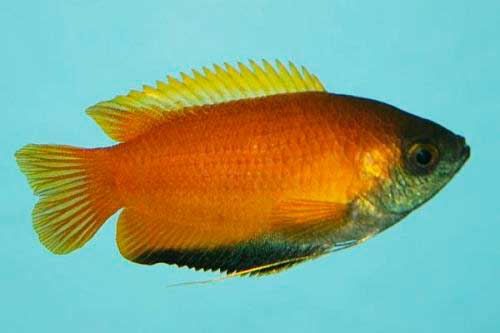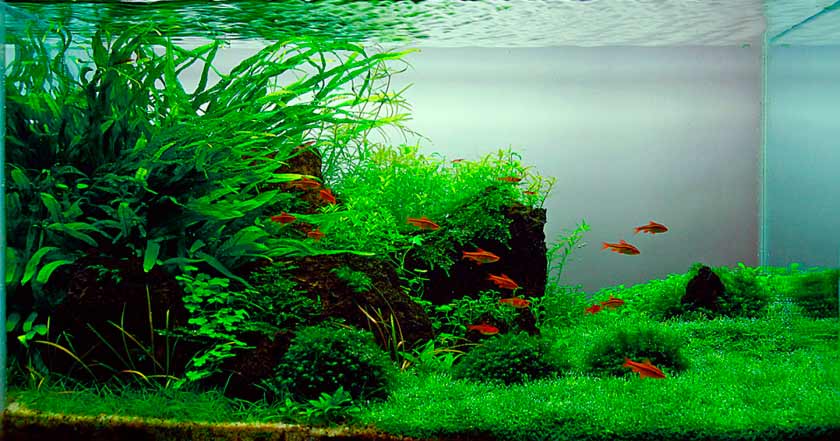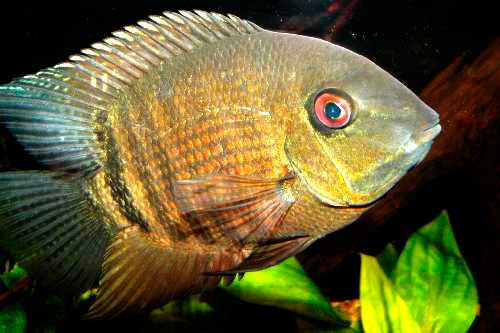
The severum cichlid is a striking representative of the cichlid family. Its body shape resembles discus fish closely enough to capture any observer’s attention, earning it the common name “false discus.” Watching its behavior, especially during spawning, can be mesmerizing for hours. For beginners, this species serves as an excellent introduction to keeping cichlids.
Classification
| Parameter | Value |
|---|---|
| Kingdom | Animalia |
| Phylum | Chordata |
| Class | Actinopterygii |
| Order | Perciformes |
| Family | Cichlidae |
| Genus | Heros |
| Species | Heros severus |
This species is currently classified under the genus Heros, though many aquarists still recognize the older generic name Cichlasoma.
Natural Habitat
Severum cichlids inhabit freshwater bodies throughout the Amazon basin. They occur in Brazil and Peru, primarily in the main Amazon channel and rivers including Rio Negro, Ucayali, Solimões, and Xingu. These fish prefer coastal zones with dense vegetation and flooded areas during seasonal river overflow.
Physical Description
The severum cichlid has a laterally compressed, deep body that approaches a disc shape when provided adequate tank space—hence the “false discus” nickname. Wild specimens can reach 15-20 centimeters in nature. In aquarium conditions, they typically grow to 15-18 centimeters.
The dorsal and anal fins are elongated, extending nearly to the caudal fin base. Coloration depends on dominant or recessive genes controlling pigmentation. Wild-type fish display greenish hues controlled by dominant genes, while yellow-toned varieties result from recessive genes. Absence of the dominant gene produces albino specimens.
The iris has a distinctive wide red border around the pupil. The mouth is terminal with thick lips. The body features a striped pattern, particularly prominent on the head and gill covers. These territorial fish exhibit facultative monogamy and live approximately 15 years. Sexual maturity occurs between 1.5-3 years.
Sexual Dimorphism

Males grow larger than females and display more vibrant coloration. Like other cichlids, males have more extensive dorsal and anal fins with elongated, pointed tips. Males may develop a nuchal hump on the forehead. During spawning, males develop a cone-shaped genital papilla, while females have a truncated pyramid-shaped papilla.
Severum Cichlid Care Requirements
In my experience, severum cichlids are among the hardiest cichlids available. Maintaining this species is relatively straightforward, though tank volume and height deserve careful consideration. I recommend purchasing a group of 6-10 juveniles, then rehoming extra fish once pairs form.
Tank Size
As large, territorial fish, severum cichlids require minimum 150-200 liters for a single pair. Groups need 300-500 liters or more. Tank shape significantly affects body development—tall tanks encourage the classic disc shape, while low, wide tanks cause the body to elongate.
Important: Severums are jumpers, so tanks must have tight-fitting lids or cover glasses.
Substrate and Decor
Severums have no special substrate requirements. Granite chips, small gravel, or sand work well. Medium to large artificial substrates can serve specific design purposes.
Large rocks arranged vertically like cliffs create natural territorial boundaries. Place several flat rocks at angles to the horizontal—these become preferred spawning sites. Prepared driftwood mimics the sunken wood found in their natural habitat.
Plants and Severum Cichlids
Like most cichlids, severums interact actively with plants. In nature, they hunt small invertebrates among vegetation and occasionally consume plant matter. When vegetable matter is insufficient in their diet, they’ll uproot and eat aquarium plants.
Large plants with tough leaves and strong root systems stand the best chance of survival. Try spiral vallisneria, fast-growing Canadian elodea, large Cryptocoryne species, hornwort, or water milfoil. Secure plants thoroughly and surround with stones.

If live plants prove impractical, plastic replicas create necessary cover. These hiding spots—whether live or artificial—help smaller fish escape aggression from larger specimens during territorial disputes after pair formation.
Water Parameters
| Parameter | Value |
|---|---|
| Temperature | 24-28°C |
| Hardness (dGH) | 6-20° |
| pH | 6.5-7.5 |
Severums prefer aged but clean water without nitrates. Avoid massive water changes—I recommend changing 20-25% weekly.
Lighting
Severums dislike bright lighting, preferring subdued conditions. Lighting intensity should primarily accommodate other tank inhabitants, particularly plants. Target total fluorescent lighting power of 0.3-0.5 watts per liter.
Filtration and Aeration
Powerful filtration and aeration systems are essential. These fish have accelerated metabolism and produce substantial waste. They appreciate clean water and gentle current from equipment.
Equip your severum tank with robust filtration and supplemental aeration. Siphon the substrate weekly to remove waste products.
Severum Cichlid Compatibility
After sexual maturity, when pairs form and territories are established, severums can display pronounced intraspecific aggression. Aggression intensifies during spawning as they defend offspring. However, they’re more intolerant toward their own species than others.
Severums show relative tolerance toward other species. With sufficient tank volume, they coexist reasonably well with similarly sized, temperamental cichlids. Armored catfish and other bottom-dwellers make excellent tankmates, similar to keeping Astronotus in the aquarium.
Avoid housing them with long-finned or slow-moving fish. Goldfish varieties, small guppies, and neon tetras are unsuitable companions. In my experience, introducing new fish at night when severums sleep reduces aggression.
Feeding
Wild severums consume primarily vegetation, invertebrates, and small fish. In aquariums, they’re omnivorous and undemanding.
Live foods include bloodworms, tubifex, brine shrimp, medium-sized crustaceans, and chopped earthworms. Plant matter is essential—offer blanched, chopped lettuce, cabbage, dandelion leaves, carrot pieces, zucchini, and pumpkin. Spirulina supplementation is recommended.

Quality balanced dry foods formulated for cichlids provide necessary micro and macro elements. Include foods with natural color enhancers to maintain vibrant coloration.
Important: Limit mammalian meat like beef heart—it digests poorly and causes obesity and disease. Severums tend toward gluttony, so I recommend feeding small portions twice daily to prevent overfeeding.
Severum Cichlid Breeding
Severums breed readily in captivity, displaying strong parental instincts. They’ll spawn in community tanks, though dedicated breeding tanks of 150-200 liters work best.
Pair Formation
The primary breeding challenge is pair formation. Pairs form naturally from juvenile groups. During pre-spawning periods, fish select territory for future breeding.
Spawning Triggers
Stimulate spawning by raising temperature 2-4 degrees (to 26-28°C) and increasing water changes to 1-2 times weekly (1/5-1/4 volume). Asian-bred varieties (Gold, Red Pearl) require softened water—otherwise larvae don’t hatch or survival rates drop significantly.
Spawning Process
Females prefer spawning on inclined or vertical surfaces—typically flat stones. They lay 300-1000 eggs. Occasionally, pairs perform a courtship dance resembling a waltz, circling with locked mouths.
Both parents tend the eggs, removing dead ones and fanning live eggs with pectoral fins. Incubation lasts up to seven days, followed by a similar larval stage.

Raising Fry
Once fry become free-swimming, they feed actively. Parents can nourish them with special skin secretions that fry graze from their flanks. This solves initial feeding challenges.
However, aquarium populations gradually lose parental instincts across generations due to artificial incubation. Young severum parents often fail at fry rearing. If your pair shows little parental interest, assume fry care yourself.
Starter foods include brine shrimp nauplii, microworms, daphnia, or finely crushed cichlid food. After two weeks, they handle regular flake food. Growth is slow—they reach one centimeter around day thirty, when camouflage coloration appears: several dark transverse bands that fade with maturity.
Conclusion
The severum cichlid appeals to experienced aquarists and beginners alike. Veterans appreciate them as worthy collection additions. Newcomers gain an accessible yet distinctive fish resembling discus in form and fascinating in behavior. These fish can learn to hand-feed, and with gentle movements, may even tolerate being touched.
Article updated: 2026-10-09