What Are Glassworms?
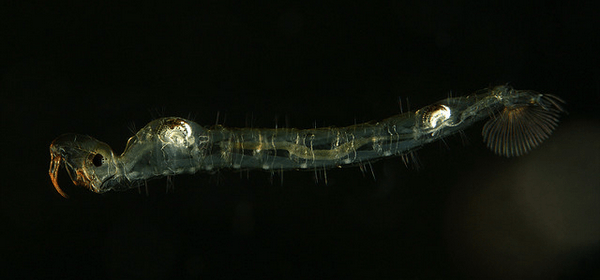
Glassworms are the larvae of phantom midges from the family Chaoboridae, genus Chaoborus (formerly Corethra). They are widely used as live food for aquarium fish due to their availability and ease of storage. These larvae are found in deep lake shallows, peat bog waters, and forest puddles throughout temperate regions.
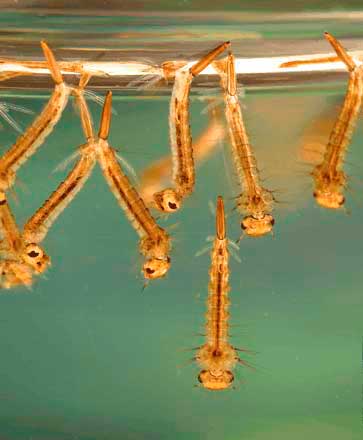
The larvae have a spindle-shaped, semi-transparent body consisting of 13-14 segments, reaching 10-16 millimeters in length. Body color varies from light yellow to dirty red depending on the food base of their native water body. Two pairs of gas-filled air sacs are visible in the third segments from each end, allowing them to maintain buoyancy and position themselves horizontally or vertically in the water column. The distinct head features two black eyespots and basket-shaped mandibles. The tail end bears vertically oriented bristles.
Glassworms spend most of their time in upper and middle water layers, rarely descending to the bottom. They are active predators, feeding on cyclops, daphnia, other insect larvae, and newly hatched fry of egg-laying fish.
Life Cycle
During autumn, winter, and spring, glassworms remain in larval form for extended periods. As temperatures rise, they begin pupating. Pupae float at the water surface and only dive when disturbed. After approximately twelve days, adult midges emerge. Unlike common mosquitoes, Chaoborus adults do not bite or feed on blood.

Benefits of Glassworms as Fish Food

In my experience, glassworms as fish food are among the safest live foods available. The risk of introducing infectious diseases approaches zero because larvae inhabit the water column and avoid contact with bottom sediments and organic deposits where pathogens concentrate. Compared to tubifex worms, the infection risk is significantly lower.
Their firm chitinous shell makes glassworms excellent roughage, effectively cleaning fish intestines. Live glassworms swim freely in the water column, making them accessible to most aquarium fish species while stimulating natural hunting behavior.
Collection Methods
Collect glassworms during autumn, winter, or early spring. Summer brings intensive pupation, increasing the likelihood of catching pupae rather than larvae. Choose clean, shallow water bodies for collection.
Use a fine-mesh synthetic net. Submerge the net and move it in a horizontal figure-eight pattern. Move slowly and smoothly along the curves, then accelerate slightly along the intersecting straight lines while applying gentle pressure. This creates a mild vortex that draws additional larvae into the net.
Transfer your catch to an enameled container and cover with a thin layer of water, maximizing surface area. This allows safe transport home for processing.
Larvae typically coexist with small crustaceans like cyclops and daphnia, requiring sorting. Use a sieve with mesh size that allows crustaceans through while retaining glassworms.
If you have concerns about water quality, disinfect the catch by holding it in weak potassium permanganate solution for one to two days.
Storage Methods
Store glassworms using one of these methods:
- In damp cloth or paper
- In small amounts of water
- Frozen
Regardless of method, maintain low temperatures to prevent pupation or spoilage.
Damp Cloth Storage
For small portions purchased at markets, damp storage works well. Rinse the larvae under running water at least once daily, then place on slightly moistened cloth and wrap. Store the bundle on the lower refrigerator shelf. This method keeps glassworms fresh for one to two weeks.

Water Storage
Place larvae in water at a ratio of one tablespoon per half-liter. Larger quantities require artificial aeration. Change water once or twice daily. Store the container on the lower refrigerator shelf. With careful maintenance, glassworms remain fresh for two to four weeks.
Long-Term Freezing
For large catches or extended storage, freeze at minus eighteen degrees Celsius. Most modern freezers handle this easily.
Before freezing, disinfect if needed and drain excess water using a net. Spread the larvae in a thin layer on half a cloth piece, fold the other half over, and place in the freezer.
Freeze in portions sized for one week to one month of feeding to avoid repeated freeze-thaw cycles, which deteriorate quality. Repeated freezing makes larvae flabby, white, and unsuitable for feeding. Ideally, each portion should suffice for a single feeding of your entire fish population.
Properly frozen glassworms retain nutritional properties for up to one year.
Nutritional Value
Glassworms contain 10% dry matter: 5.4% fats, 41.2% proteins, 48.9% carbohydrates, and 4.5% ash. This is less caloric than many live foods, so don’t rely on glassworms exclusively.
Their chitinous shell provides excellent roughage for intestinal cleaning, but low nutritional density means they shouldn’t be daily fare. Feed glassworms once or twice weekly, alternating with more caloric foods.
Feeding Guidelines
Remember that glassworms are predators. Without their usual prey, they readily consume whatever is available, including newly hatched fry.

Important: Never place glassworms in breeding tanks. Feed them only to juvenile and adult fish.
Before feeding, check for off odors in the storage container. If present, discard that batch.
Live Glassworms
Rinse the measured portion under gentle running water before releasing into the aquarium. Live glassworms can be so transparent that fish don’t immediately notice them, but with regular feeding, fish quickly learn to hunt them.
Uneaten larvae may pupate, producing adult midges in your home after twelve days. While these midges don’t bite, their presence is unpleasant. If this occurs, reduce portion size and wait until the previous feeding is consumed before adding more. Remove any dead larvae floating at the surface, as they quickly develop fungal and bacterial growth that can sicken fish.
Frozen Glassworms
Thaw frozen food before feeding. Don’t thaw the entire block—break off only what you need for one feeding.
Rinse thawed glassworms in a net under running water to remove potential contaminants and reduce infection risk.
Conclusion
Glassworms as fish food provide valuable nutrition, and live specimens offer hunting enrichment that benefits captive fish. In some cases, live foods swimming in the water column are essential.
Rotating various foods—glassworms, artemia, enchytraea, and grindal worms—creates a complete diet that promotes growth and enhances coloration in your fish.
Article updated: 2026-10-23