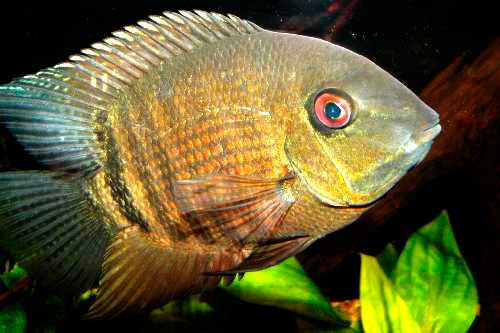
The severum cichlid is a striking representative of the cichlid family. Its body shape resembles discus fish closely enough to capture any observer’s attention, earning it the common name “false discus.” Watching its behavior, especially during spawning, can be mesmerizing for hours. For beginners, this species serves as an excellent introduction to keeping cichlids.

Sajica Cichlid: Care Guide for Amatitlania sajica
Description and Classification
The Sajica Cichlid (Amatitlania sajica, synonyms: Cryptoheros sajica, Archocentrus sajica, Cichlasoma sajica) stands out as one of the most peaceful representatives of Central American cichlids. With its relatively small size, attractive coloration, and tolerance toward live plants, this species makes an ideal choice for beginning aquarists.

Salvini Cichlid: Care Guide for Trichromis salvini
Introduction
The Salvini Cichlid was first described by Günther in 1862, yet it only found its way into home aquariums toward the end of the last century. This species captivates hobbyists with its vibrant coloration and the remarkable intelligence characteristic of cichlids. However, keeping this fish comes with challenges related to its territorial nature. Once you navigate these difficulties, the rewards are well worth the effort.

Convict Cichlid: Care Guide for Beginners
Introduction
The convict cichlid was first described in 1867 and has since won numerous admirers among aquarists worldwide. This hardy, relatively peaceful fish with fascinating behavioral traits can be kept in medium-sized aquariums, making it an almost ideal choice for hobbyists looking to explore the remarkable world of cichlids.

Jack Dempsey Cichlid: Complete Care Guide
Overview and Natural Habitat
The Jack Dempsey cichlid (Rocio octofasciata) is a stunning freshwater fish first described by Charles Regan as Heros octofasciatus. European aquarists received this species around 1904, while hobbyists in the Soviet Union didn’t encounter it until 1958. Despite being kept in aquariums for over a century and facing competition from many newer species, the Jack Dempsey maintains its popularity among fishkeepers worldwide.
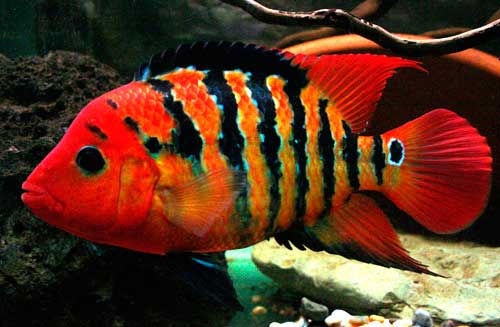
Cichlasoma Festa
Cichlasoma Festa gets its species name in honor of its discoverer Enrico Festa. Its other name, orange cichlasoma, is for its predominant coloration, which becomes especially bright during spawning. Amateurs first became known only around 1977. It quickly became a popular inhabitant of aquariums around the world, in spite of its inhospitable temperament and the need for a large body of water for its content. The reason for this unusually beautiful coloration and pronounced individual features of behavior.
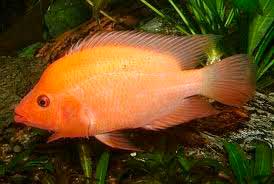
Citron cichlasoma
Citron cichlasoma is a very large fish by aquarium standards. In nature, it can reach a length of up to 35 centimeters. Behind the glass of the aquarium is usually somewhat smaller, but still large. Plus to the size of it is a predator and aggressive even in relation to their kin. But nevertheless, having appeared in Europe by 1970, lemon cichlasoma very quickly found its ardent fans.
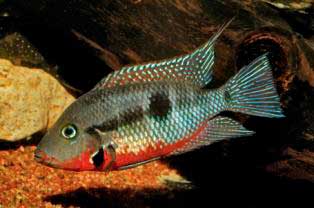
Cichlasoma meeka
The Cichlasoma meeka is one of the most beautiful American cichlids. It was first described at the dawn of the last century, namely in 1918 by the American researcher Walter L. Brind. The fish was named in honor of the American ichthyologist Seth Eugene Meek. After revision of the genus Cichlasoma this species was assigned to the genus Thorichthys, so now it would be more correct to call the article about this fish Thorichthys meeki.