Origin and Description of the Gold Gourami
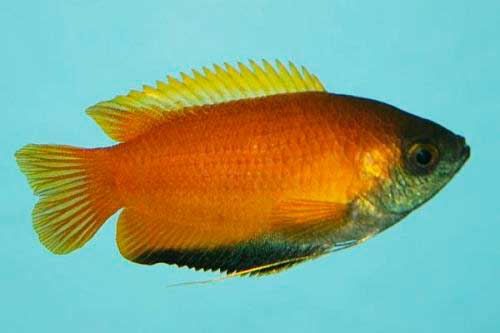
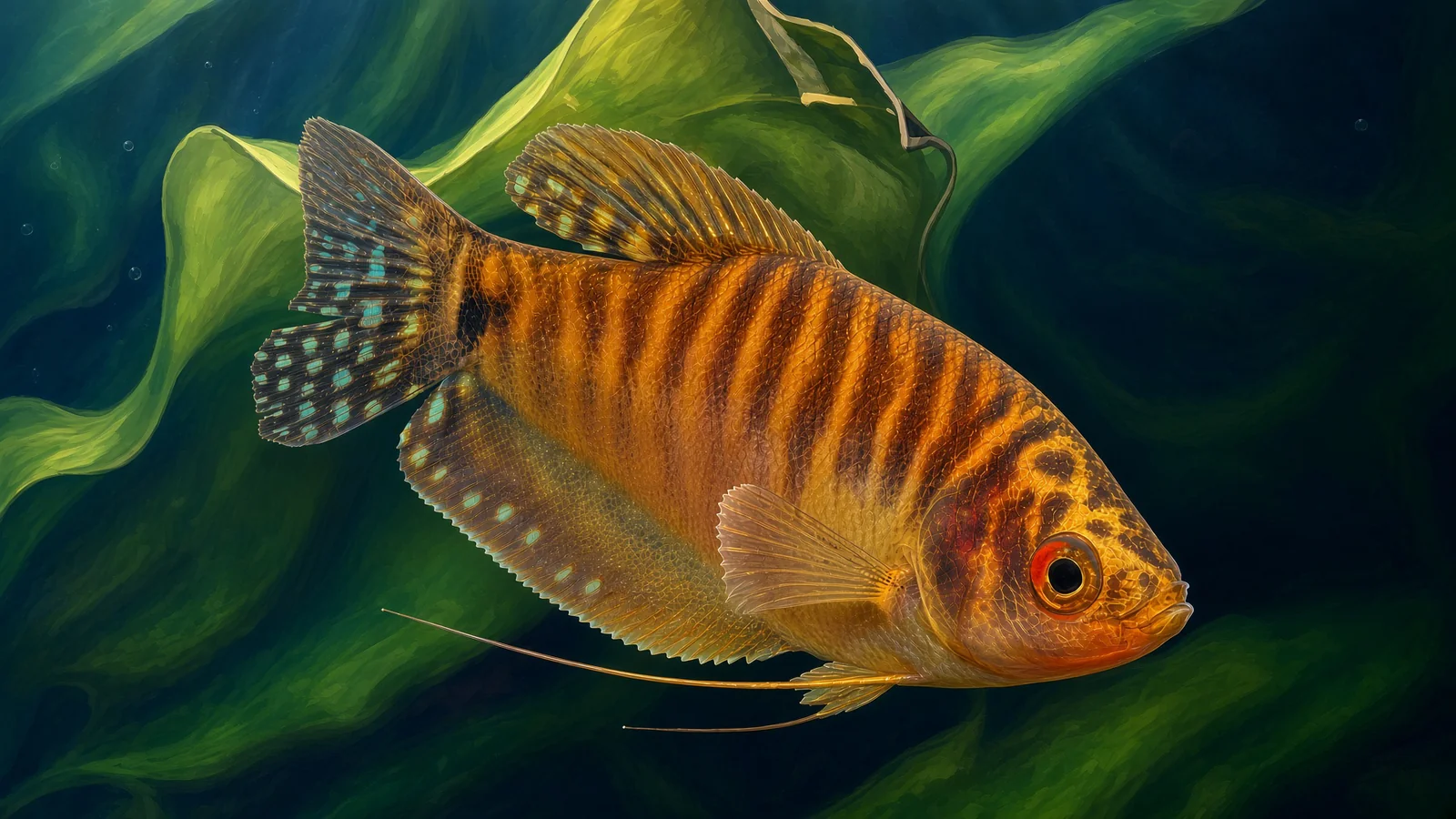
The gold gourami is a striking selective breeding variant of the three-spot gourami, first developed in 1970. This coloration does not occur in the wild, making it an exclusively aquarium-bred fish. In my experience, the golden coloration makes it one of the most visually impressive labyrinth fish for home aquariums.
Adult specimens reach 4 to 6 inches in length, with a lifespan of 4 to 7 years under proper gold gourami care. Their body is deep, elongated, and laterally compressed, giving them an elegant profile.
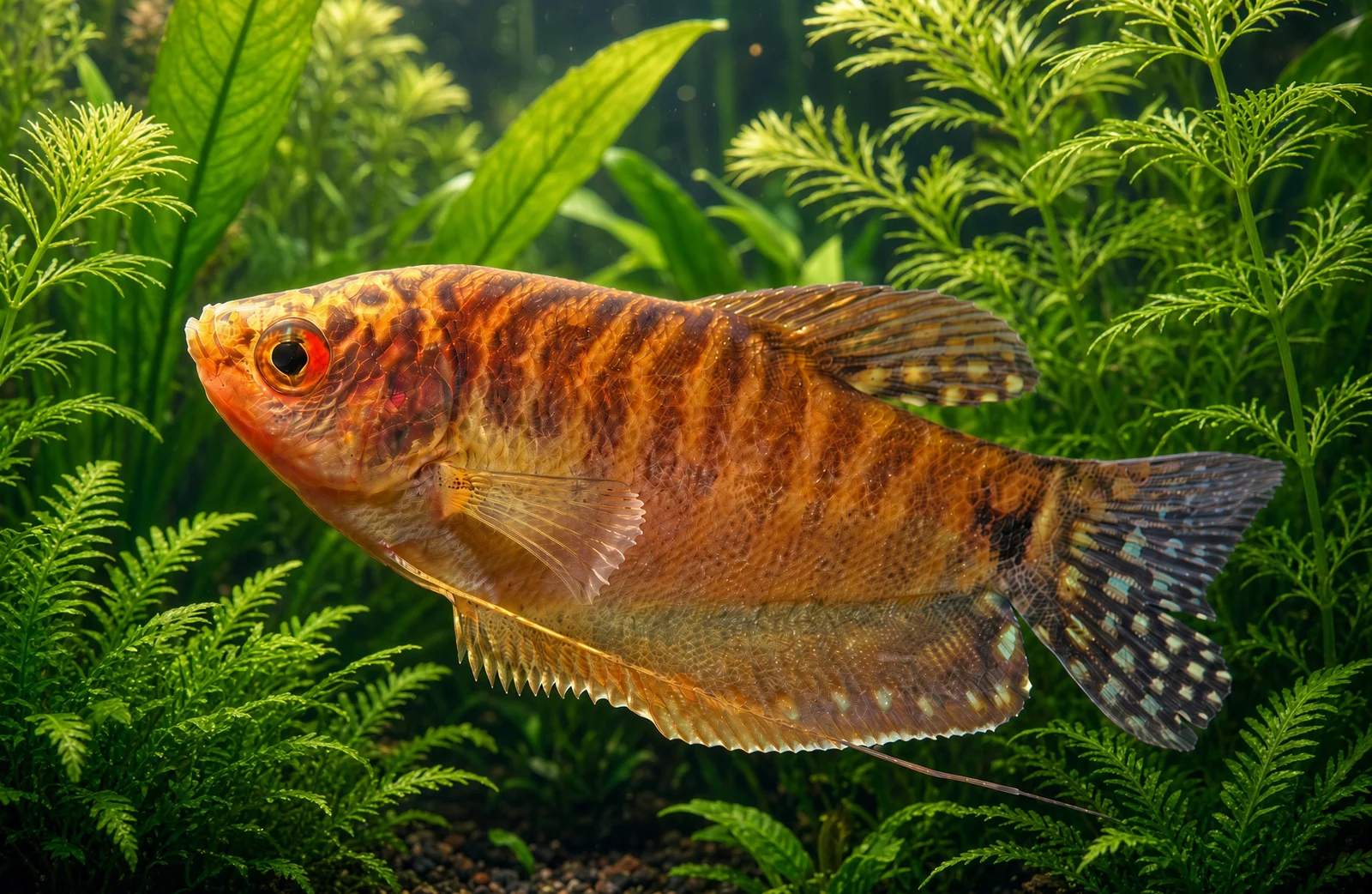
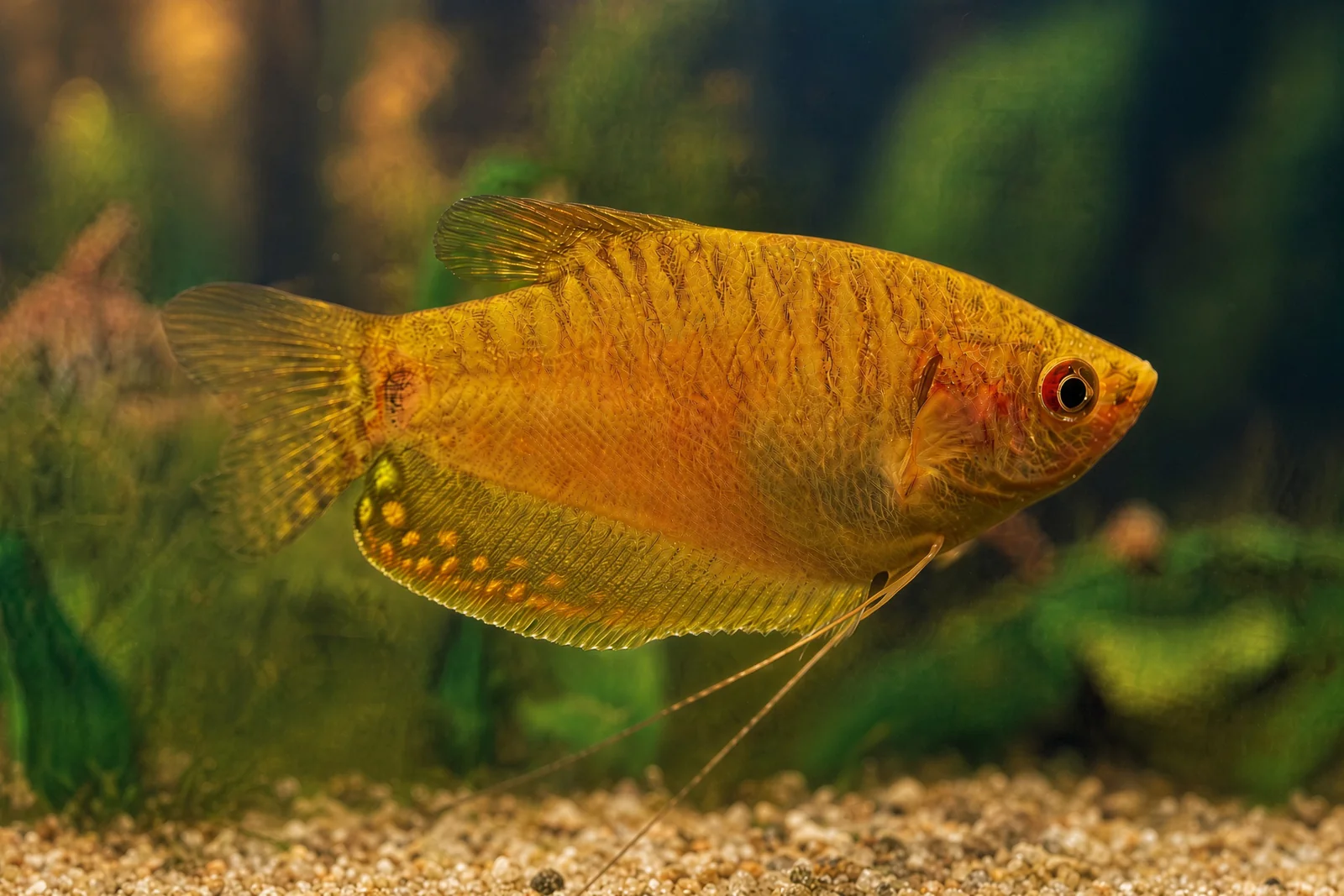
The coloration ranges from golden-yellow to golden-orange, with the dorsal area typically darker. Two characteristic dark spots may appear on the flanks—one mid-body and another near the tail base. Small bluish spots scatter across the body and fins, becoming especially noticeable under good lighting.
Physical Features and Sexual Dimorphism
The dorsal fin is relatively small: pointed in males and rounded in females. The anal fin is long and broad, extending from mid-belly to the tail. The pelvic fins have evolved into thread-like feelers that serve as tactile organs, helping the fish navigate their environment.
Males grow larger than females and display more intense coloration. This difference becomes particularly evident during breeding readiness, when males develop a vibrant golden hue.
One defining characteristic is the labyrinth organ, which allows atmospheric breathing. This adaptation enables survival in oxygen-depleted waters by periodically surfacing for air. Other labyrinth species, such as the thick-lipped gourami, share this remarkable trait.
Gold Gourami Care: Tank Requirements
A group of 4–6 fish requires a tank of at least 20–25 gallons. Optimal water temperature ranges from 75–81°F, hardness 5–20 dGH, and pH 6.5–7.5. Maintain stable parameters and perform weekly water changes of approximately one-third the volume.
The aquarium must have a tight-fitting lid to keep the air above the water surface warm—fish can develop respiratory issues from inhaling cold air during breathing. Lighting should be subdued or diffused, as gold gouramis prefer dim conditions.
Dark substrate works best, as it creates striking contrast with the golden coloration. Plant the tank densely, including floating vegetation, while leaving open swimming space. Driftwood and hiding spots are essential, as these fish appreciate sheltered areas.
Behavior and Tank Mates
Gold gouramis are peaceful and somewhat timid, retreating into plant cover when threatened. They inhabit the upper and middle water layers, occasionally descending to forage.
Males may show aggression toward each other, especially in cramped quarters without adequate cover. In smaller tanks, keep one male with several females to minimize conflict.
They coexist well with other peaceful fish of similar size. Avoid pairing them with long-finned species, as gouramis may nip at flowing fins, and with very small fish that might be mistaken for food.
Feeding Requirements
Gold gouramis are omnivorous and undemanding. They accept dry flakes and pellets, as well as live and frozen foods—bloodworms, brine shrimp, glassworms, and cyclops. These fish are prone to overeating, so feed moderate portions once or twice daily.
An interesting benefit: gouramis consume hydra and small snails, helping control these aquarium pests. This makes them both decorative and functionally valuable inhabitants.
Breeding Gold Gouramis
Sexual maturity occurs at 8–12 months. Breeding requires a separate tank of at least 10 gallons. Condition the breeding pair separately for a week with abundant live food.
Raise the water temperature to 79–82°F and lower the water level to 5–8 inches. The male constructs a bubble nest at the surface, using floating plants as anchoring points. The female may produce several hundred to 2,000 eggs.
Remove the female after spawning, as the male becomes territorial while guarding the nest. Incubation lasts approximately 24 hours, followed by larval hatching. Remove the male when fry begin free-swimming and feeding—3–4 days post-hatching.
Starter foods include infusoria and microorganisms. The labyrinth organ becomes functional at 3–4 weeks, after which juveniles become more resilient.
Practical Gold Gourami Care Tips
- Monitor air temperature above the water surface—it should match water temperature to prevent respiratory illness.
- When establishing a new tank, allow several days for biological equilibrium to develop.
- Avoid overfeeding—underfeeding is preferable to obesity and water fouling from uneaten food.
- Watch male behavior: if aggression escalates, add more hiding spots or separate excess individuals.
- Include floating plants—they provide natural shading and serve as nest supports during breeding.
I recommend gold gouramis to beginning aquarists as one of the most undemanding and attractive species. With minimal maintenance, they’ll reward you with brilliant coloration and engaging behavior for years.