Species Description and Origin
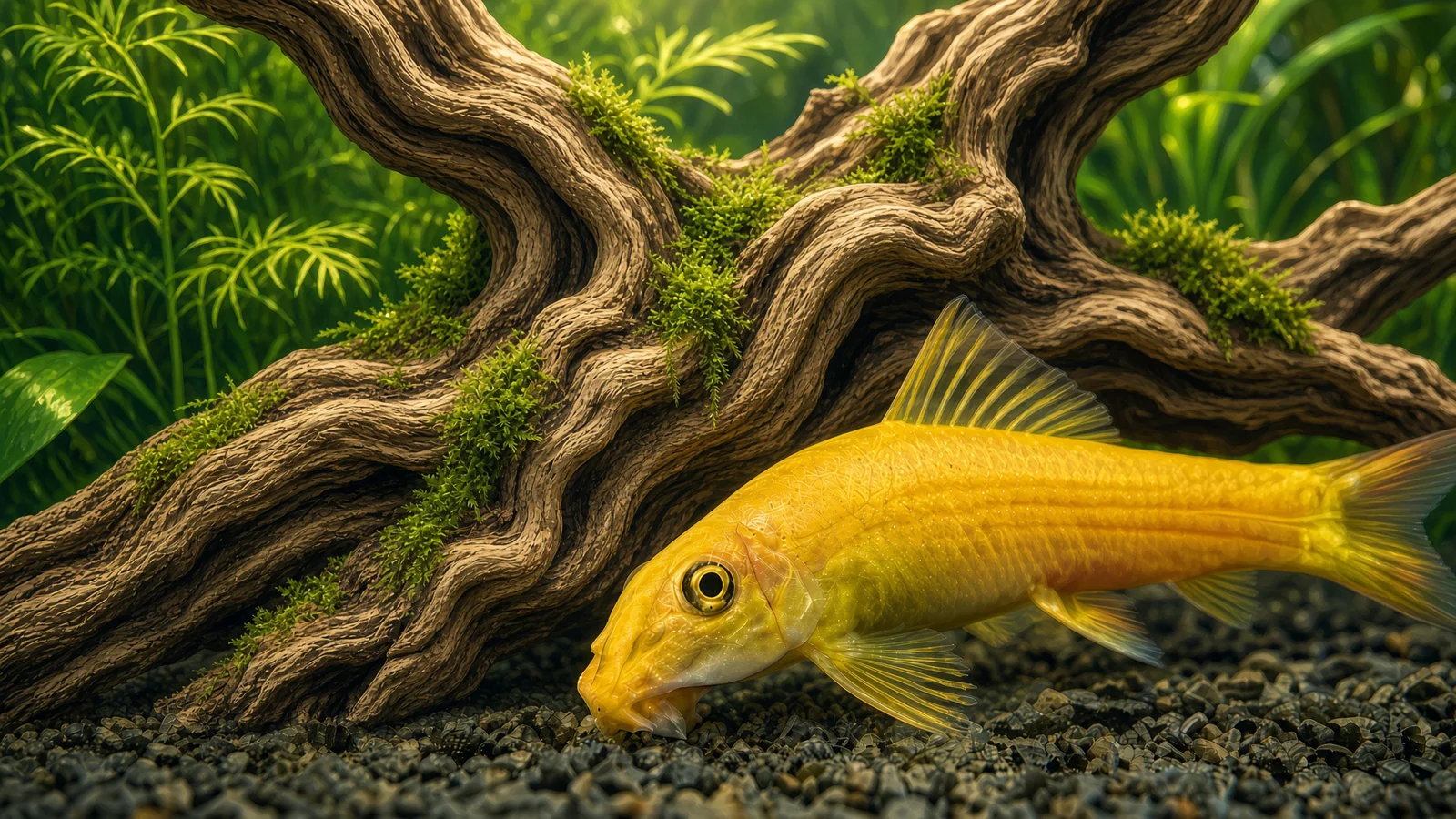
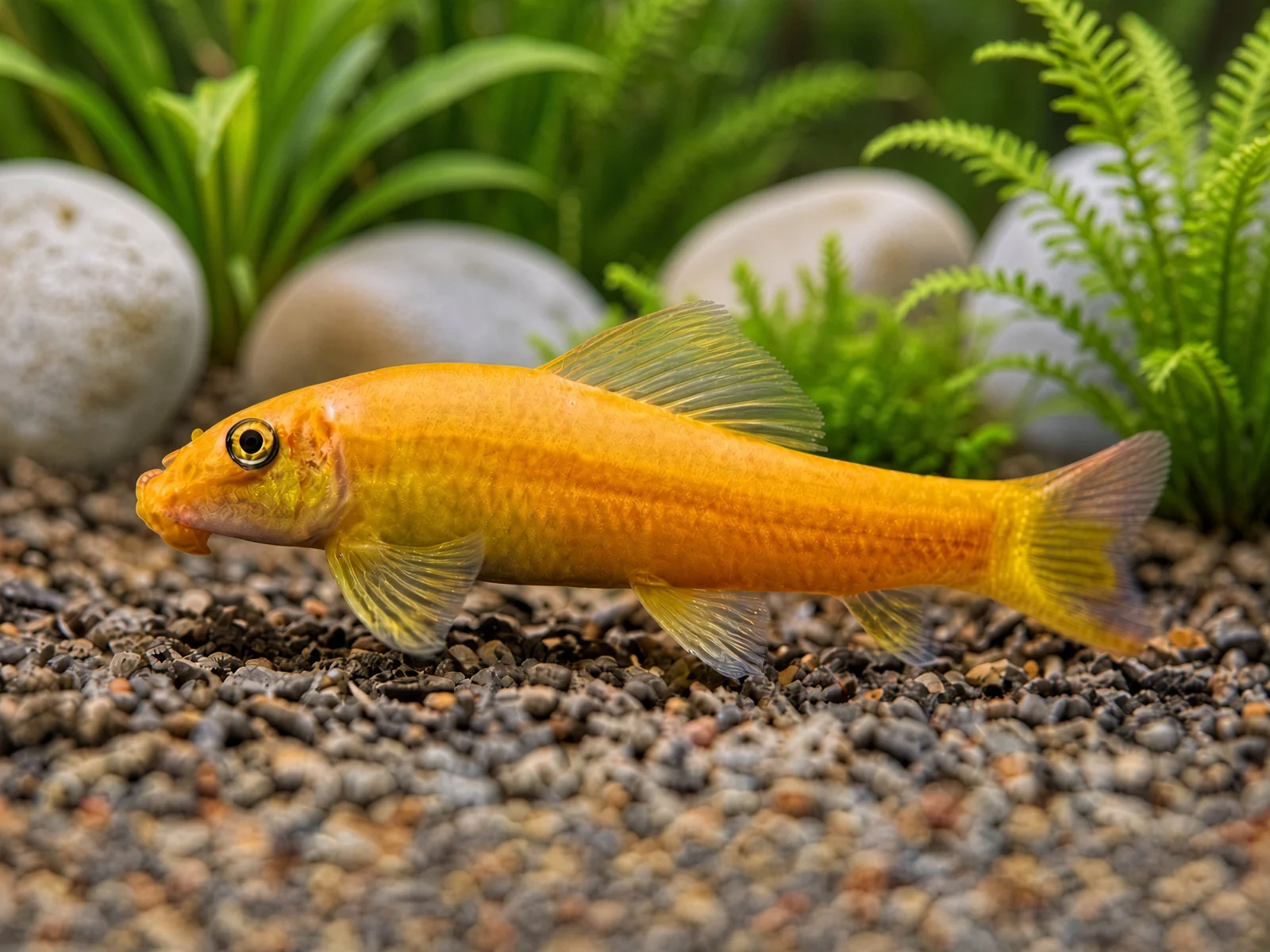
The golden Chinese algae eater is a selectively bred color variant of Gyrinocheilus aymonieri, developed specifically for the aquarium hobby. This fish gets its name from the bright yellow or orange body coloration that makes it a striking addition to any tank. In the wild, this species inhabits fast-flowing rivers and streams throughout Southeast Asia, including Vietnam, Thailand, Laos, Cambodia, and parts of China. Their natural habitat features rocky or sandy bottoms with strong currents.
The body is elongated with a characteristic arched back and flattened belly—an adaptation that helps them hold position in currents and press against rocks. The mouth is modified into a sucker with broad lips, allowing them to attach to hard surfaces and scrape algae. Small spines surround the mouth, and barbels are absent. An interesting feature of the golden Chinese algae eater is the presence of two gill openings that allow water to pass over the gills, freeing the mouth from respiratory functions.
In nature, these fish reach 28–30 cm, but in aquariums they typically grow to 12–15 cm. Life expectancy in home aquariums is around 10 years, sometimes longer with proper care.
Tank Requirements for Golden Chinese Algae Eater
Young fish need a minimum 100-liter tank, while adults require at least 200 liters. Optimal water temperature is 22–28°C, pH 6.0–8.0, and hardness 5–19 dGH. In my experience, these fish are highly sensitive to nitrogenous compounds, so ammonia and nitrite levels must remain near zero.
Strong filtration and good aeration are essential. Creating water flow in the tank to mimic natural conditions is recommended—this can be achieved using the filter outlet or an additional powerhead. Weekly water changes of 20–30% and substrate vacuuming are necessary. The aquarium should be covered, as these fish may jump.
Coarse sand or medium gravel works well as substrate. Dense planting is advisable, as golden Chinese algae eaters rarely damage vegetation. Provide hiding spots: caves, driftwood, ceramic pots, and flat stones. This becomes especially important for adult fish, which develop territorial behavior.
Feeding and Diet
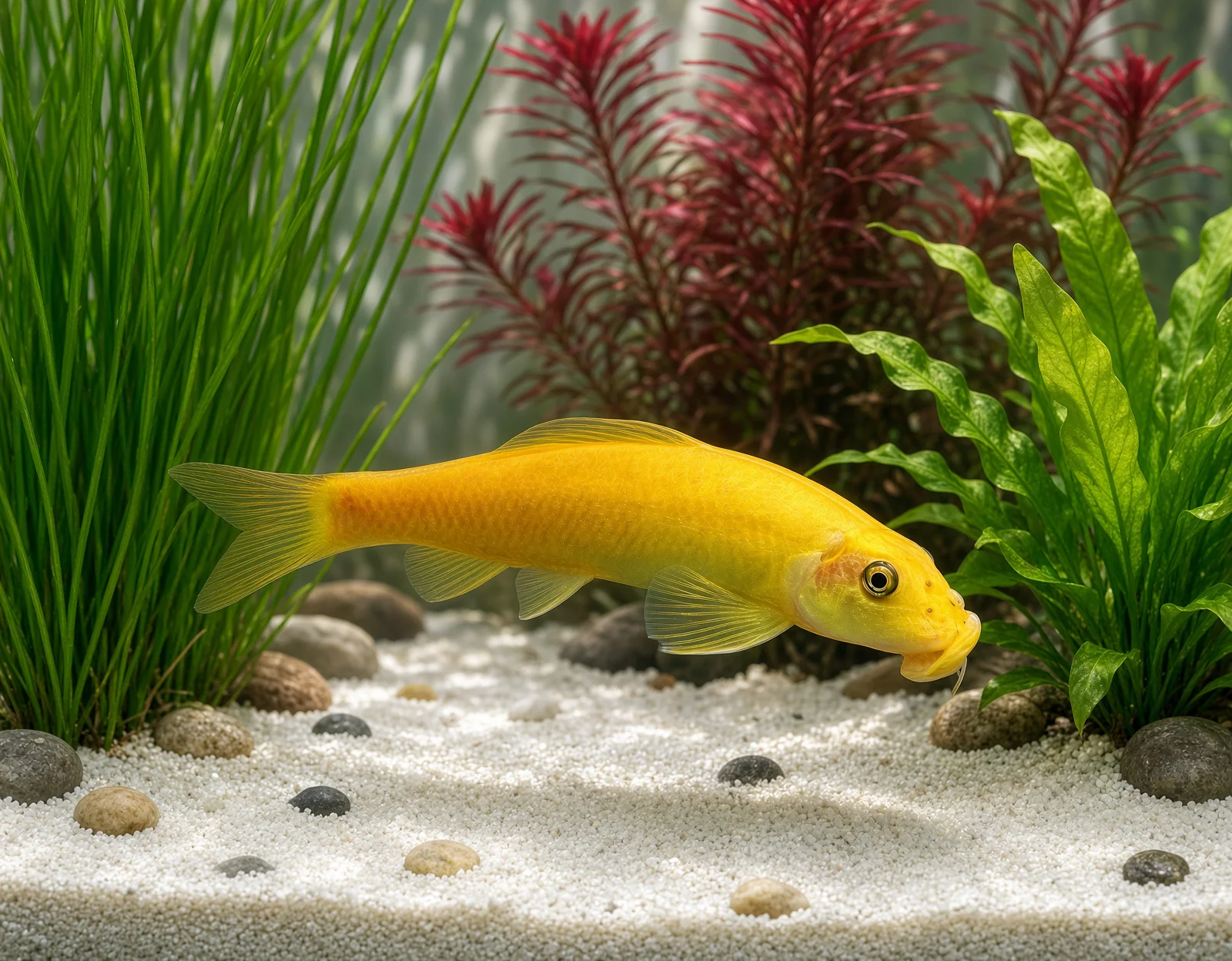
Young specimens actively consume algae growth, particularly short and soft varieties, making them useful helpers in controlling unwanted algae. However, adult fish become less enthusiastic algae eaters and prefer prepared foods.
The diet should be primarily plant-based—spirulina foods, blanched vegetables (zucchini, cucumber, spinach, lettuce, cabbage). Since these fish feed from the bottom, sinking foods work best: algae wafers, pellets, and chips. To maintain condition, periodically offer live or frozen foods: bloodworms, brine shrimp, or shrimp meat.
Golden Chinese algae eaters tend to overeat when given live food. I recommend implementing a fasting day once weekly to ensure fish maintain interest in algae and remain active tank cleaners.
Compatibility with Other Fish
Young specimens are peaceful and coexist well with other community fish. However, golden Chinese algae eaters become territorial and aggressive with age. Adults may attach to large, slow-moving fish and damage their protective slime coat.
Avoid housing them with goldfish, discus, angelfish, and other slow species. Also unsuitable as tankmates are ranchu, wakin, bubble eyes, and celestial eyes—all these goldfish varieties are too slow and vulnerable to aggression.
Best companions are large, active fish inhabiting upper and middle water layers, such as barbs and rainbowfish. Swordtails also work well, as they’re sufficiently active and occupy upper zones. Keeping groups of 5 or more individuals helps reduce intraspecific aggression through hierarchy formation.
When protein is insufficient, fish may attach to tankmates and graze their protective slime, so maintaining a balanced diet is crucial.
Breeding Golden Chinese Algae Eater
Sexual maturity occurs at 2–3 years. Males are slimmer, more colorful, and smaller than females. During breeding season, males develop a fatty bump on the head—a reliable sign of spawning readiness.
Breeding requires a separate tank of at least 200 liters. The spawning tank needs strong water flow from the filter. Place spawning mesh on the bottom and plant broad-leaved vegetation in corners. Water parameters for spawning: temperature 24–25°C, pH 6.0–6.8, hardness not exceeding 5 dGH. Lighting should be subdued.
Hormone injections are used to stimulate spawning in females. Place one female with two males. Females can produce 3,000–4,000 eggs. Incubation lasts 24–48 hours.
Fry are initially fed infusoria, finely ground plant food, and crushed egg yolk. After one week, offer brine shrimp nauplii and rotifers. Young grow rapidly and begin eating adult foods after 5–6 weeks.
Health and Behavioral Characteristics
These fish are susceptible to bacterial infections when conditions deteriorate. Below 20°C, they become sluggish or inactive, making stable temperature maintenance important.
Golden Chinese algae eaters are diurnal and occupy all water layers, though they spend most time on the bottom and tank walls scraping algae. Monitor behavior closely: if an adult begins showing aggression toward tankmates, it may indicate insufficient protein in the diet or inadequate territory.
Proper care, balanced nutrition, and suitable tankmates will keep your golden Chinese algae eater healthy for years, allowing you to enjoy its vibrant coloration and beneficial algae-eating activity.