Appearance and Physical Characteristics
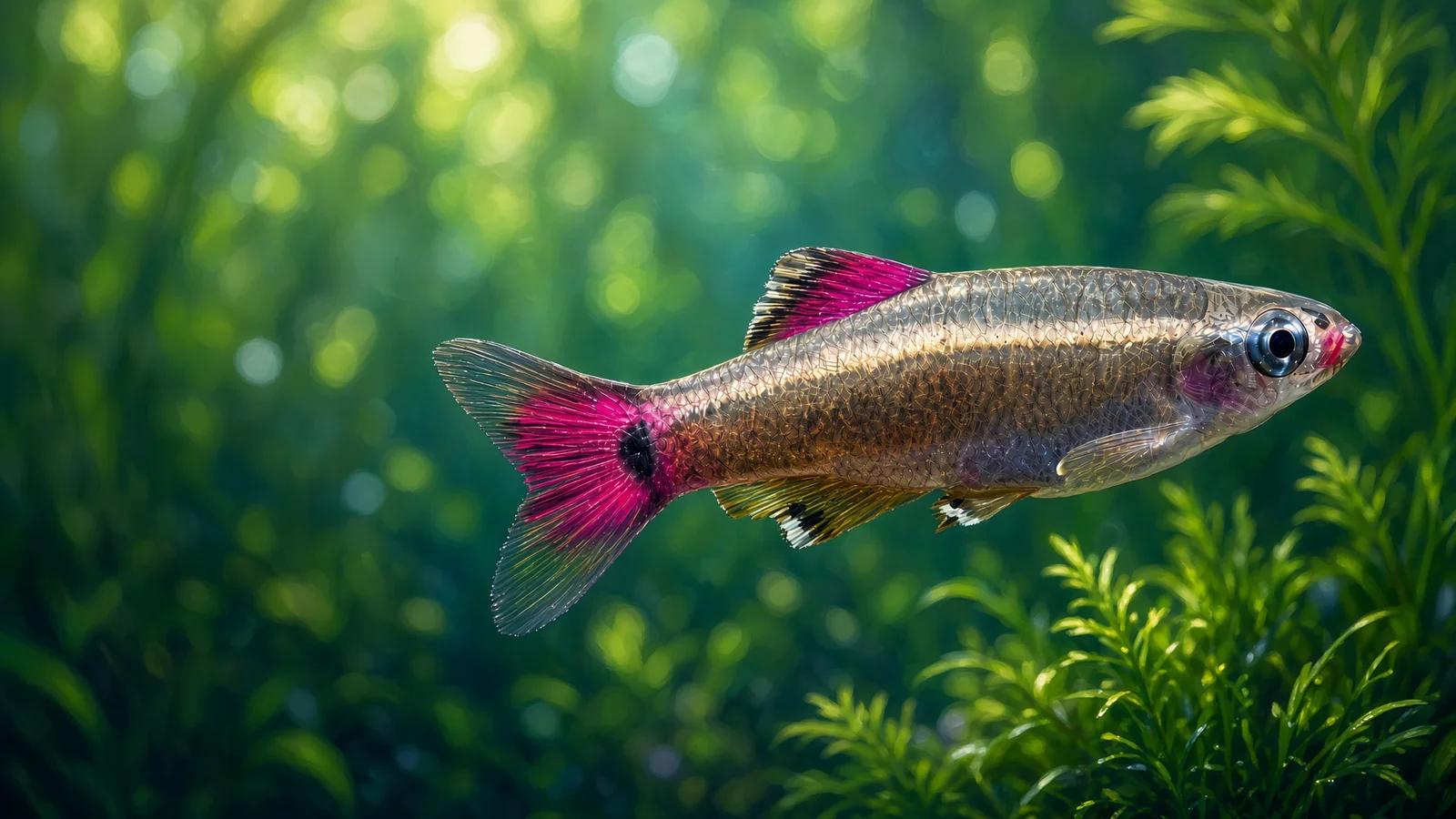
The cardinal fish is a miniature cyprinid species that has gained popularity among aquarists for its vibrant coloration and hardy nature. Adults reach only three to four centimeters in length, making them an excellent choice for smaller aquarium setups.
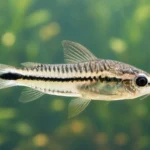
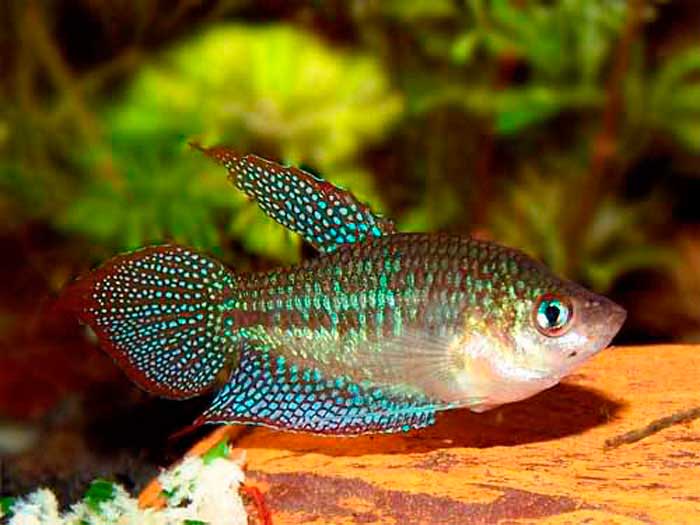
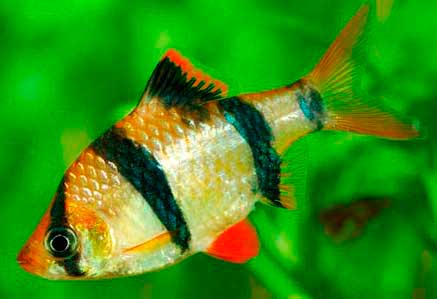
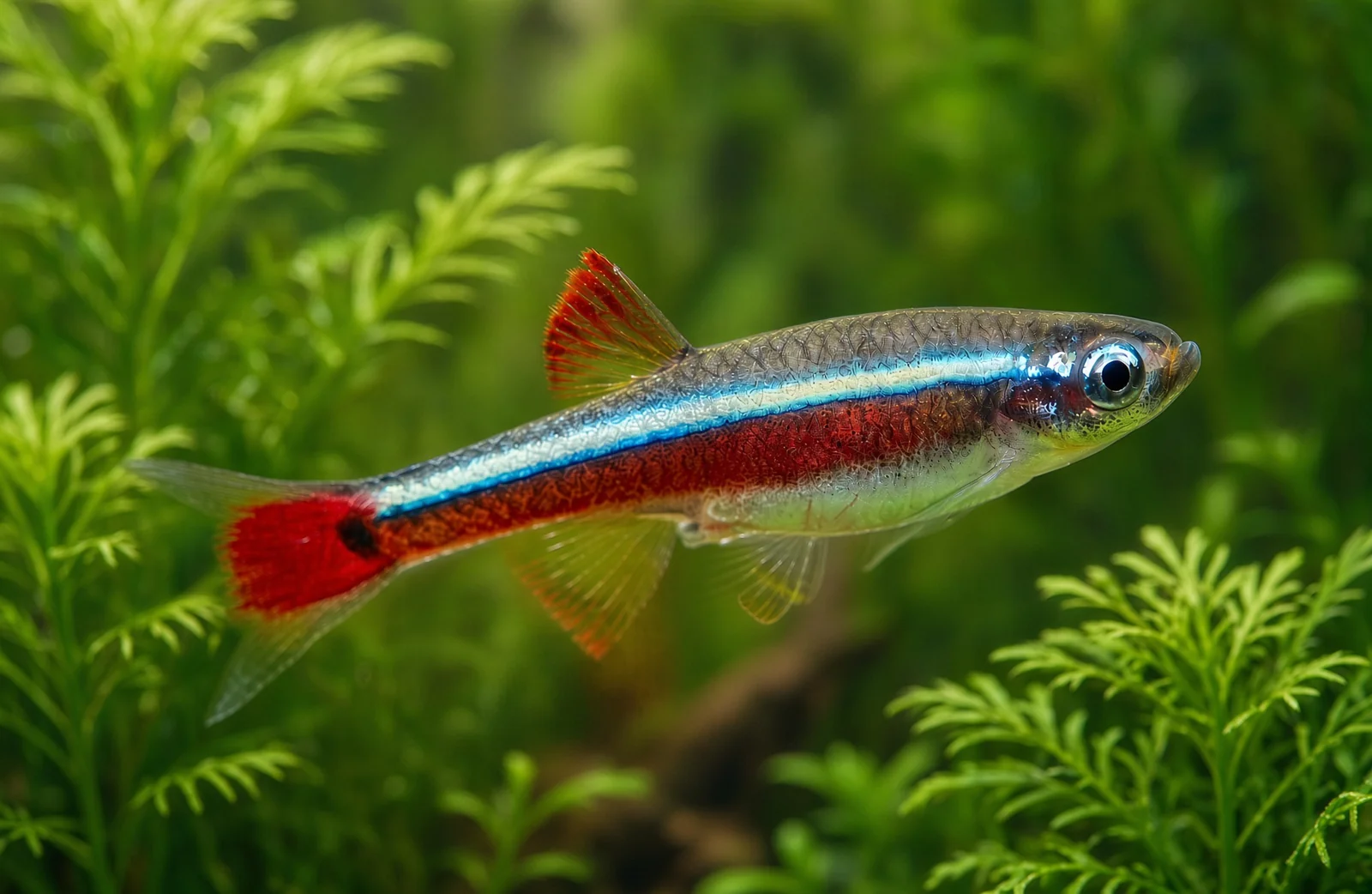
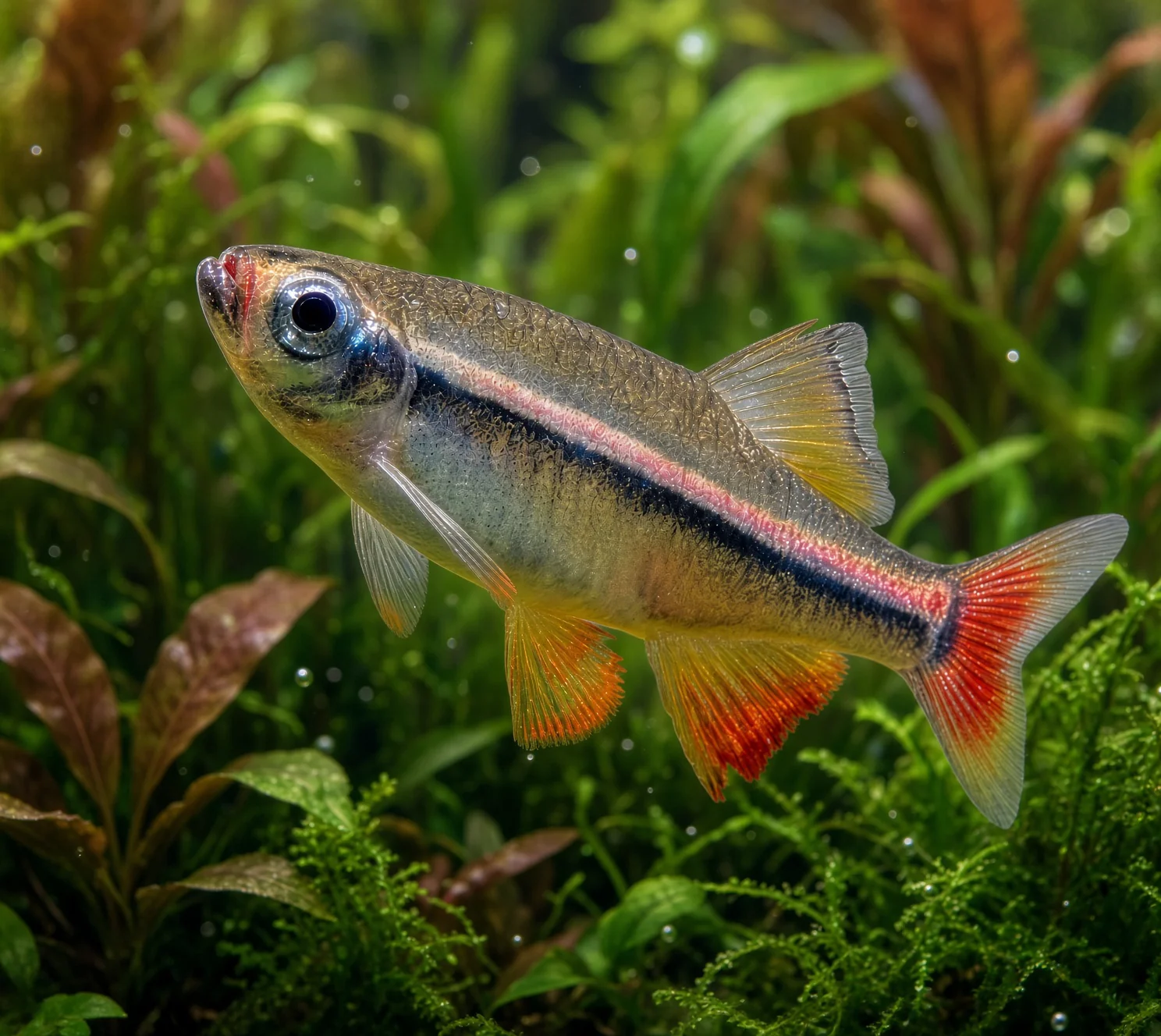
The most striking feature is a luminous stripe running horizontally from head to tail in golden or pinkish tones. A distinctive dark spot surrounded by red coloration marks the caudal peduncle. Males display slimmer bodies with more intense coloration, while females appear fuller but with more subdued hues.
Their mouth points upward—an adaptation for surface feeding in their natural habitat. Unlike many cyprinids, cardinal fish lack barbels entirely.
Natural Habitat and Origins
This species originates from mountain streams and rivers in southeastern China and northeastern Vietnam. In the wild, they inhabit cool, flowing waters with abundant vegetation. Unfortunately, the species faces critical endangerment in nature due to habitat destruction and appears on the Red List.
Cardinal fish first arrived in Europe in 1938 and quickly became established in the aquarium hobby. All specimens available in pet stores today are captive-bred, which helps preserve wild populations.
Cardinal Fish Care Requirements
In my experience, cardinal fish care suits beginners exceptionally well due to the species’ resilience and tolerance for varying water conditions. The primary consideration is their preference for cooler temperatures.
Temperature and Water Parameters
Optimal temperature ranges from 18 to 22 degrees Celsius. Warmer water significantly reduces lifespan. The species tolerates considerable temperature fluctuations—from 14 to 30 degrees—and with gradual acclimation can survive temperatures as low as 4-5 degrees.
Heaters typically aren’t necessary for cardinal fish tanks in climate-controlled rooms. Interestingly, temperatures below 20 degrees enhance coloration intensity and contrast.
Water hardness can range from 4 to 20 dGH, with pH tolerance spanning 6.0 to 8.5. These fish show sensitivity to copper, so exercise caution with copper-based medications.
Tank Size and Aquascaping
A group of ten to fifteen individuals thrives in tanks from 30 to 60 liters. Cardinal fish require shoaling conditions—minimum six to eight specimens, preferably ten or more. Smaller groups result in timid, lethargic behavior.
Dark substrates enhance the contrast and vibrancy of their coloration. Plant moderately rather than densely, leaving open swimming space centrally. Floating plants create natural shading and boost confidence levels.
Cardinal fish occupy upper and middle water layers primarily, so ensure adequate open space at these levels. Weekly water changes of 20-30% are recommended. Filtration and aeration benefit the species, and gentle current mimics their natural stream environment.
Compatibility with Tankmates
Cardinal fish display peaceful temperaments and coexist well with similarly sized, non-aggressive species. Suitable companions include danios, neon tetras, small barbs, guppies, and corydoras catfish. Observing cardinal fish shoals proves fascinating—they remain active and playful, with males performing courtship displays and elegant maneuvers around females.
Avoid housing with large or aggressive species that might view them as prey. Despite similar temperature preferences, goldfish make poor tankmates as they may consume small cardinal fish. The same applies to comets, ranchu, and other large goldfish varieties.
Feeding Cardinal Fish
In nature, cardinal fish consume insects, worms, crustaceans, and zooplankton. Aquarium specimens accept all food types—live, frozen, and dry. Prefer small live and frozen foods: bloodworms, daphnia, cyclops, and brine shrimp.
Food size matters given their small mouths. They feed primarily from the surface and water column, rarely scavenging from the bottom. Balance animal and plant-based nutrition to maintain health and color vibrancy.
These fish tend toward overeating, so monitor portions carefully. Feed two to three times daily in amounts consumed within two to three minutes.
Breeding Cardinal Fish
Cardinal fish reach sexual maturity at four months. Breeding succeeds both in community tanks and dedicated spawning setups of 5 to 30 liters.
Spawning Preparation
Separate males and females for seven to fifteen days before breeding, feeding heavily with live foods. Introduce one to two pairs or groups with more females than males. Spawning triggers include temperature increases to 20-25 degrees and protein-rich feeding.
Spawning typically occurs at dawn or when lights activate, potentially lasting up to two days. Females deposit 20 to 300 eggs per spawning event. In community tanks, females may scatter three to five eggs daily over several weeks.
Eggs and Fry Development
Eggs appear small, transparent, and adhere to fine-leaved plants. Parental instincts remain weak—adults may consume eggs and fry, though less frequently than other cyprinids. Protect eggs using spawning grids, coarse gravel with gaps, or dense fine-leaved vegetation.
Incubation spans 36 to 60 hours depending on temperature. Fry become free-swimming two to four days post-hatching. Initial foods include infusoria, microworms, rotifers, and brine shrimp nauplii. After three weeks, offer small cyclops and daphnia.
Fry grow rapidly with quality feeding. At four to five millimeters, fry develop a luminous blue lateral stripe that disappears upon reaching maturity. Sort fry by size, as larger individuals may prey on smaller siblings.
Varieties and Lifespan
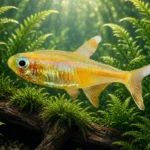
Several selectively bred varieties exist: golden, veiltail, albino, and super-red forms. The golden variety displays yellow-gold body coloration while retaining dark eyes. Veiltail forms feature elongated dorsal and anal fins. All varieties can interbreed.
Lifespan in aquariums typically ranges from 1.5 to 2 years. Under optimal conditions—cool water, quality nutrition, and consistent maintenance—some individuals reach 3 to 5 years.
Practical Cardinal Fish Care Tips
I recommend attention to several critical aspects of cardinal fish care. Inbreeding at commercial facilities has weakened many modern cardinal fish genetically, increasing disease susceptibility. The species shows particular vulnerability to velvet disease, especially in acidic water below pH 7.
In water contaminated with nitrogenous compounds, juveniles frequently develop spinal deformities. Regular water changes and quality monitoring prove essential for maintaining fish health.
Cardinal fish represent an ideal species for beginning aquarists due to their hardiness and adaptability. In China, they’re occasionally kept in ornamental ponds, confirming their environmental flexibility. These miniature fish beautify any aquarium without demanding complex care protocols.