Introduction
The Madagascar Rainbowfish (Bedotia geayi) is a representative of the Bedotiidae family that allows you to experience the remarkable fauna of Madagascar right in your home aquarium. This species was discovered in Madagascar and described by Pellegrin in 1907. The fish first reached Europe in 1958.
Kingdom: Animalia Phylum: Chordata Class: Actinopterygii Order: Atheriniformes Family: Bedotiidae Genus: Bedotia Species: Bedotia geayi
Appearance and Size
In the wild, Madagascar Rainbowfish inhabit freshwater bodies of Madagascar, primarily clean, well-oxygenated streams and rivers with moderate current. In nature, they can reach 15 centimeters, though in aquariums they typically grow to 10-12 cm.
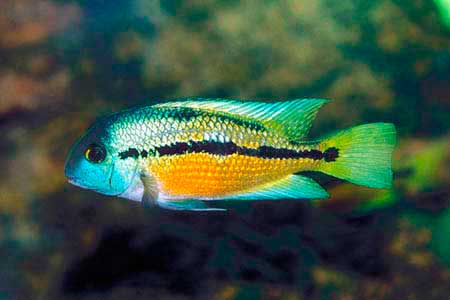
The body is elongated and laterally compressed, typical of fish living in flowing waters. The coloration is golden-silver with a characteristic black horizontal stripe running along the entire body. Males are larger and more vibrant than females, with their dorsal, caudal, and anal fins displaying striking bright red edging bordered by black. Females have nearly colorless fins and a more rounded body, especially during spawning season.
Madagascar Rainbowfish Water Parameters

| Parameter | Value |
|---|---|
| Tank Volume | 100-150 liters for a school |
| Temperature | 22-26°C (72-79°F) |
| Hardness (dH) | 8-20° |
| pH | 6.5-8.0 |
| Lifespan | 5-8 years |
Aquarium Care Requirements
Since Madagascar Rainbowfish are schooling fish, I recommend keeping them in groups of 6-10 individuals. Such a school requires a tank of 100 to 150 liters. In my experience, fish in schools feel more confident, display natural behavior, and show brighter coloration.
Water temperature for adult specimens should be maintained at 22-26°C. Hardness can range from 8 to 20 degrees. The pH should be neutral to slightly alkaline (6.5-8.0).
Weekly water changes of 25-30% are mandatory. Bedotia originate from clean flowing waters, so water quality is critically important for their health. Effective filtration and additional aeration are necessary—these fish require oxygen-rich water.
For substrate, you can use river sand, fine pebbles, small gravel, or medium-fraction expanded clay. I recommend choosing dark-colored substrate—against this background, the fish appear brighter and more contrasting.
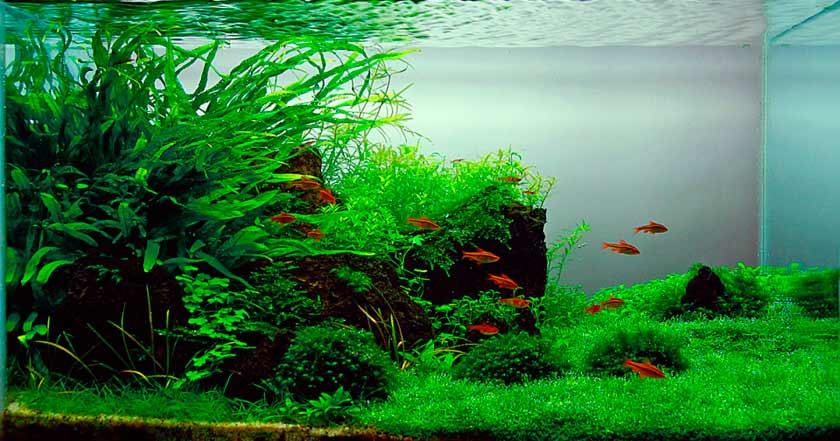
Suitable plants include any species with similar care requirements: Canadian waterweed, spiral vallisneria, water milfoil, marimo moss balls, and Java moss. It’s important to leave sufficient open space in the center of the aquarium for swimming—Bedotia are very active and constantly in motion.
Compatibility with Other Fish

Madagascar Rainbowfish are peaceful and excellent for community tanks. As tankmates, I recommend choosing other peaceful fish of similar size: barbs, rasboras, larger tetras, danios, other rainbowfish, peaceful cichlids, and bottom-dwelling catfish like the Peppered Cory.
Avoid housing them with aggressive or territorial species, as well as very small fish—adult Bedotia may perceive them as food. Like many schooling fish, when kept alone, Madagascar Rainbowfish become timid and spend most of their time hiding.
Feeding Madagascar Rainbowfish
In nature, Bedotia feed primarily on insects falling on the water surface, their larvae, small crustaceans, and other invertebrates. They also accept plant matter.
In the aquarium, feed once or twice daily. In my experience, it’s better to feed in the morning and afternoon rather than evening—this helps prevent obesity, to which Bedotia are prone when overfed.

Diet should be varied and balanced. Madagascar Rainbowfish readily consume bloodworms, tubifex, glassworms, brine shrimp, daphnia, small crustaceans, insects, and their larvae. They accept quality flakes and pellets, especially those containing spirulina. No more than once weekly, you can offer white worms.
Feed in small portions, offering the next portion only after the previous one is completely consumed. Uneaten food must be removed from the aquarium. One or two fasting days per week are beneficial.
Breeding Madagascar Rainbowfish
Breeding can be achieved both in a community tank and in a separate breeding setup. Considering adult fish’s tendency to eat small creatures, using a separate breeding tank of at least 50 liters makes sense for preserving offspring.
Transfer Considerations

An important note: Bedotia tolerate transfer to another aquarium very poorly. For them, it’s genuine stress that in rare cases can even lead to death. Therefore, I strongly recommend acquiring these fish at an early fry stage—juveniles 1-1.5 cm long tolerate relocation significantly better than adults.
Bedotia’s bodies adapt to specific physicochemical parameters, and they tolerate sudden changes with great difficulty. Before moving breeders to a spawning tank, create identical conditions to the main aquarium: matching hardness, pH, and water temperature. Alternatively, use water from the tank where the fish were kept.
Breeding Preparation
If Bedotia are kept in a species-only tank, you can spawn them directly there. Place spawning substrate—Java moss or Java fern—on the bottom. Once or twice weekly, remove the substrate with eggs and transfer it to an incubator, replacing it with fresh substrate.
When using a separate breeding tank, gradually adjust water parameters to optimal spawning conditions: temperature 26-28°C, hardness around 10-15°, pH 7.5-8.0. When fish find conditions suitable, after brief courtship displays, they’ll deposit eggs on the substrate or directly on the tank bottom.
Don’t rush to remove breeders from the spawning tank. Atheriniformes, to which Bedotia belongs, have fractional and prolonged spawning—fish deposit eggs over several consecutive days in batches of 20-70 eggs daily. Adult fish typically don’t disturb eggs, though they may consume newly hatched fry.
Raising Fry
Eggs are light yellow, transparent, approximately 1.5 mm in diameter. Incubation lasts 5-8 days depending on temperature. Just one or two days after hatching, fry begin swimming and require starter food.
Since Madagascar Rainbowfish fry are relatively large, they can immediately consume brine shrimp nauplii, microworms, small cyclops, or quality dry fry foods. As a last resort, you can use crushed egg yolk, though results will be somewhat inferior.
Madagascar Rainbowfish reach sexual maturity at 8-10 months of age.
Conclusion
Madagascar Rainbowfish are wonderful fish for aquarists ready to pay attention to water quality and proper feeding. While they require certain experience in keeping and breeding, with proper care these active schooling fish will reward you with their striking appearance and interesting behavior. Under favorable conditions, Bedotia can live 5-8 years in aquariums, becoming a true centerpiece of your home aquatic display.
Article updated: 2026-09-24