Understanding Body Size and Shape
Adult male bettas typically reach six to seven centimeters in length, while females usually stay under five centimeters. This difference becomes noticeable after three to four months when the fish reach sexual maturity.
Males have a slender, streamlined body that tapers toward the tail and broadens near the head. Females display a stockier, more compact build with a fuller profile. The female’s belly often appears rounded and plump, especially when she’s ready to spawn. These physical differences help identify sex even in bettas with similar coloring.
Fin Length and Structure in Male and Female Betta Fish
Fins provide the most obvious clue for sexing bettas. Males have significantly longer and more elaborate fins, creating that characteristic flowing silhouette. The tail, dorsal, and anal fins on a male can be two to three times larger than those on a female.
Females possess shorter, more rounded fins across the board. Their pectoral fins are also noticeably shorter than males’. However, recent breeding programs have produced females with elongated fins and vibrant colors that rival males in appearance. In these cases, you’ll need to examine other characteristics.
Betta fish develop their full fin length around six months of age. Before that, determining sex by fins alone can be challenging, particularly with juveniles.
Color Intensity Differences
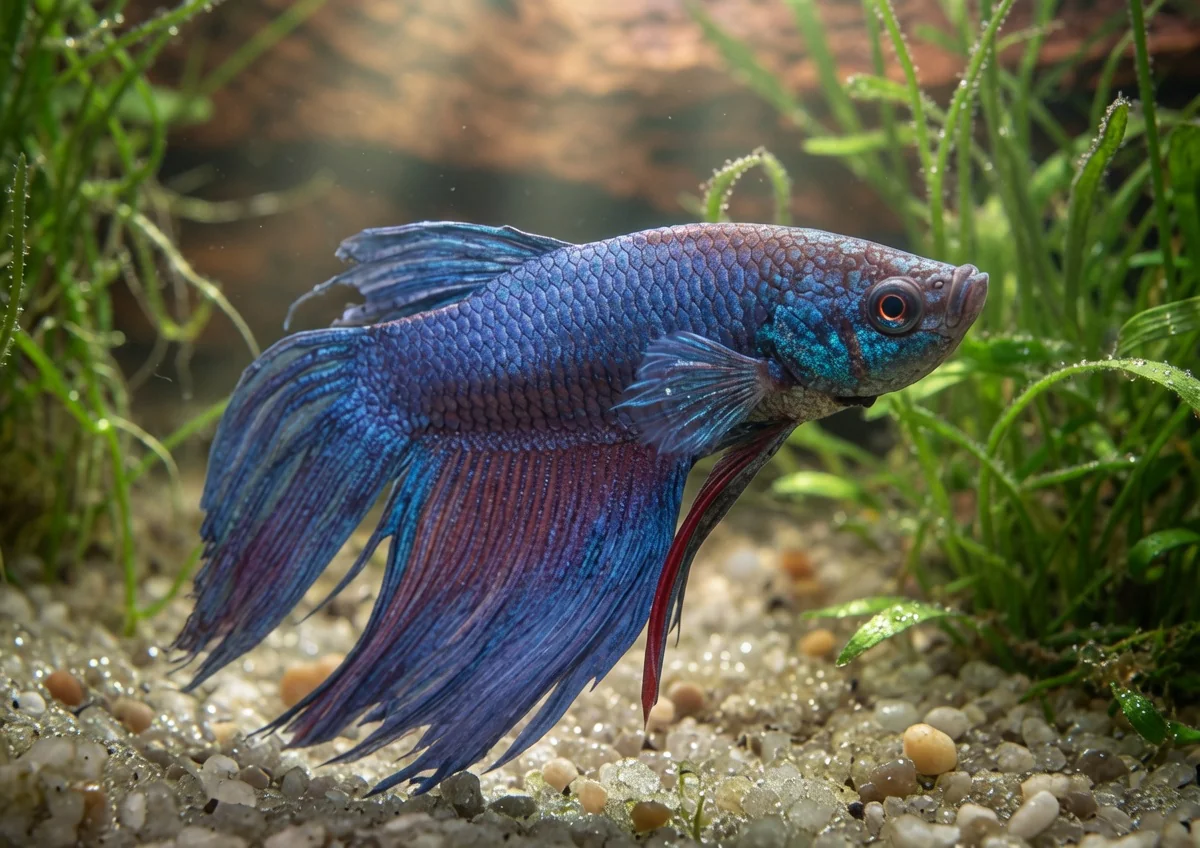
Males display brighter, more saturated coloring, especially in comfortable conditions or when excited. During spawning or confrontations with other males, they become exceptionally vivid, showing their full color spectrum.
Females have paler, less dramatic coloring. Their bodies often show dark horizontal stripes that are faint or absent in males. When a female is ready to breed, vertical stripes appear on her body—an important indicator of her reproductive state.
Modern breeding lines sometimes break this pattern. Some females look as vibrant as males, so color alone isn’t always reliable.
The Egg Spot: A Reliable Female Marker
Females have a small white dot or grain-like spot on their belly near the base of the anal fin—this is the ovipositor or egg spot. This feature helps identify females even at young ages, before fins have fully developed and other distinctions aren’t yet clear.
The egg spot appears as a tiny white point and is visible upon close inspection. This is one of the most dependable ways to distinguish female from male bettas, especially with young fish or breeding variants that don’t show typical characteristics.
Behavioral Patterns
Males are more aggressive and territorial, particularly toward other males. When encountering a rival or their own reflection, they flare their fins, puff out their gill covers, and assume a combat stance. In this excited state, males expand their gill plates into a prominent collar—the so-called beard. This beard is much more pronounced than in females.

Females react more calmly to their reflection—they might slightly spread their fins but do so with less persistence. They can show aggression toward each other, but to a lesser degree than males. Males build bubble nests for breeding, while females don’t engage in this behavior—it’s exclusively a male trait.
Understanding these behavioral differences is crucial when keeping cockerel fish or fighting fish in your aquarium setup.
Practical Identification Tips
For accurate sexing, compare several characteristics simultaneously rather than relying on one feature. Morphological differences become apparent around two months after hatching, but three to four months of age provides the clearest certainty.
Sexing young specimens is difficult because sexual dimorphism hasn’t fully developed. In these cases, look for the egg spot—it’s visible earlier than fins grow out. If you’re selecting a betta at a store, ask the seller to show you several fish for comparison—next to a male, a female will appear noticeably smaller and less showy.
In my experience, proper sex identification matters significantly for tank management. Males cannot coexist due to aggression, while females can live in small groups with adequate tank volume. Knowing the sex helps prevent conflicts and create comfortable conditions for your pets, just as important as recognizing health issues like those covered in guides about betta splendens and their diseases.
Final Thoughts
Identifying male and female betta fish requires examining multiple traits: body size, fin shape and length, color intensity, presence of an egg spot, and behavior patterns. Males are larger, brighter, and sport elaborate fins, while females are more compact, calmer, and have the distinctive white spot on their belly. I recommend observing your fish over several days—behavior often reveals sex more accurately than physical features alone. With these guidelines, you’ll confidently sex bettas and build a harmonious community in your aquarium.