Understanding Betta Fish Varieties
The betta fish captivates aquarists with an extraordinary range of forms and colors. All modern ornamental bettas belong to a single biological species, Betta splendens, yet selective breeding has produced dozens of distinct varieties differing in fin structure and scale coloration. Understanding these differences helps you choose a fish that matches your preferences while providing appropriate care.
Selective breeding has transformed bettas dramatically. Fins can exceed twice the body length in some varieties, and colors intensify during spawning or territorial displays. Classification of betta fish types relies primarily on two characteristics: fin shape and color pattern.
Main Betta Fish Types by Fin Structure
Breeding lines distinguish themselves through tail, dorsal, and anal fin configurations. These structural differences affect not just appearance but sometimes behavior and swimming ability.
Veiltail Betta
The veiltail represents the original selective variety and ancestor of modern forms. This type features elongated tail and anal fins that typically drape downward, creating the characteristic veil silhouette. The dorsal fin also extends longer than wild types, though less dramatically than the tail.
This classic form remains popular for its elegant appearance and wide availability. Veiltails adapt well to standard aquarium conditions and suit beginners exploring different betta fish types.
Crowntail Betta
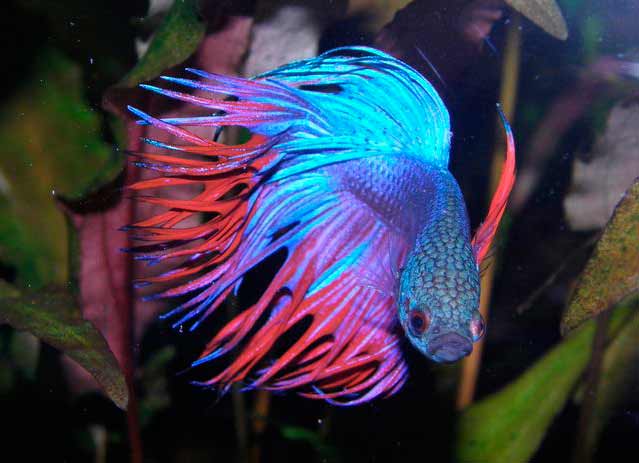
Crowntail bettas display fin rays extending beyond the webbing membrane, creating a crown-like appearance. The membrane between rays reduces significantly or disappears partially, producing a serrated, spiky outline. Indonesian breeder Ahmad Yusuf developed the first crowntail in 1996.
Crowntails come in three ray structures: single ray, double ray, and crossed ray. Males of this variety show particularly aggressive behavior, especially during breeding periods. Account for this temperament when planning tank arrangements.
Plakat Betta
Plakat bettas carry short fins most resembling wild betta forms. Beginners sometimes mistake male plakats for females due to compact finnage, though mature males display distinguishing sexual characteristics.
This variety exhibits calmer temperament compared to long-finned types. Short fins facilitate easier swimming and reduce injury risk from tank decorations. Plakats suit newcomers to cockerel fish care and active display tanks.
Delta and Super Delta Betta
Delta bettas feature rigid tail rays forming a wide isosceles triangle when spread. The outer tail rays can extend to angles approaching 130 degrees, creating the characteristic fan shape.
Super delta represents an intermediate form between delta and halfmoon, with tail spread exceeding 130 degrees but remaining under 180. Breeders value this transitional variety for its balanced proportions.
Halfmoon Betta
Halfmoon bettas possess large, flowing tails with lateral rays spreading to exactly 180 degrees, forming a perfect semicircle or D-shape. Dorsal, pectoral, and anal fins also develop long and full, creating an impressive display.
This form ranks among the most striking betta fish types but demands attention to water quality and smooth tank decorations. Extended fins damage easily, potentially leading to infections if torn.
Double Tail Betta
Double tail bettas display a split caudal fin creating two distinct lobes, while dorsal and anal fins develop flowing extensions. This mutation produces an unusual silhouette particularly noticeable from above. Double tails appear less frequently than other forms and attract collectors.
Elephant Ear Betta: A Distinctive Variety
Elephant ear or dumbo bettas take their name from enlarged pectoral fins resembling elephant ears. In dumbo varieties, pectoral fin size exceeds head size several times over, creating unique and instantly recognizable appearance.
This relatively new variety has gained popularity among enthusiasts. Breeding focused on pectoral and opercular fin development rather than tail modifications. The enlarged pectoral trait manifests clearly only in males, aiding sex determination in young specimens.
Dumbo characteristics combine with any tail type—you’ll find elephant ear halfmoons, deltas, and even plakats. This versatility expands diversity within the variety.
Rare and Hybrid Fin Forms
Beyond standard varieties, breeders have developed several uncommon forms worth noting.
Half-sun bettas result from crossing halfmoon and crowntail lines. This hybrid spreads its tail to 180 degrees like a halfmoon while displaying the serrated edges characteristic of crowntails.
Feathertail bettas show branching tail rays creating lush, feathery texture. Rosetail bettas feature interweaving rays forming ruffles resembling rose petals. This delicate form proves challenging to breed consistently.
Speartail bettas carry pointed caudal fins shaped like spearheads. Brush-tail bettas display tapered tails with shorter outer rays than center rays, creating a paintbrush effect. These forms appear primarily among Asian breeding lines.
Betta Varieties by Coloration
Color classifications divide bettas into solid, bicolor, and multicolor patterns. Breeders have established red, blue, yellow, green, pink, and white color strains. Intensity peaks during spawning and territorial encounters.
Solid bettas display uniform coloring without transitions or spots. Bicolor varieties combine two contrasting hues with clear separation—red body with blue fins, for example. Multicolor or marble bettas show complex patterns incorporating three or more colors.
Specialty color groups include metallic finishes with reflective scales, dragon bettas with dense opaque scaling, and Cambodian bettas contrasting pale bodies against vibrant fins. Even within single variety groups, individual bettas vary considerably in color, form, and fin length.
Practical Selection Guidance
When choosing among betta fish types for your aquarium, consider maintenance requirements alongside aesthetic appeal. Long-finned forms need careful attention to water quality and tanks free of sharp decorations.
Plakats and short-finned varieties prove hardier and suit beginners better. They swim more actively and handle stress more readily. Crowntail bettas require solitary housing due to heightened aggression.
In my experience, healthy specimens show intact fins without tears or white coating, bright coloration, and active behavior. Observe candidates for several minutes before purchasing—healthy bettas display curiosity and spread their fins readily.
Proper nutrition proves especially important for long-finned varieties requiring extra energy for movement. Varied diet maintains color vibrancy and fin health. Understanding potential betta health issues helps you recognize problems early.
Conclusion
Betta fish types encompass remarkable diversity in form and color, each variety offering distinct characteristics. From classic veiltails to exotic elephant ear dumbos, every form brings its own beauty and interest.
Grasping differences between varieties enables informed choices and appropriate care provision. Regardless of selected form, bettas create vibrant aquarium focal points and reward their keepers with engaging personalities and stunning displays.