Understanding Betta Temperament and Tank Dynamics
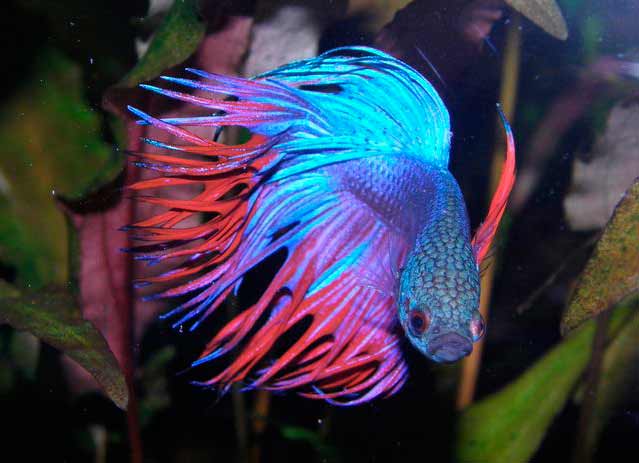
Betta splendens carry a reputation for aggression, but this doesn’t mean they must live alone. The key to successful betta fish compatibility lies in understanding their territorial instincts and selecting appropriate tankmates. With proper planning, you can create a thriving community where your betta coexists peacefully with other species.
The golden rule: never house two male bettas together. Even in spacious tanks, males will fight until one dies or suffers severe injury. Torn fins and fatal wounds are common outcomes. Regardless of tank size, maintain only one male betta per aquarium.
Female bettas show less aggression than males and can live in groups. A single male with multiple females works well, though avoid keeping pairs—an eager male may harass an unreceptive female. For mixed-gender groups, aim for one male with at least three females in tanks of 30 liters or larger.
Successful cohabitation depends on three factors: tank volume, stocking density, and hiding spots. Provide plenty of cover through live plants, driftwood, and caves. These refuges allow fish to avoid confrontation and reduce stress throughout the community.
Best Tankmates for Betta Fish
Fully compatible species include corydoras catfish, bristlenose plecos, dwarf cichlids, mollies, platies, black skirt tetras, and neon tetras. These fish occupy different water layers and don’t trigger betta aggression. In my experience, these combinations require minimal supervision once established.
Conditionally compatible options include pearl gouramis, cardinal tetras, rainbow sharks, dwarf gouramis, spiny eels, and angelfish. Monitor interactions closely during the first week after introduction. If your betta persistently chases others or nips fins, separation becomes necessary.
Fish raised together from youth typically develop better tolerance. Introduce new tankmates while your betta fish is still young and before sexual maturity—this promotes acceptance. Established bettas often react defensively to newcomers in their territory.
Individual personality matters significantly in betta fish compatibility. In community tanks with moderate temperatures and diverse populations, bettas usually behave peacefully. However, a male guarding his bubble nest will attack any fish approaching the breeding area.
Species to Avoid With Bettas
Never combine bettas with guppies, goldfish, aggressive cichlids, pufferfish, cherry shrimp, or very small tetras. Avoid any fish with flowing, colorful fins—bettas mistake them for rivals. Male guppies particularly trigger this response due to their elaborate tails.
Goldfish prove incompatible for two reasons: they require cooler water than bettas, and their long fins provoke attacks. This applies to all goldfish varieties, including comets, ranchus, and wakins.
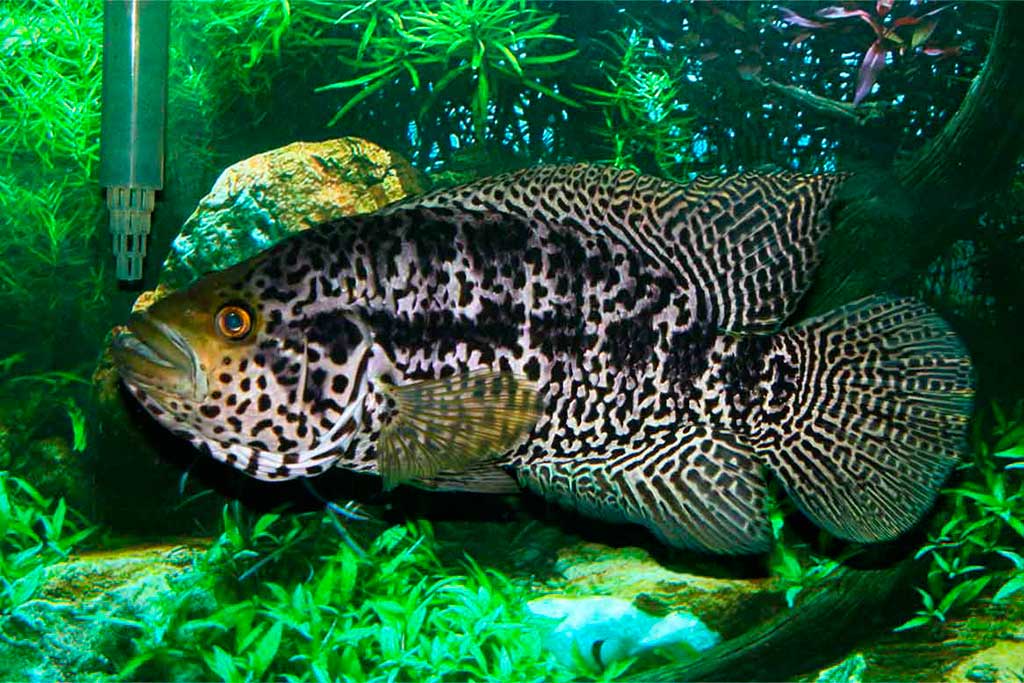
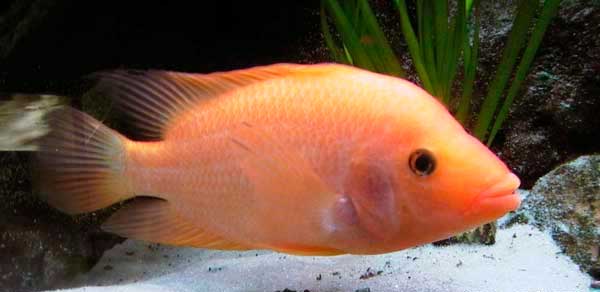
Barbs, convict cichlids, tilapia, discus, and other labyrinth fish also conflict with bettas. Aggressive species may shred betta fins, while bettas may view tiny fish as food rather than companions.
Large snails generally coexist with bettas, but small snails and shrimp often become meals. Some bettas tolerate shrimp, though most see them as prey rather than tankmates.
Managing Multiple Male Bettas
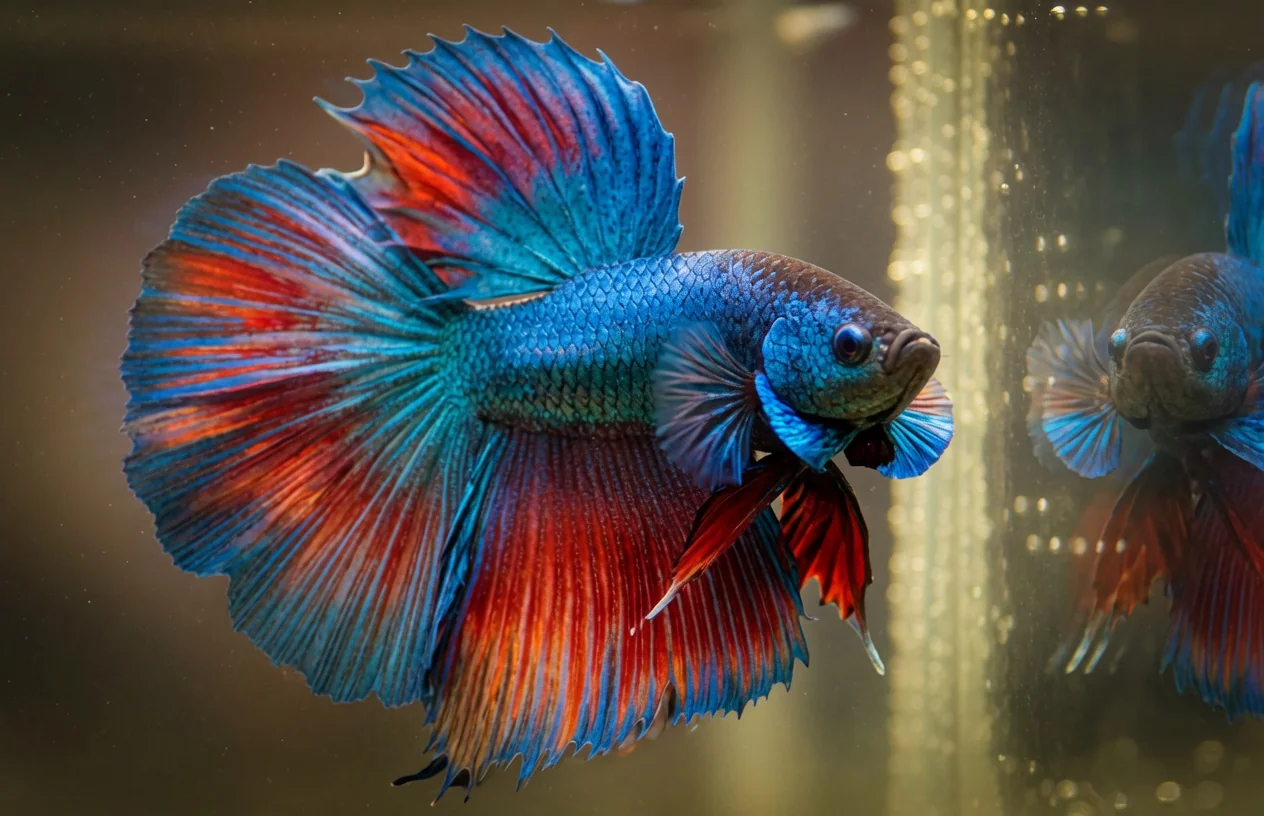
Young males may tolerate each other temporarily, but require separation as they mature. Seeing rivals through glass creates constant stress for both fish. Housing multiple males demands tanks of 100 liters minimum with dense vegetation and numerous hiding spots.
Tank dividers with circulation holes offer a solution for keeping several males in one aquarium. This prevents physical fights while maintaining water flow. However, visual contact through dividers still causes stress, even without direct confrontation.
Recognize aggression through these signs: persistent chasing, fin-nipping attempts, flared gill covers, and intensified coloration. When these behaviors appear, take immediate action: add more cover, reduce population density, or isolate the aggressor.
Keeping Female Bettas Successfully
Female bettas adapt more easily to community settings and can live in groups. Avoid keeping mixed-sex pairs constantly—males will harass single females. Females also establish hierarchies among themselves, though with less violence than males display.
Keeping females without a male risks health problems—unspawned eggs may develop into cysts. The optimal arrangement combines one male with three to four females in a spacious, well-decorated tank.
Select tankmates preferring similar warm water conditions. Ensure all inhabitants receive adequate nutrition to minimize food competition and territorial disputes. Understanding proper betta fish care helps maintain peaceful community dynamics.
Introducing New Tankmates Safely
If a tankmate dies, don’t immediately replace it—a betta accustomed to solitude will likely attack newcomers. Fish that have lived alone view new arrivals as territorial threats. Either maintain the betta alone or completely restart with a group of young fish.
Monitor initial interactions carefully. The first three to five days reveal true compatibility. Constant pursuit, flared gills, and bright coloration signal problematic aggression requiring intervention.
Increase hiding spots before adding new fish. Dense plant growth, wood structures, and caves create visual barriers allowing fish to avoid direct contact. This proves especially critical in smaller tanks where physical distance is limited.
Introduce newcomers during evening hours when lighting is dim. Reduced visibility lowers stress and gives new fish time to acclimate while the betta remains less active. By morning, the community often accepts each other’s presence.
Watch for signs your betta may be unwell during transitions, as stress can trigger betta fish diseases that compromise their ability to coexist peacefully with tankmates.
Creating Lasting Compatibility
Betta fish compatibility with other aquarium species depends on individual temperament, tank size, and thoughtful tankmate selection. I recommend starting with fully compatible species and observing behavior closely during the adjustment period. With proper conditions and careful planning, bettas can thrive as part of diverse aquarium communities, displaying their remarkable colors and fascinating behaviors alongside peaceful companions.