Introduction to Pangasius
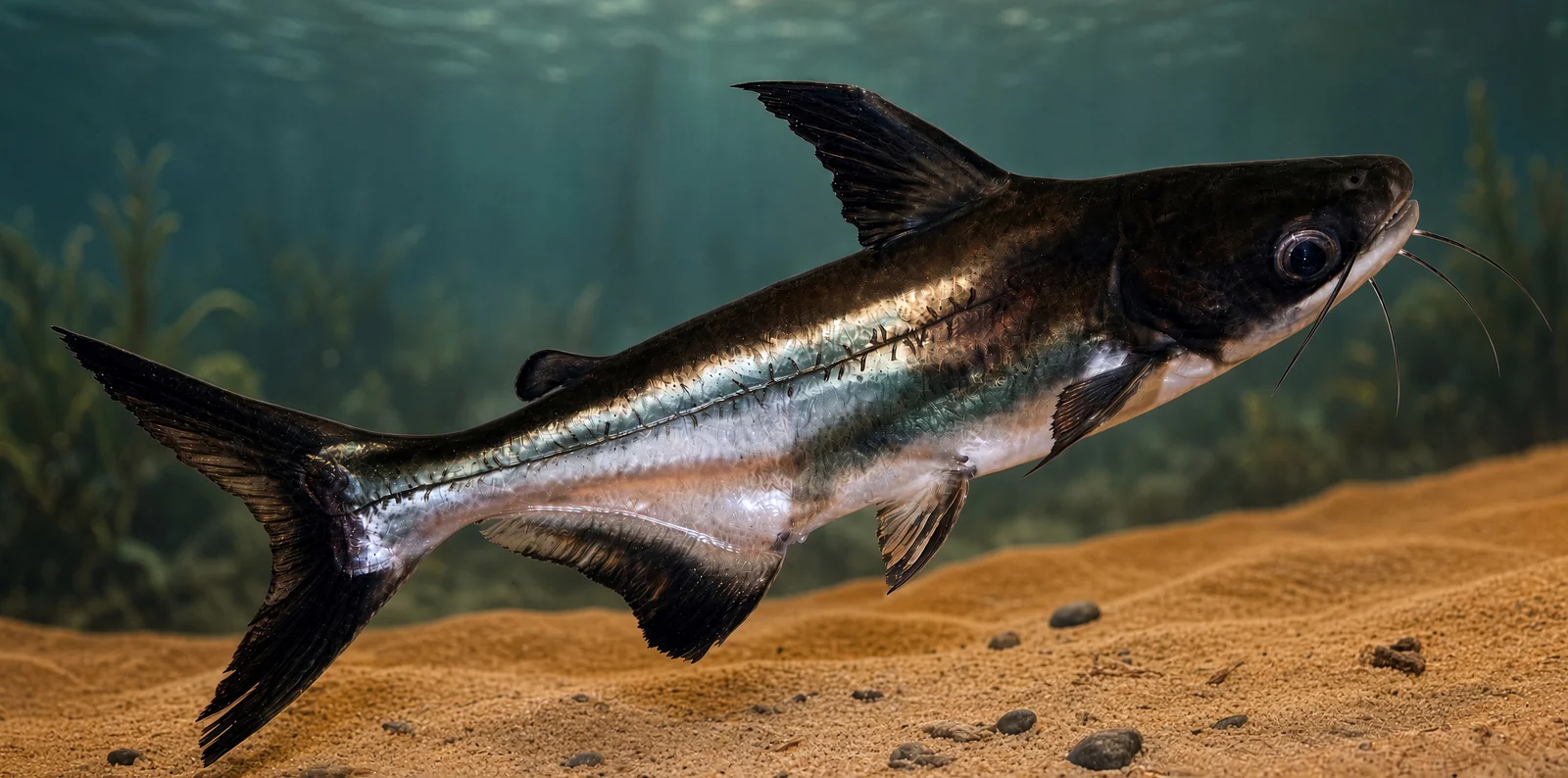
The iridescent shark (Pangasianodon hypophthalmus) earns its common name from its distinctive shark-like silhouette. This ray-finned fish from the pangasiid catfish family captivates aquarists with its streamlined body, tall dorsal fin featuring six branched rays, and large forked tail that genuinely resembles a marine predator. The flattened head with a wide mouth and two pairs of barbels reveal its true catfish nature.
In the wild, pangasius inhabits the Mekong and Chao Phraya river systems flowing through Thailand, Laos, Vietnam, Cambodia, and Myanmar. These rivers support specimens reaching impressive dimensions—up to 130 centimeters in length with weights approaching 44 kilograms. In my experience, the mismatch between the tiny juveniles sold in pet stores and their eventual size creates the primary challenge for aquarium keepers.
Physical Characteristics of Iridescent Sharks
Juvenile specimens display silvery-gray coloration with two characteristic black longitudinal stripes running along the lateral line. This is the typical appearance of fish offered for sale—measuring just 4-10 centimeters. As they mature, the coloration transforms: adult fish develop uniform light gray tones while the stripes gradually fade. Fins are colored dark gray or black.
A critical feature of pangasius is the complete absence of scales or bony plates. The unprotected skin makes these fish extremely vulnerable to injuries and infections. Under aquarium conditions, iridescent sharks typically reach 50-70 centimeters, though individual specimens may achieve lengths exceeding one meter. With proper iridescent shark care, lifespan exceeds 20 years.
Females grow larger and lighter than males, but these differences become apparent only in mature specimens. Young fish prefer schooling behavior and display high activity levels, while adult pangasius may adopt solitary habits.
Tank Requirements for Iridescent Shark Care
Housing an adult iridescent shark requires an aquarium of at least 1500 liters per individual. This isn’t a comfort recommendation but a necessary minimum dictated by the fish’s size and behavior patterns. The tank must be elongated to provide swimming space—pangasius actively patrol the middle and upper water layers.
A secure lid is mandatory. These fish are extremely skittish and nervous, potentially jumping from the water or crashing into tank walls when startled. Arrange decorations compactly, avoiding sharp edges and protruding elements that could injure the fish. Remember that pangasius skin lacks protective covering.
Water parameters should be maintained within these ranges:
- Temperature: 22-28 degrees Celsius
- pH: 6.5-8.0
- Hardness: 2-20 dGH
Powerful filtration and aeration are essential, as large fish create substantial biological loads. Weekly water changes of approximately 30 percent are obligatory procedures. When temperature drops below 22 degrees, iridescent sharks become lethargic and refuse food.
Subdued lighting is recommended—bright illumination can trigger stress and feeding refusal. If the aquarium houses other species requiring stronger light, create shaded zones using floating plants.
Feeding and Diet
In nature, iridescent sharks are omnivorous—consuming algae, plants, zooplankton, insects, fruits, crustaceans, and fish. In aquariums, the diet foundation should consist of protein-rich foods: specialized pellets for large fish, live or frozen fish, shrimp, and worms.
Adult specimens readily accept plant matter—lettuce leaves, zucchini, cucumber, spinach. An important consideration: pangasius catches food only in the water column, ignoring items at the surface or bottom. Therefore, food must sink slowly or remain suspended.
These fish are voracious and prone to overfeeding, which can lead to health complications. I recommend implementing fasting days once weekly—this helps maintain normal digestion. Feed smaller portions twice daily rather than large quantities at once.
Compatibility with Other Fish
Iridescent sharks can coexist with large fish of comparable size—cichlids, large barbs, bichirs. Small fish are perceived as food and may be consumed. This means cohabitation with swordtails, bettas, or goldfish is excluded—they become prey for growing catfish.
When selecting tankmates, consider not only size but temperament. Aggressive species may injure the unprotected pangasius skin. Conversely, excessively peaceful fish will experience stress from the large catfish’s active swimming patterns.

Breeding in Aquariums
Reproducing pangasius under aquarium conditions is virtually impossible and hasn’t been reliably documented. In nature, spawning occurs from June through November, when fish undertake extensive migrations covering hundreds of kilometers between spawning grounds and feeding areas. Females deposit eggs among vegetation.
Successful reproduction requires conditions impossible to recreate in home aquariums: massive water volumes, current, seasonal environmental parameter changes. All pangasius available commercially are farm-raised in Southeast Asia, where this species represents an important commercial fishery.
Practical Iridescent Shark Care Tips
Before purchasing an iridescent shark, honestly assess your capabilities. A finger-sized juvenile transforms into a 30-40 centimeter fish within a year, potentially reaching half a meter the following year. Consider whether you can provide appropriate housing throughout the fish’s growth stages.
When introducing young pangasius to a new aquarium, do so in groups of 3-5 individuals—fish feel more confident and less anxious in company. During initial days, dim the lighting and provide hiding spots.
Regularly inspect fish for skin damage. Due to absent protective covering, even minor scratches can become infection gateways. Upon discovering injuries, immediately improve water quality and apply antiseptic treatments if necessary.
Remember that skittishness is an inherent pangasius trait. Avoid sudden movements near the tank, loud noises, and abrupt light activation. Over time fish acclimate to their environment and become calmer, but complete elimination of nervousness won’t occur.
Conclusion
The iridescent shark is an impressive aquarium species demanding serious preparation and responsible commitment. Proper iridescent shark care suits experienced aquarists prepared to provide large water volumes, quality equipment, and appropriate nutrition. When all conditions are met, pangasius will enjoy a long life and become a genuine aquarium centerpiece, but acquiring one as an “interesting beginner fish” represents a serious mistake that creates problems for both keeper and fish.