Origin and Physical Characteristics
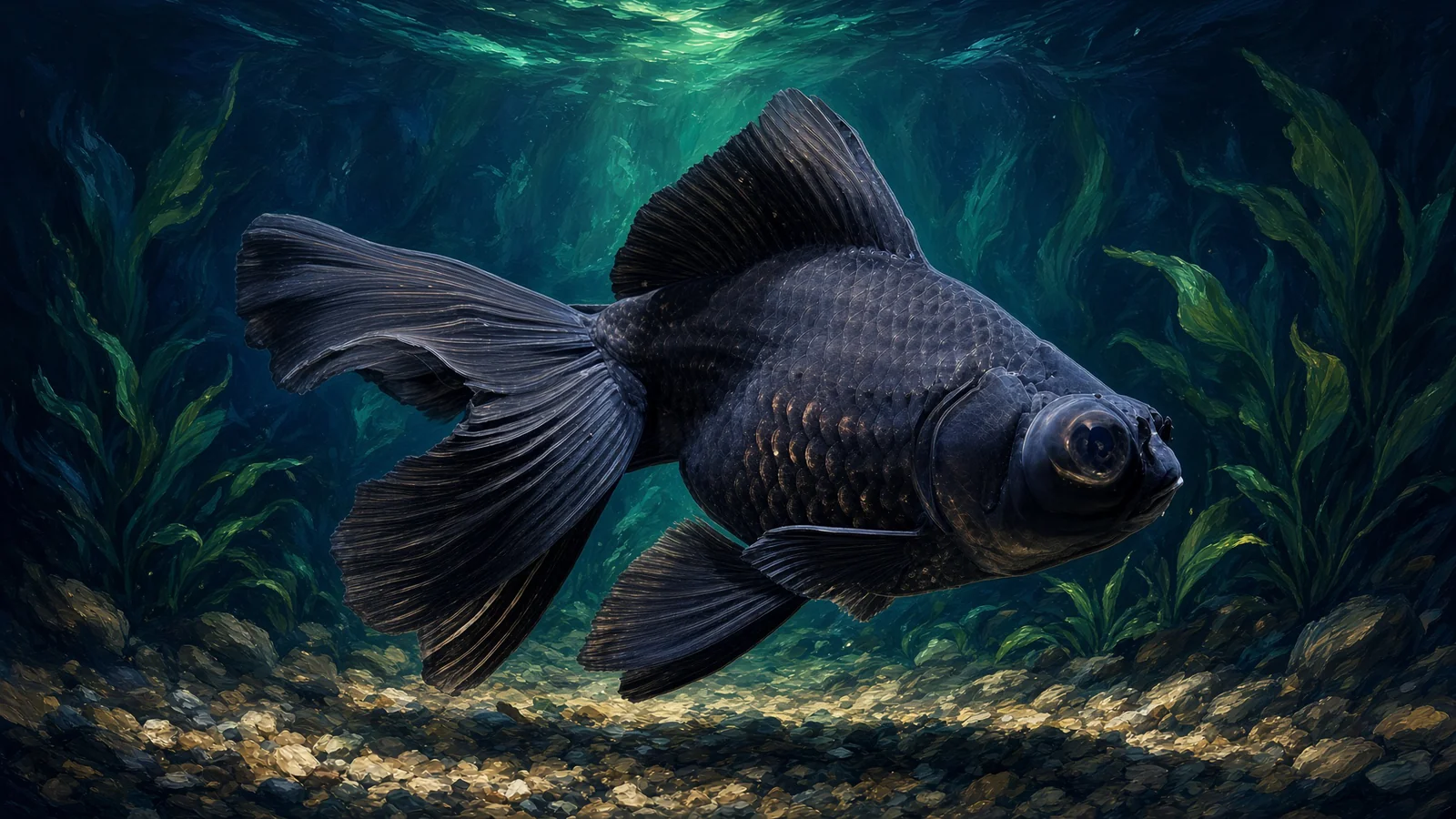
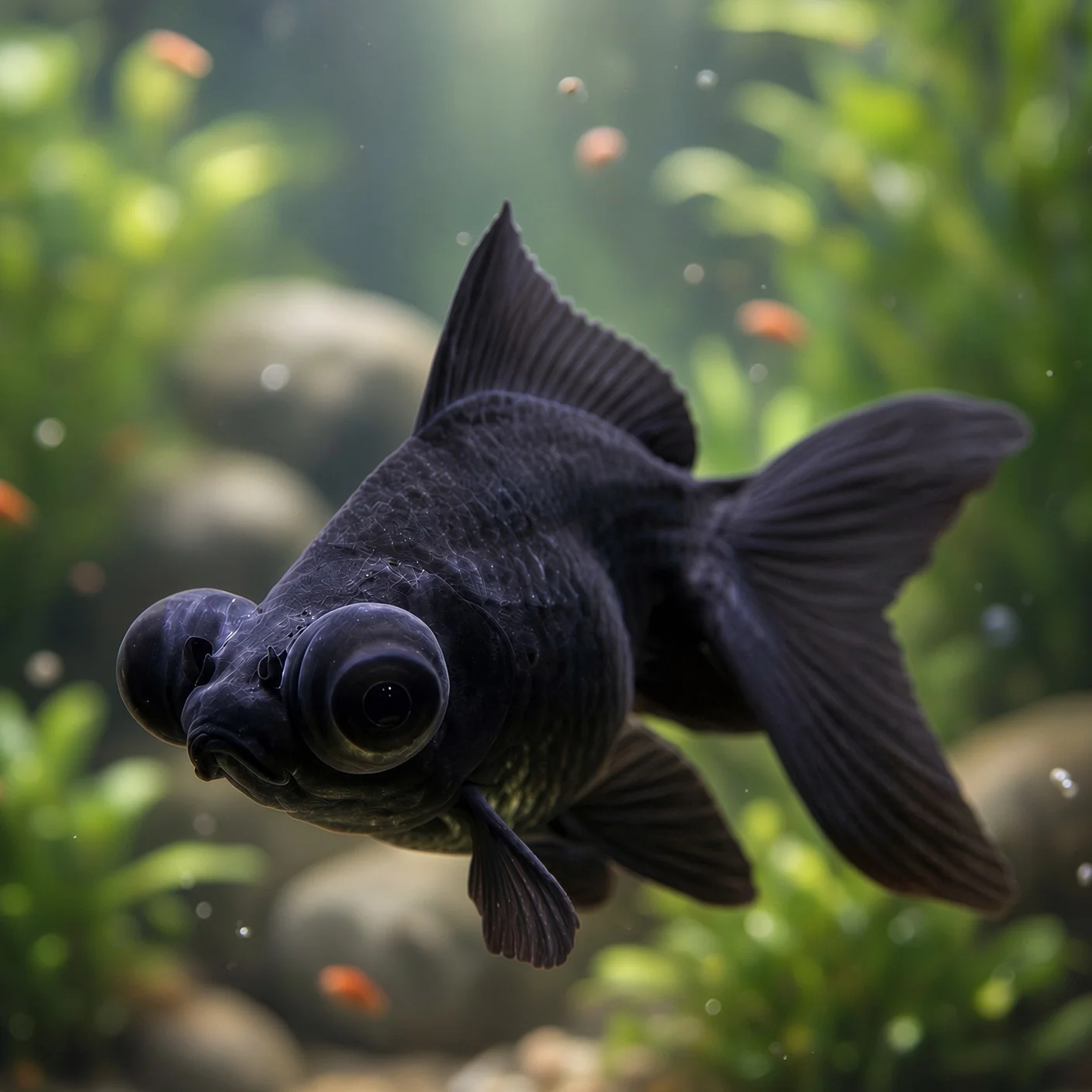
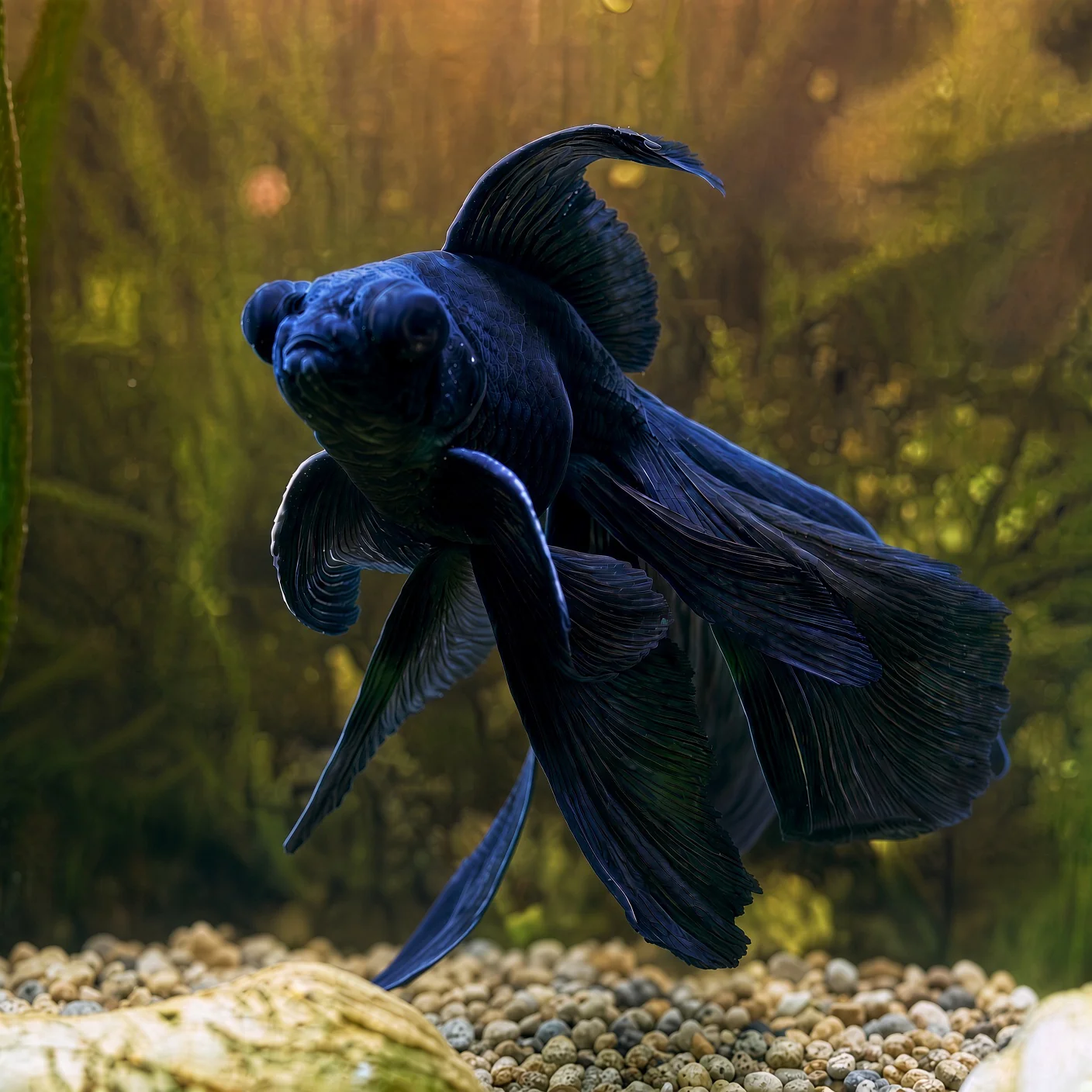
The black moor is an artificially bred fancy goldfish variety distinguished by its velvety coloration and unusual appearance. The breed’s most striking feature is its large, protruding eyes mounted on conical stalks on either side of the head. Eye diameter typically reaches 2–3 cm, though some Shanghai specimens develop eyes up to 5 cm across. Eye shapes vary from spherical to cylindrical, conical, or plate-like.
The body is short, egg-shaped or rounded, with a noticeably rounded belly. Fins are long, with both anal and caudal fins being bifurcated. The coloration is velvety black with metallic sheen, though the belly may show diluted blue-gray or faint golden tones. Adult specimens reach 15–20 cm in aquarium conditions.
This variety was developed in China during the 17th century, later reaching Japan where it became known as “demekin.” Black moors arrived in Europe in 1872, appearing in Russia the same year. In the late 19th century, Moscow aquarist Kozlov developed a black velvet variety with elongated fins that gained worldwide recognition as the “Moscow black moor.” In 1941, Moscow hobbyist Andrianov bred a variety with ruby-red eyes.
Color Development and Variations
Juvenile fish display dark bronze coloring that transitions to deep black as they mature. Fry under 4–6 months show no eye protrusion; the characteristic bulging develops only with age. This is normal development that shouldn’t concern beginning aquarists.
Adult fish may lose black pigmentation and turn gray or copper-colored when kept in excessively warm water or in old age. Color intensity depends on water quality, substrate, lighting brightness, and diet. In my experience, intense lighting improves pigmentation, making fish more vibrant. Fluorescent lighting at 0.5 W/L is recommended.
Black moor varieties exist based on tail fin shape: butterfly (resembles a butterfly when viewed from above), veiltail, and ribbon-tail. Telescopes with symmetrical black-and-white coloration are called pandas.
Black Moor Tank Requirements
Minimum tank volume for a single specimen is 40–50 liters, with 60–100 liters recommended for a pair. Round bowls are unsuitable for black moors; standard rectangular tanks work best.
Comfortable water temperature ranges from 18–25°C. Black moors are considered more warm-loving among goldfish varieties, with optimal temperature around 25°C. Excessively high temperatures (26–28°C) accelerate aging. Water hardness should be 5–19 dGH, pH 5.0–8.0. Fish cannot tolerate sharp temperature fluctuations, living comfortably at room temperature without additional heating.
Goldfish require clean, oxygen-rich water. Strong aeration and filtration are necessary, as these fish create substantial biological load. Frequent water changes are required—weekly replacements of 1/4 to 1/3 tank volume. Sensitive to oxygen deficiency, they need a compressor for additional water oxygenation.
Fish enjoy digging in substrate, stirring up debris, so powerful filtration with capacity of at least three tank volumes per hour is essential. Large-grain substrate is preferable, as fish dig constantly and may swallow small pebbles.
Tank Decoration and Safety Measures
Decorations must lack sharp edges and protruding elements that could damage delicate eyes. Driftwood, caves, and similar decorations are not recommended due to eye and fin injury risk. Caution is needed when netting fish, as eyes damage easily; fine-mesh nets are recommended.
Preference should go to aquarium plants with hard leaves, otherwise goldfish will nibble them. Duckweed, riccia, and wolffia form part of goldfish diet and can serve as supplemental food.
Feeding and Diet
Black moors are omnivorous, consuming live, frozen, and artificial foods. Feed 2–3 times daily in small portions that fish consume within 2–5 minutes. Food mass shouldn’t exceed 3% of fish body weight. Diet should contain more carbohydrates than proteins.
Offer brine shrimp, bloodworms, daphnia, tubifex, plus plant matter—lettuce, spinach, cabbage leaves (pre-scalded). Soak dry food before feeding: flakes for 10 seconds, pellets up to 30 seconds.
Avoid overfeeding—if fish floats belly-up after eating, this indicates systematic overfeeding. Due to poor vision, black moors don’t always notice food and may remain hungry, requiring more feeding time.
Compatibility with Other Fish
Black moors are peaceful, calm, and rather clumsy fish. Group keeping of 4+ specimens is recommended, as they’re schooling. Unsuitable tankmates include active and aggressive species—barbs, cichlids, gouramis, neon tetras. Better to keep black moors separately or with other fancy goldfish—veiltails, celestial eye goldfish, bubble eyes, ranchu.
Due to sluggishness and poor vision, black moors may go without food when housed with more active fish like swordtails or bettas. Sucker-mouth fish (Chinese algae eaters, bristlenose plecos, common plecos) may attach to black moors and aren’t recommended as tankmates.
Health and Common Diseases
Black moors have weak vision despite large eyes. Eyes are highly vulnerable and easily damaged, potentially leading to blindness or infections. Mechanical eye damage is the most common problem. One-eyed black moors are frequently encountered.
Fish are prone to intestinal diseases and gill rot. Fungal infections (saprolegniasis) rank among the most frequent problems, manifesting as white cotton-like growth. The main care priorities are proper feeding and absence of nitrogenous compounds (ammonia, nitrites, nitrates) in the aquarium.
Lifespan with proper care reaches 10–15 years, occasionally exceeding 20 years. The black moor is considered one of the hardiest and most popular goldfish breeds. Can live in aquariums or decorative ponds in warm climates.
Black Moor Breeding
Goldfish reach sexual maturity around one year, becoming breeding-ready after two years. Males ready for spawning develop small white bumps (tubercles) on gill covers resembling semolina grains. Males are slimmer than females, with serrated pectoral fins and pearl-like rash on gill covers during breeding season.
Spawning stimulus involves temperature increase of 3–5 degrees and water change. Breeding requires a spawning tank of 50+ liters for fancy goldfish. Place 2–3 males per female for spawning. Fecundity ranges from 2,000 to 10,000 eggs. Eggs measure up to 1 mm, semi-transparent, slightly yellowish.
Goldfish consume their own eggs, so remove parents after spawning. Incubation lasts approximately 48 hours, with larvae hatching and beginning to swim within 4–7 days at 20–26°C. Starter food for fry includes infusoria, rotifers, and brine shrimp nauplii.
Fry initially appear dark brown or black, acquiring adult coloration after several months. Protruding eyes are a stable trait, typically preserved when crossbreeding with other goldfish.
Practical Care Recommendations
I recommend beginning aquarists pay special attention to several key aspects of black moor care. First, don’t economize on tank volume—more space means greater fish comfort and more stable water parameters. Second, regularly check eye condition, as any cloudiness or redness may signal infection.
Pay particular attention to water quality. Install reliable filtration and don’t neglect weekly water changes. Overfeeding is a common mistake leading to digestive problems and water pollution. Better to underfeed than overfeed.
When selecting tankmates for black moors, focus on peaceful fish with similar water requirements. The ideal option is a species tank with several black moors or other fancy goldfish such as wakin or comet goldfish.
The black moor is a striking and relatively undemanding fish that, with proper care, will grace your aquarium for many years. Its unusual appearance and calm temperament make this breed a popular choice for both experienced aquarists and beginners willing to provide necessary care conditions.