Introduction
The cuckoo catfish is one of the most fascinating members of the featherfin catfish family. This species earned its common name from a remarkable reproductive strategy that mirrors the brood parasitism of cuckoo birds. In the wild, these fish are found exclusively in Lake Tanganyika in East Africa, where they’ve evolved alongside mouthbrooding cichlids.
With their striking spotted pattern, daytime activity, and intriguing behavior, cuckoo catfish make an appealing choice for aquarium enthusiasts. When properly cared for, these fish can live 10 to 15 years, becoming a centerpiece of your home aquarium.
Physical Characteristics of Cuckoo Catfish
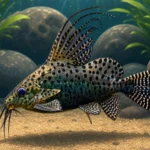
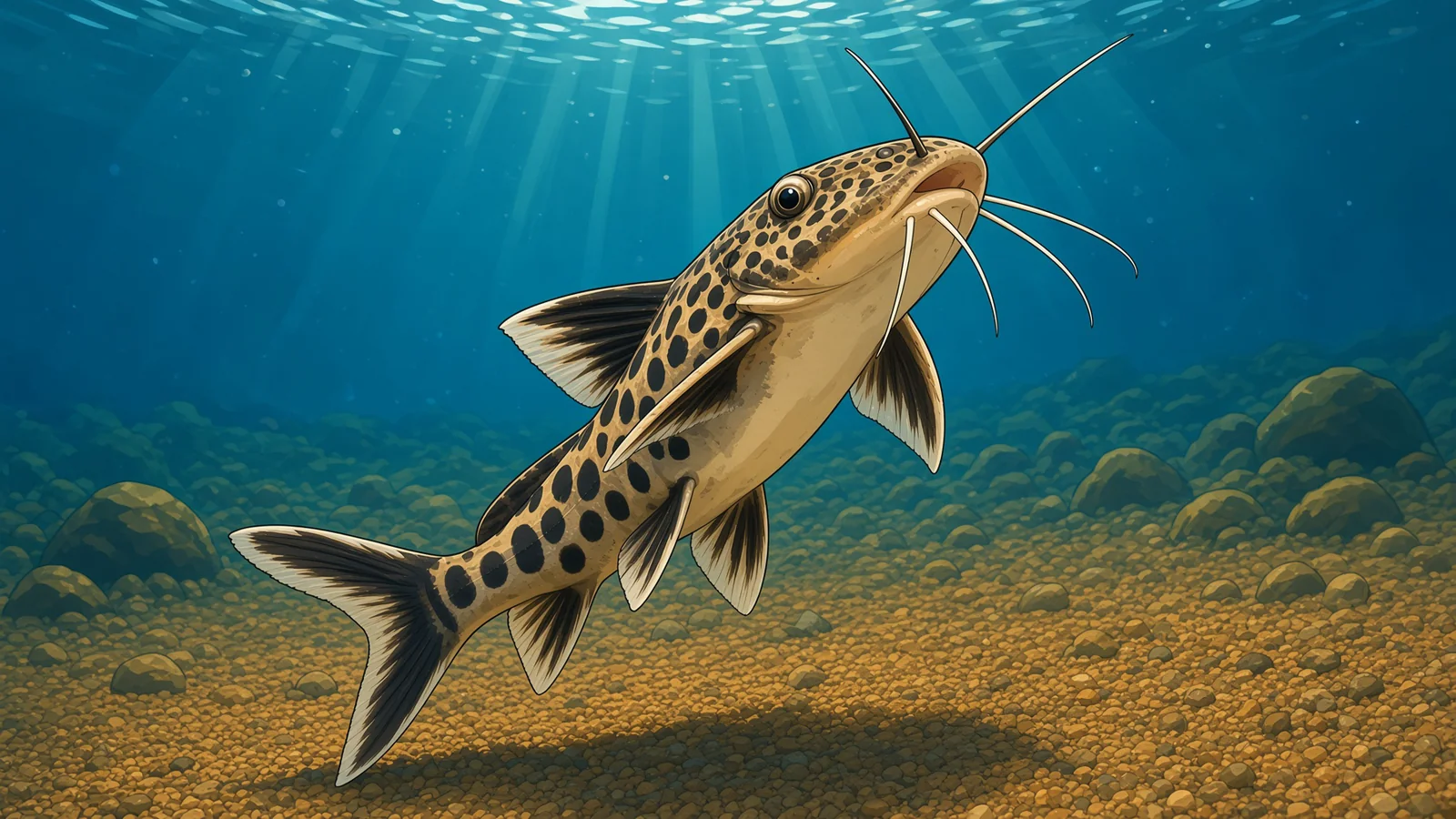
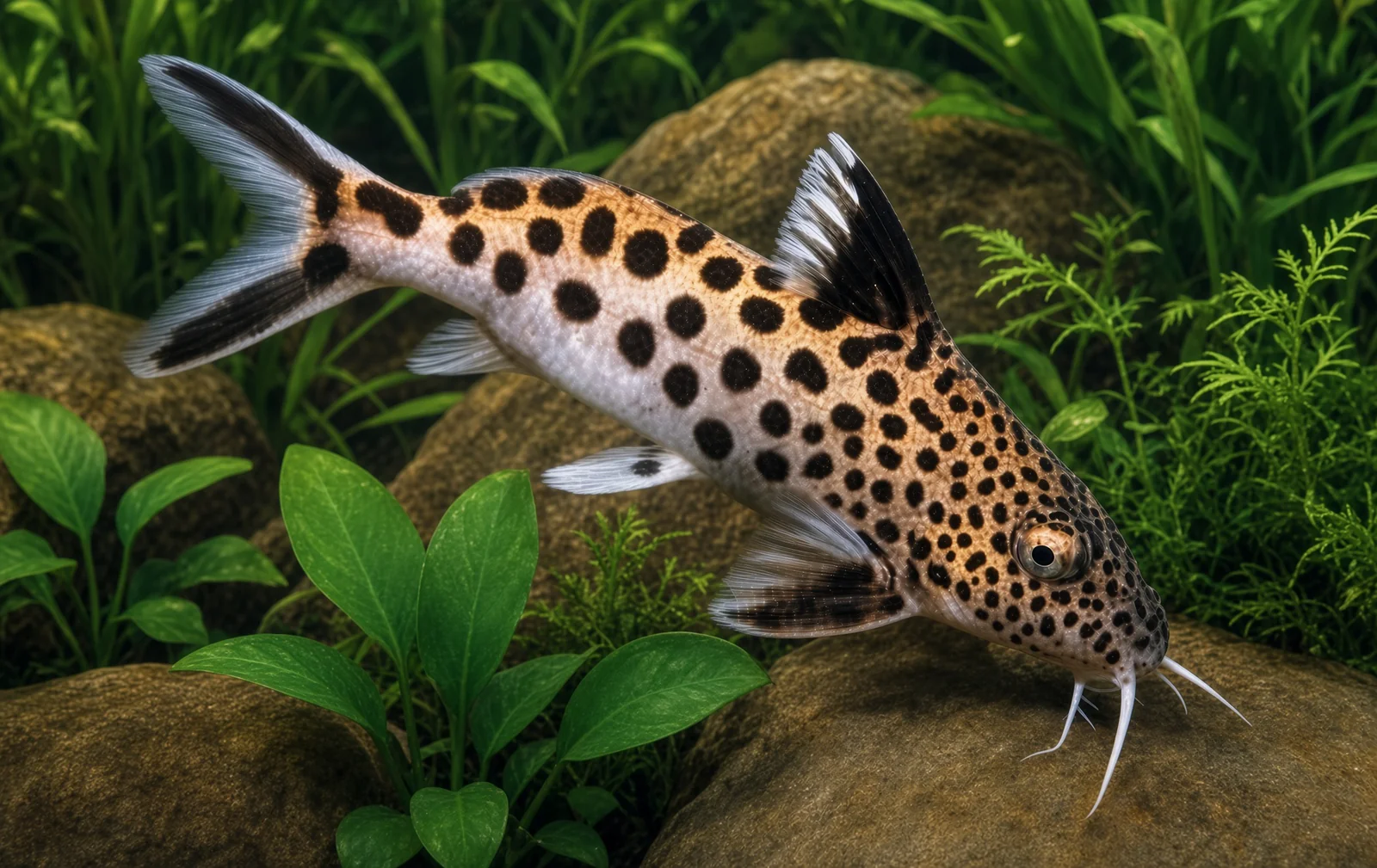
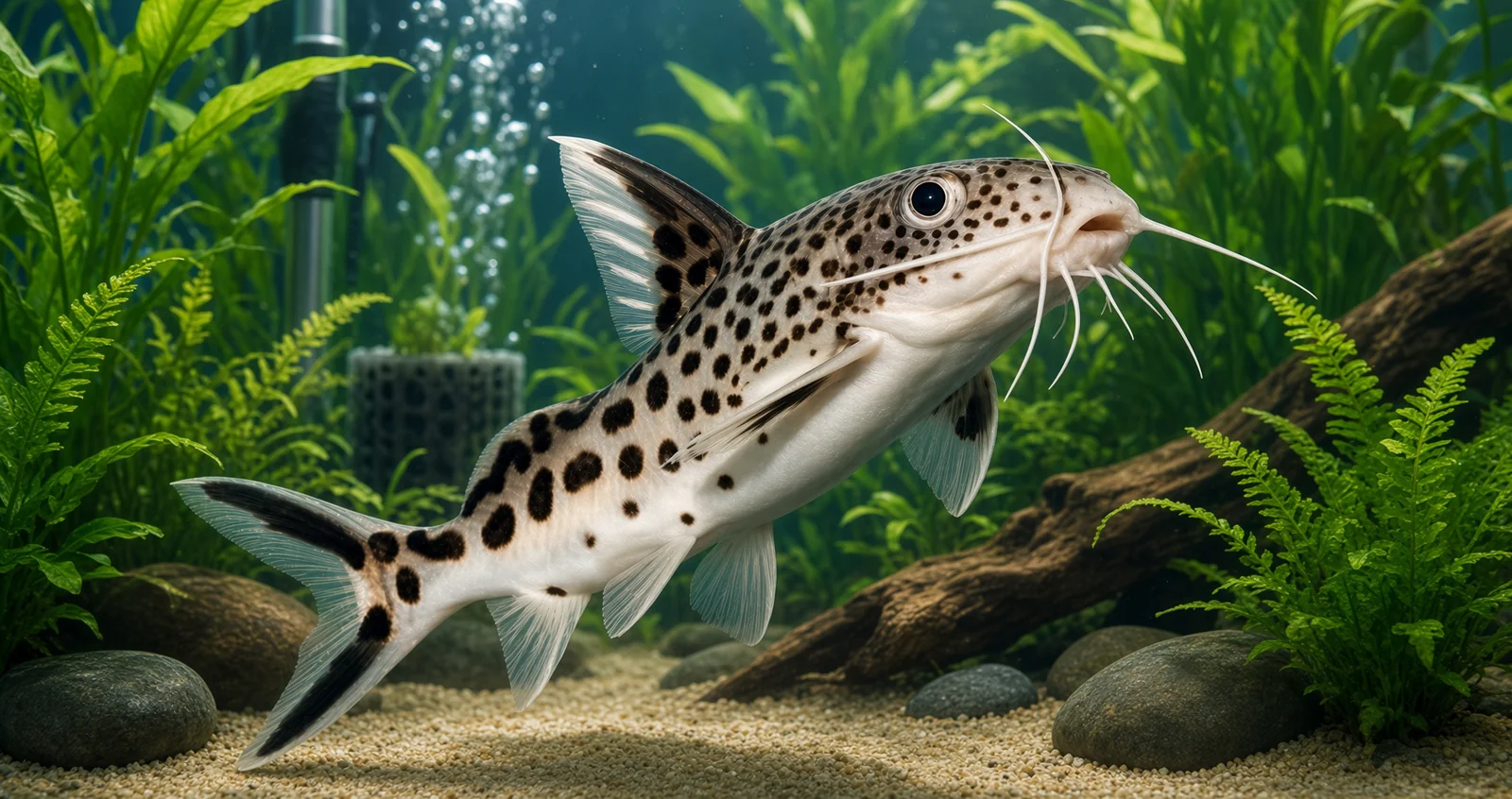
The body displays a light yellow base color covered with numerous black spots distributed across the entire surface except the belly. This contrasting pattern helps the fish blend in among the rocky substrates and sandy areas of Lake Tanganyika.
One distinctive feature is the large eyes, which can comprise up to 60 percent of the head size. This trait distinguishes the cuckoo catfish from its close relative, Synodontis petricola. The inferior mouth is equipped with three pairs of barbels that help the fish locate food along the bottom.
In nature, these catfish reach a maximum length of around 20 centimeters, though aquarium specimens typically grow to 12-15 centimeters. This manageable size makes them suitable for medium-sized home aquariums.
Tank Setup and Water Requirements
For comfortable cuckoo catfish care, you’ll need an aquarium of at least 80 to 100 liters. In my experience, keeping these fish in groups of 4-6 individuals works best—solitary specimens often hide and show less activity.
Water parameters should replicate the natural conditions of Lake Tanganyika:
- Temperature: 23-28°C (73-82°F)
- Hardness: 10-25 dGH
- pH: 7.0-8.5
Robust filtration and aeration are essential, as cuckoo catfish are sensitive to water quality. Weekly water changes of 20-25 percent help maintain optimal conditions.
The aquarium should feature plenty of hiding spots created with rocks, caves, and driftwood. Choose a coarse substrate without sharp edges to prevent injury when the fish dig. Adult specimens may root through substrate and uproot plants while foraging, so select species with strong root systems or plant them in pots.
Lighting should be moderate—bright light causes these fish to remain hidden constantly. Unlike many other Synodontis species, cuckoo catfish are more active during daylight hours, allowing you to observe their behavior.
Feeding Your Cuckoo Catfish
In the wild, these catfish feed on insects and snails. In captivity, they readily accept diverse foods: live, frozen, and dry foods formulated for bottom-dwelling fish.
Supplementing the diet with vegetable matter is beneficial—blanched zucchini, cucumber, or specialized tablets with plant components work well. Varied nutrition ensures vibrant coloration and robust health.
Feed once or twice daily in small portions. Since they’re bottom dwellers, food should sink to where they can easily locate it.
Compatibility with Tank Mates
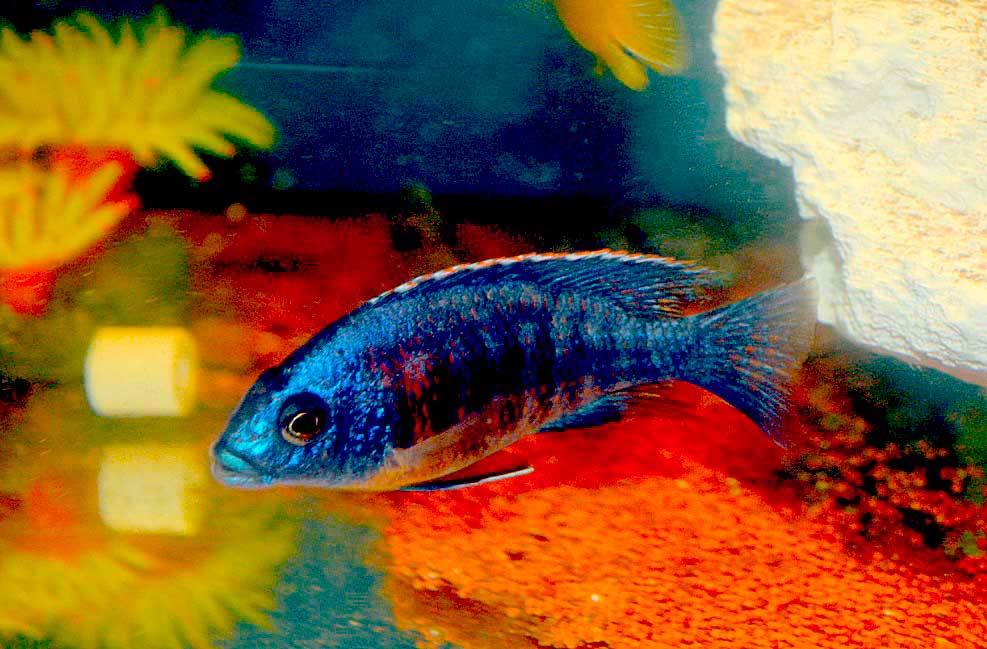
Cuckoo catfish are compatible with larger fish, particularly African cichlids. This pairing mirrors their natural habitat, where these species coexist in Lake Tanganyika. Small fish may be consumed, especially at night, so avoid housing them with species like swordtails or betta fish.
Adult specimens can be territorial, and intraspecific aggression may occur. To minimize conflicts, provide ample hiding places and swimming space.
Breeding Behavior of Cuckoo Catfish
The most remarkable aspect of this species is its unique reproductive strategy known as brood parasitism. Cuckoo catfish deposit their eggs with mouthbrooding cichlids.
Sexual maturity occurs at approximately 2 years of age. Males monitor cichlid behavior and synchronize their spawning. During egg-laying, the catfish spawn simultaneously with cichlids and consume some of the cichlid eggs. Females produce a modest number of eggs—around 30 per spawning event.
Cuckoo catfish eggs develop faster than cichlid eggs, with an incubation period of about 3 days. The fry hatch before cichlid fry and feed on them while protected inside the host fish’s mouth.
Successful aquarium breeding requires the presence of suitable cichlid hosts. Compatible hosts include cichlids from Lakes Tanganyika, Malawi, and even Victoria. Under appropriate conditions, cuckoo catfish frequently breed in aquariums.
Practical Care Tips
- Choosing Tank Mates: Select fish of similar size and temperament. African cichlids make ideal companions.
- Shelter: More hiding spots result in calmer behavior. Use rocks, caves, and driftwood.
- Water Quality: Regularly test water parameters and maintain the weekly water change schedule.
- Lighting: Install a dimmer or use floating plants to create shaded areas.
- Observation: Monitor fish behavior—activity and appetite are primary health indicators.
Conclusion
I recommend cuckoo catfish for aquarists interested in African species who are prepared to recreate natural conditions. This fish is not only attractive but also displays fascinating behavior, particularly during breeding. With proper care, the cuckoo catfish will become a long-lived resident of your aquarium and provide countless hours of interesting observations.