Introduction
Aquarium catfish are among the most popular inhabitants of home tanks, and for good reason. These bottom-dwelling workers not only help maintain cleanliness by scavenging leftover food and cleaning algae from surfaces, but also delight with their variety of shapes and behaviors. In my experience, properly selected catfish become a true aquarium centerpiece while remaining undemanding pets even for beginner aquarists.
In nature, catfish inhabit freshwater environments across nearly all continents except Antarctica. Science recognizes approximately two thousand species of these fish, with several dozen suitable for aquarium keeping. All share a distinctive feature that sets them apart from other fish—the absence of scales. Aquarium catfish bodies are covered either with bony plates or thick skin. Another characteristic trait is the presence of barbels around the mouth (one to four pairs), which serve as tactile organs and help locate food on the substrate.
Popular Types of Aquarium Catfish
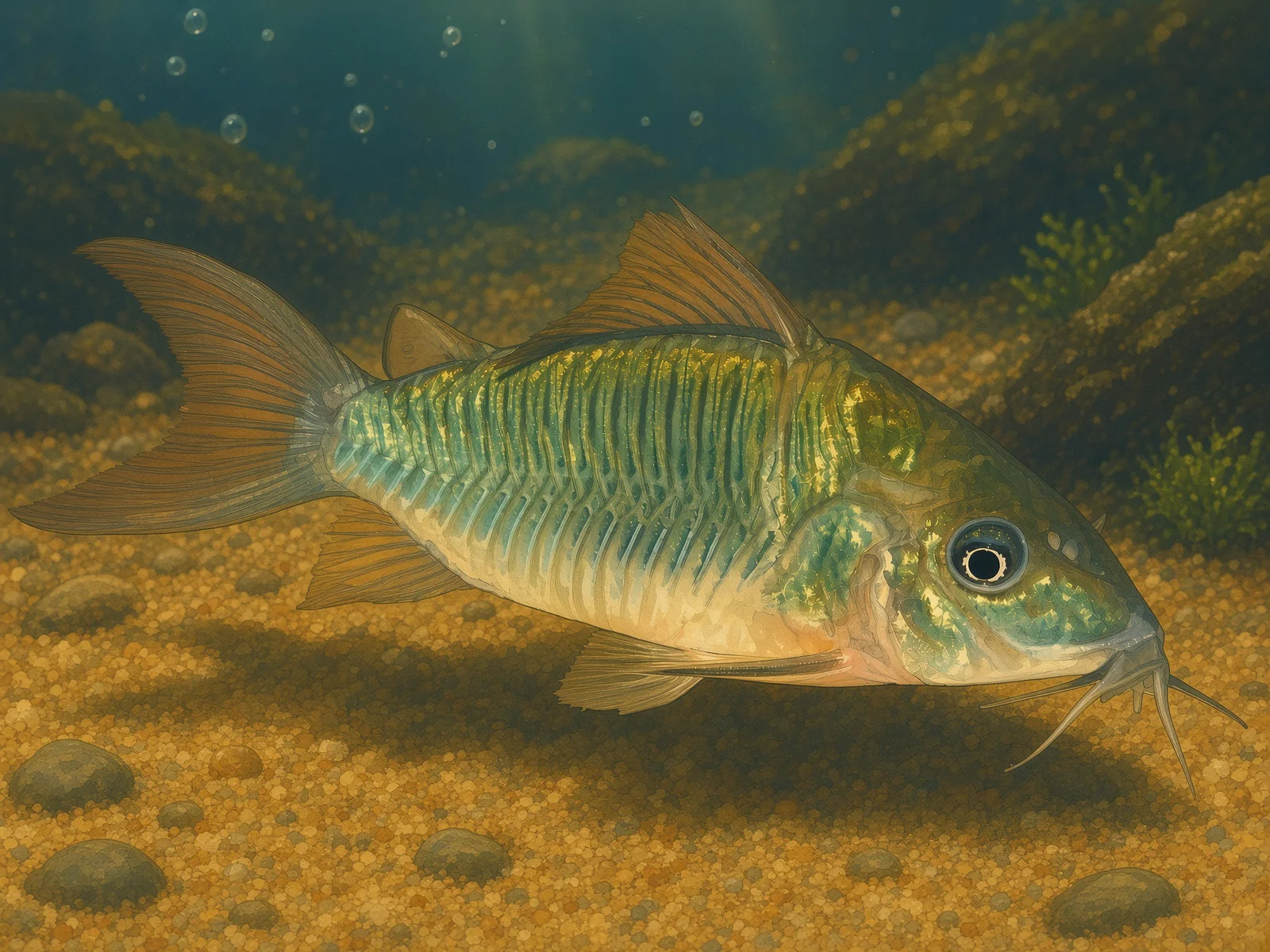
Corydoras — Armored Cleaners
Corydoras are among the most popular representatives of the armored catfish family. The name derives from Greek words meaning “helmet” and “armor,” accurately reflecting their appearance: the body is covered with several rows of overlapping bony plates forming genuine armor. They have three pairs of barbels around the mouth—two above the upper jaw and one on the lower.
The Corydoras family includes over 200 species, varying in coloration and size. These are schooling fish best kept in groups of 5-6 individuals. A small school requires a tank of at least 50 liters. Corydoras are peaceful and coexist excellently with swordtails, danios, neons, tetras, and other non-aggressive species.
With proper care, these catfish live 6-10 years. An important characteristic: they periodically surface to gulp atmospheric air—this is normal behavior due to supplementary intestinal respiration.
Bristlenose Plecos — Sucker Cleaners
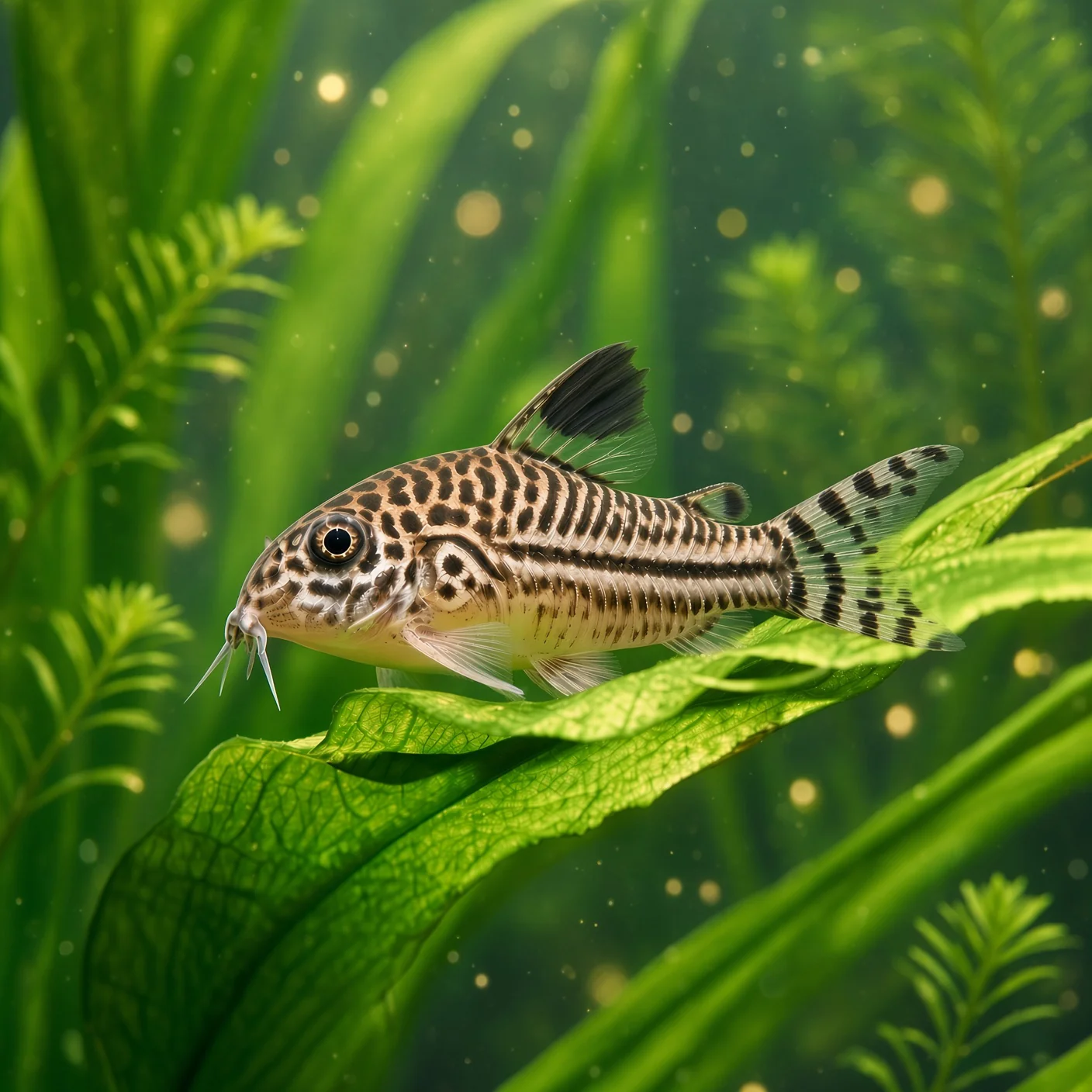
Bristlenose plecos, or suckermouth catfish, belong to the armored catfish family and are especially valued for their ability to clean tank walls and decorations from algae growth. Their mouth is structured like a sucker with horn-like scrapers, allowing them to scrape algae from any surface.
Bristlenose plecos rarely exceed 15 cm in size. A distinctive feature of sexually mature males is numerous fleshy growths on the head called tentacles. Females lack these, making sex identification straightforward.
For keeping bristlenose plecos, a tank of at least 50 liters is recommended. These catfish prefer soft and slightly acidic water (pH 6.0-7.0) but adapt well to a wide parameter range. Natural driftwood in the aquarium is desirable, serving as a cellulose source for digestion. Bristlenose plecos are crepuscular fish, becoming active after lights-out. With proper care, they live approximately 6-8 years.
Otocinclus — Miniature Helpers
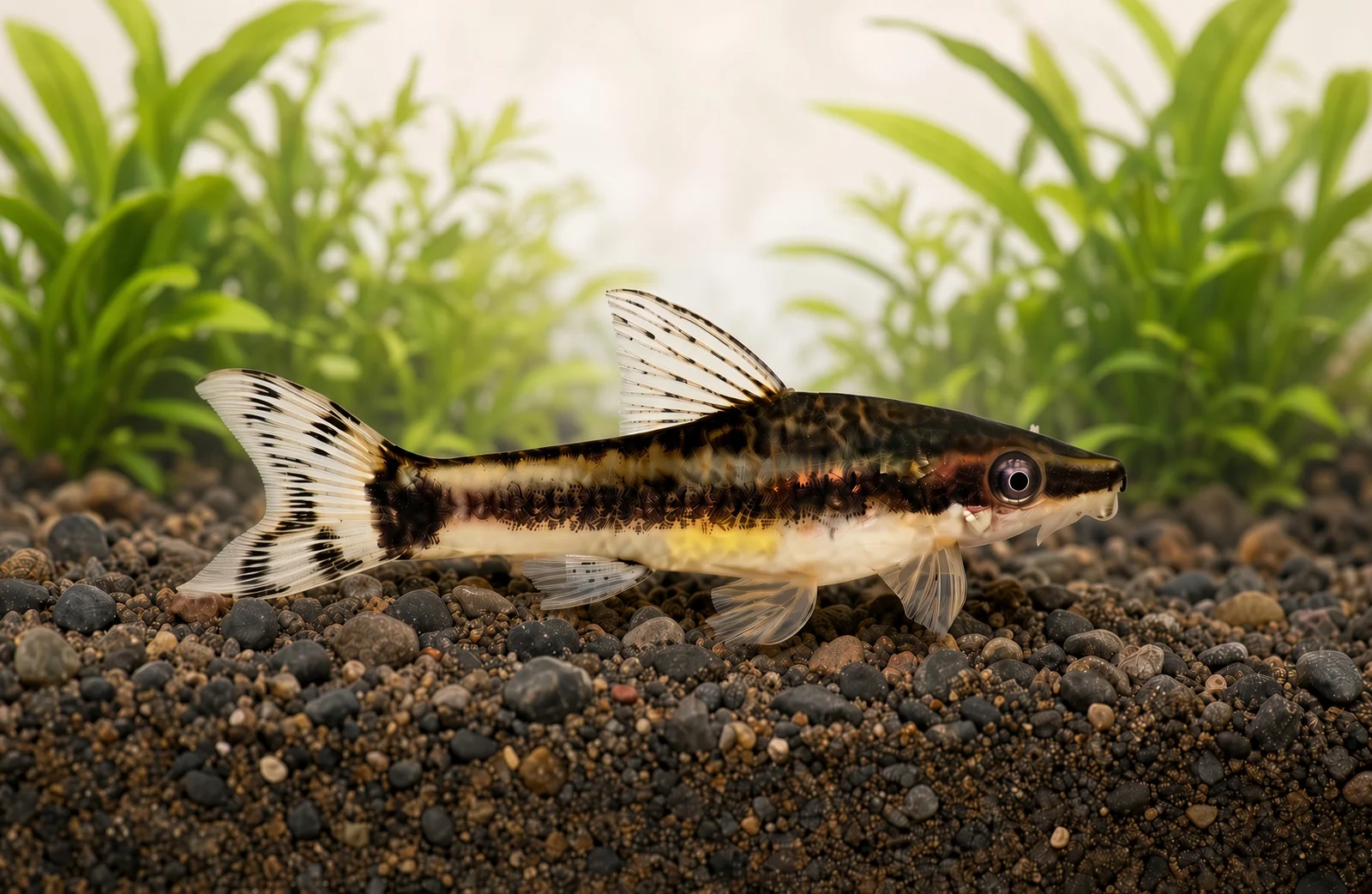
Otocinclus are miniature catfish measuring just 3-5 cm, ideally suited for small tanks and nano-systems. They diligently clean plant leaves and decorations without damaging them, making them indispensable helpers in planted tanks.
Due to their modest size, otocinclus are compatible even with shrimp and small fish. They’re best kept in small groups in tanks from 30 liters. These catfish are peaceful and active during daylight hours, unlike most of their relatives.
Other Interesting Species
Hoplosternum thoracatum are peaceful catfish reaching up to 12 cm, distinguished by increased activity. A remarkable feature: they build bubble nests for spawning, which is uncharacteristic for catfish.
Glass catfish attract attention with complete absence of pigmentation—internal organs and skeleton are visible through the transparent body. They should be kept in schools in tanks from 100 liters.
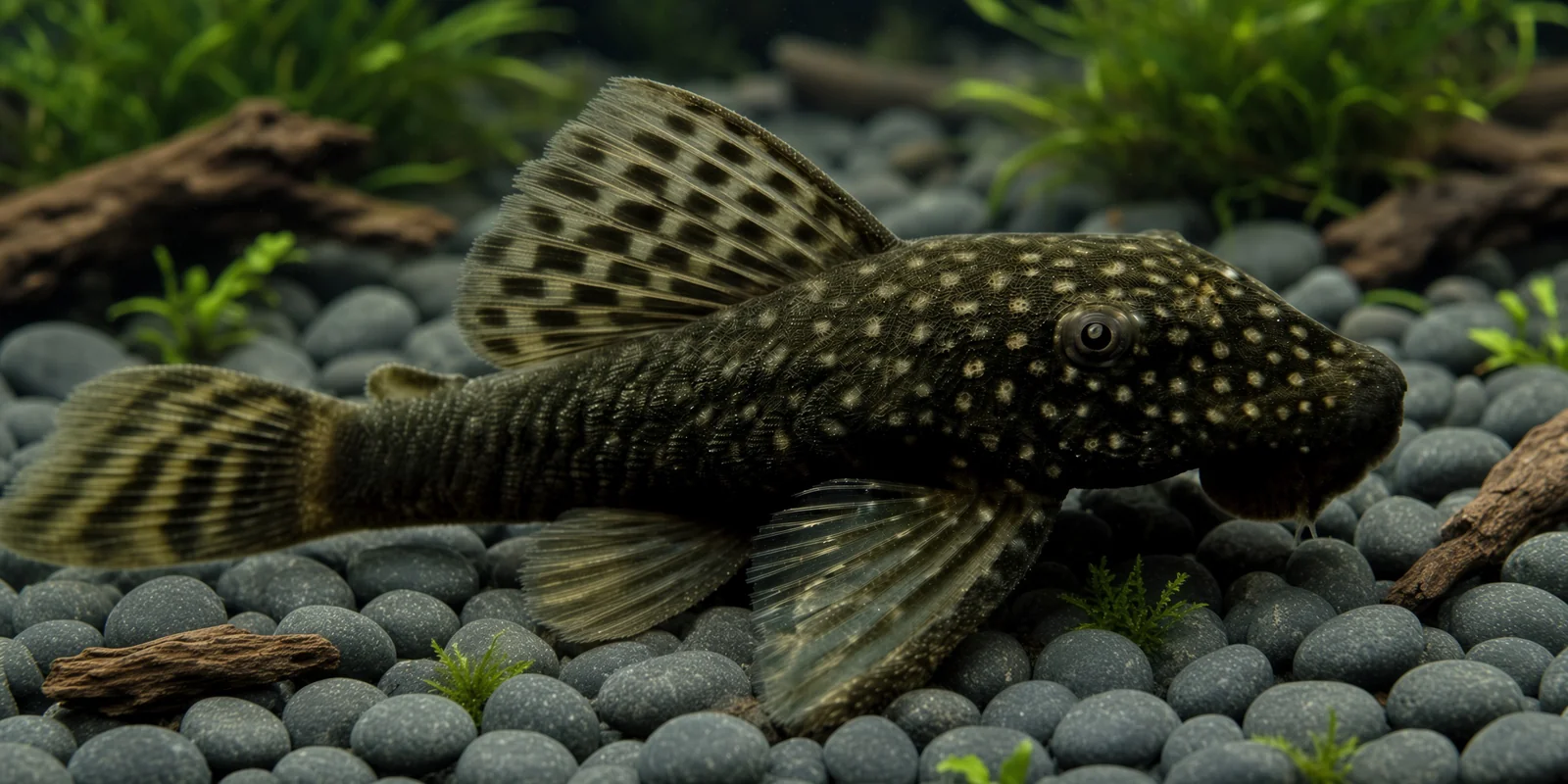
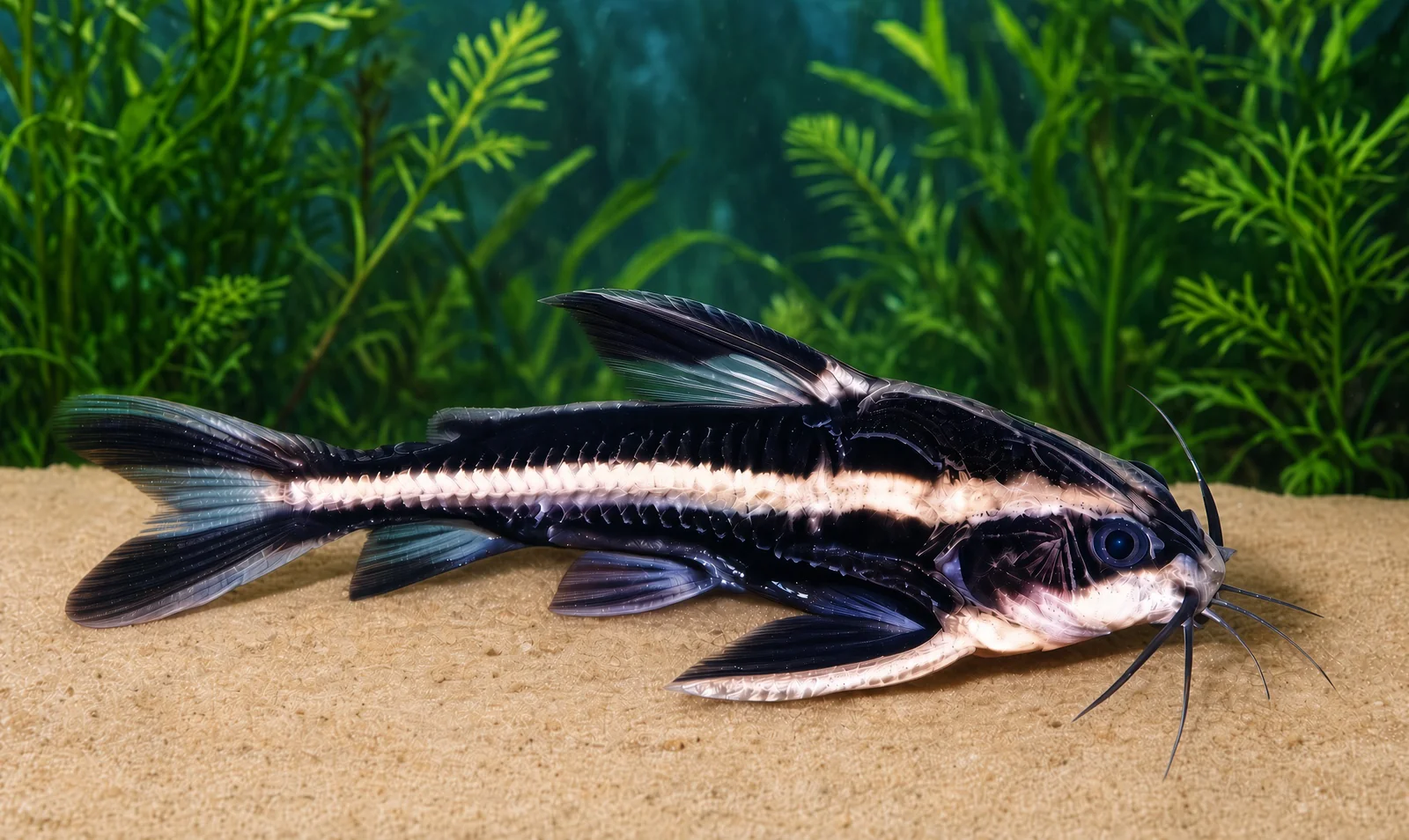
Raphael catfish are striped catfish from the thorny catfish family, capable of producing sounds resembling drumming. With good care, they can live up to 15 years.
Whiptail catfish have thin, highly elongated reddish-brown bodies up to 12 cm long and also belong to suckermouth catfish.
Housing Conditions for Aquarium Catfish
Tank and Equipment Requirements
Most catfish are undemanding and adapt well to various conditions, but basic requirements exist. For small species (otocinclus, small corydoras), a tank from 30-50 liters suffices; for medium species (bristlenose plecos, thoracatum), 50-80 liters; large species require 200-300 liters or more.
Aquarium catfish prefer tanks with abundant hiding spots—caves, grottos, driftwood. Lighting should be subdued or moderate, flow weak to moderate. Fine sand or rounded gravel is preferable as substrate, since catfish enjoy foraging through it.
Quality filtration and aeration are necessary. Weekly water changes of 20-30% are mandatory, as catfish are sensitive to water quality—high concentrations of nitrogenous compounds can cause barbel deterioration.
Water Parameters
Optimal temperature for most species is 22-26 degrees Celsius. Corydoras and bristlenose plecos prefer slightly acidic water (pH 6.0-7.0) of medium hardness (4-18), but adapt to a broader range.
Important: catfish cannot tolerate copper-containing medications or salt baths. Corydoras are especially sensitive—they don’t tolerate table or marine salt. Water parameters should remain stable, without sharp temperature or pH fluctuations.
Feeding
Catfish are omnivorous, but many species prefer plant matter. Specialized sinking tablets and wafers work well for feeding. Corydoras and bristlenose plecos readily consume quality dry foods designed for bottom feeders.
Bristlenose plecos and other suckermouth catfish require plant-based diet components—blanched lettuce, spinach, zucchini, or cucumber work well. Driftwood in the aquarium serves not only as decoration but also as a cellulose source necessary for armored catfish digestion.
Feeding is best done in the evening when catfish show greatest activity. Avoid overfeeding—leftover food pollutes water.
Compatibility and Behavior
Most aquarium catfish are peaceful and coexist well with other non-aggressive species. Corydoras live harmoniously with barbs, danios, livebearers, betta fish, and angelfish. Bristlenose plecos are compatible with most peaceful fish species.
Keeping catfish with large predatory cichlids is not recommended, as they may perceive them as food. Corydoras sometimes conflict with other bottom-dwelling species, such as loaches, due to competition for territory and food.
Catfish lead predominantly bottom-dwelling lifestyles and are active at dusk or night. Bristlenose plecos are territorial—with age, males may conflict with each other, so in small tanks it’s better to keep one male with several females.
Important to remember: catfish may accidentally swallow fry of other fish, so their presence in breeding tanks is undesirable.
Breeding Catfish at Home
Breeding many catfish species is accessible even to beginning aquarists. Corydoras are ready to spawn at 1-2 years of age. Females are typically larger and fuller than males. Spawning triggers include lowering water temperature by 2-3 degrees and abundant live food feeding.
Bristlenose plecos breed easily even in community tanks. Males have characteristic head growths; females lack them or have poorly developed ones. Males display developed parental instinct and care for eggs, guarding the clutch in hiding spots. Egg development takes 4-7 days depending on temperature. Fry reach sexual maturity at 8-12 months.
For successful breeding, providing sufficient hiding spots is important—caves, tubes, coconut halves where fish can deposit eggs.
Practical Tips for Catfish Care
- Species selection: For beginners, corydoras and bristlenose plecos are best—they’re undemanding and easily adapt to various conditions.
- Number of individuals: Corydoras are schooling fish; keep them in groups of 5-6. Bristlenose plecos can be kept individually or in pairs.
- Behavior observation: If corydoras surface for air too frequently, this may indicate oxygen deficiency—increase aeration.
- Hiding spots are mandatory: All catfish need places to hide during the day. Without shelters, fish experience stress.
- Substrate matters: Sharp substrate can damage delicate barbels. Choose rounded gravel or sand.
- Driftwood isn’t decoration: For armored catfish (bristlenose plecos, whiptails), driftwood is vital as a cellulose source.
- Regular water changes: Don’t neglect weekly replacement of 20-30% volume. Water quality directly affects catfish health and lifespan.
- Don’t expect instant cleanliness: Catfish help maintain cleanliness but don’t replace gravel vacuuming and glass cleaning. They’re helpers, not magic cleaners.
Conclusion
Aquarium catfish represent a diverse group of fish among which every aquarist will find a suitable species for their tank. Miniature otocinclus for nano-aquariums, industrious corydoras for medium-sized tanks, impressive bristlenose plecos—the choice is vast.
Following simple care guidelines, these fish live 6-10 years, with some species reaching 15 years. I recommend beginning your catfish journey with corydoras or bristlenose plecos—their hardiness and peaceful nature make them ideal inhabitants for both beginners and experienced aquarists. The key is ensuring stable water parameters, varied nutrition, and sufficient hiding spots, and your catfish will delight you for many years.