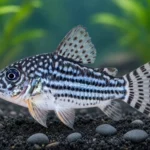
Pleco fish belong to the Loricariidae family, commonly known as armored or suckermouth catfish. These aquarium inhabitants have earned their popularity not only for their distinctive appearance but also for their practical benefits: they actively consume algae, helping maintain tank cleanliness.
Most loricariid catfish originate from South American waters, primarily the Amazon River basin. In nature, these fish inhabit fast-flowing mountain streams, where their sucker mouth helps them anchor against strong currents. Their bodies are covered with bony plates instead of scales, providing excellent protection from predators and explaining the “armored” designation.
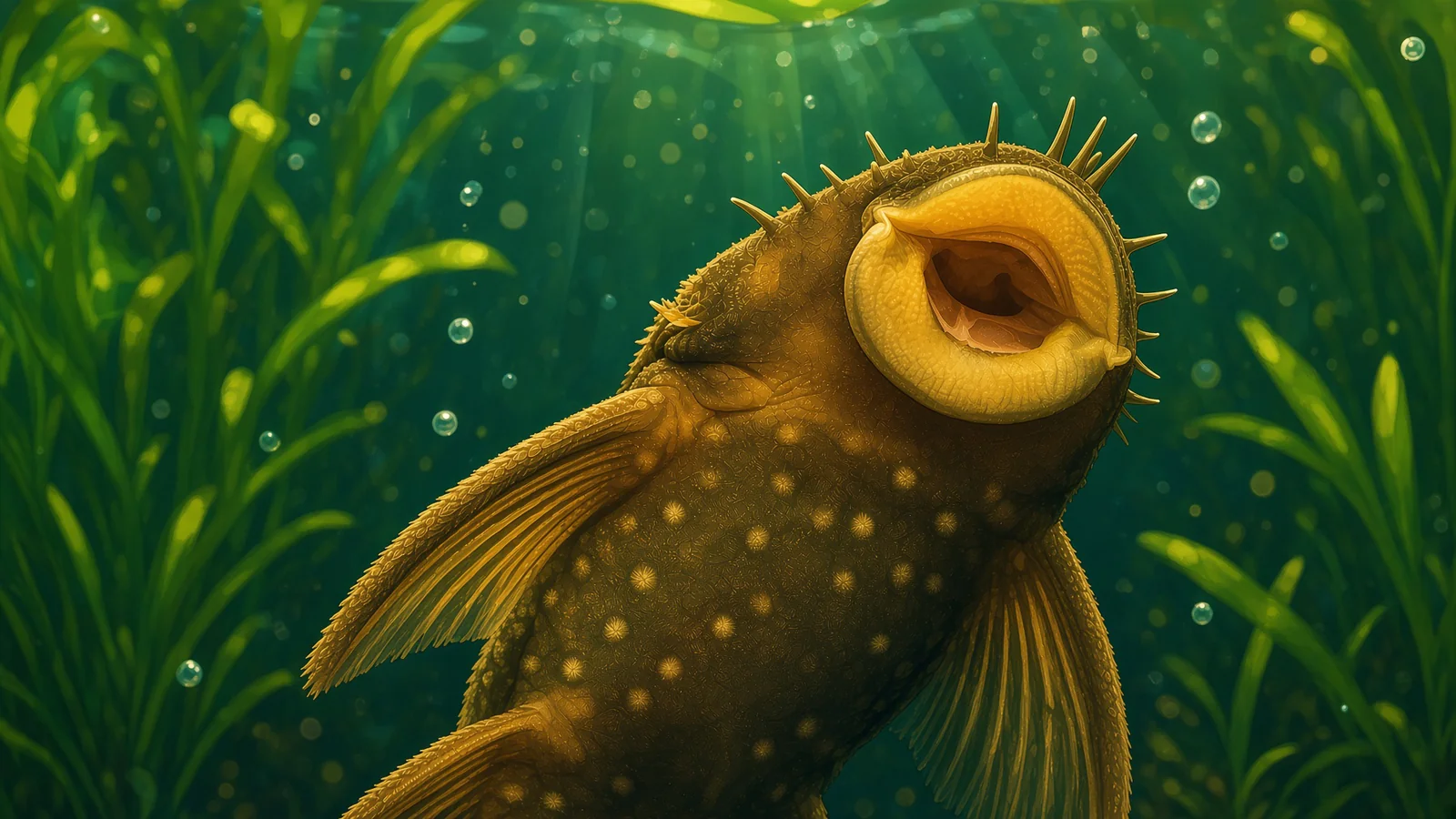
The mouth of pleco fish forms a sucker disc with horn-like scrapers that remove algae from rocks, driftwood, and aquarium glass. In my experience, these tireless cleaners can keep tank walls spotless, reducing the frequency of manual cleaning.
Popular Pleco Fish Species
Common Bristlenose Pleco
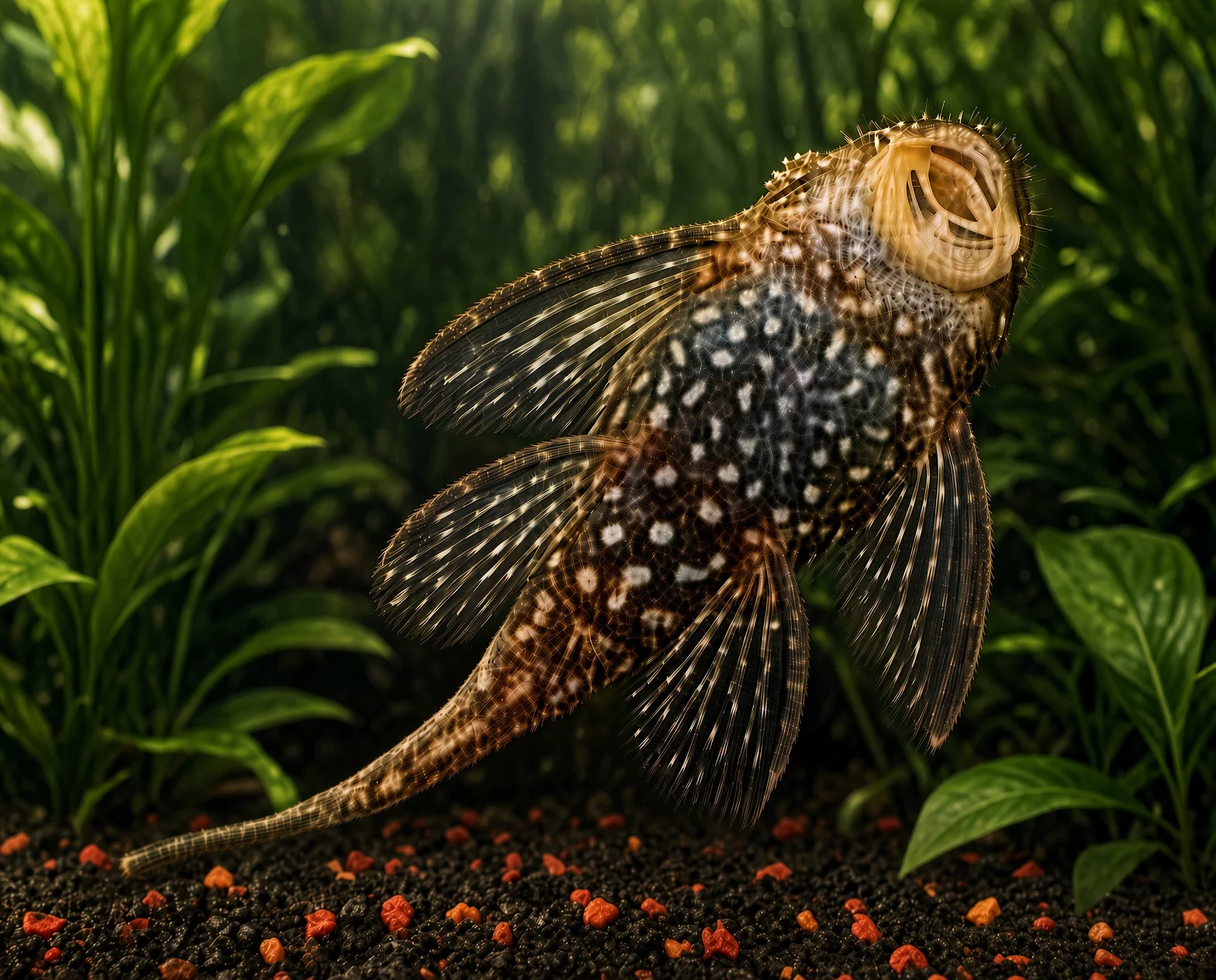
The common bristlenose pleco (Ancistrus) is the most widespread pleco fish in the aquarium hobby. This spotted catfish displays characteristic coloration: gray, black, or brown body covered with light dots. Adults reach approximately 4-6 inches in length, making them suitable for medium-sized tanks.
A distinctive feature of bristlenose plecos is sexual dimorphism, manifested in skin appendages on male heads. These tentacles reach 0.6-0.8 inches and may branch, while females have minimal or no such growths. With proper care, bristlenose plecos live 6-7 years.
Selective breeding has produced several variants: albino forms with yellowish-white coloration, longfin varieties with extended fins, and the red bristlenose—a compact form with reddish-brick coloring reaching up to 2.5 inches.
Sailfin Pleco
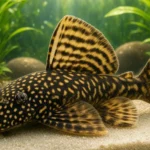
The sailfin pleco (Pterygoplichthys) is another popular armored catfish species, distinguished by impressive size and striking patterns. Adults grow to 14-16 inches in length, requiring spacious tanks of at least 55-65 gallons.
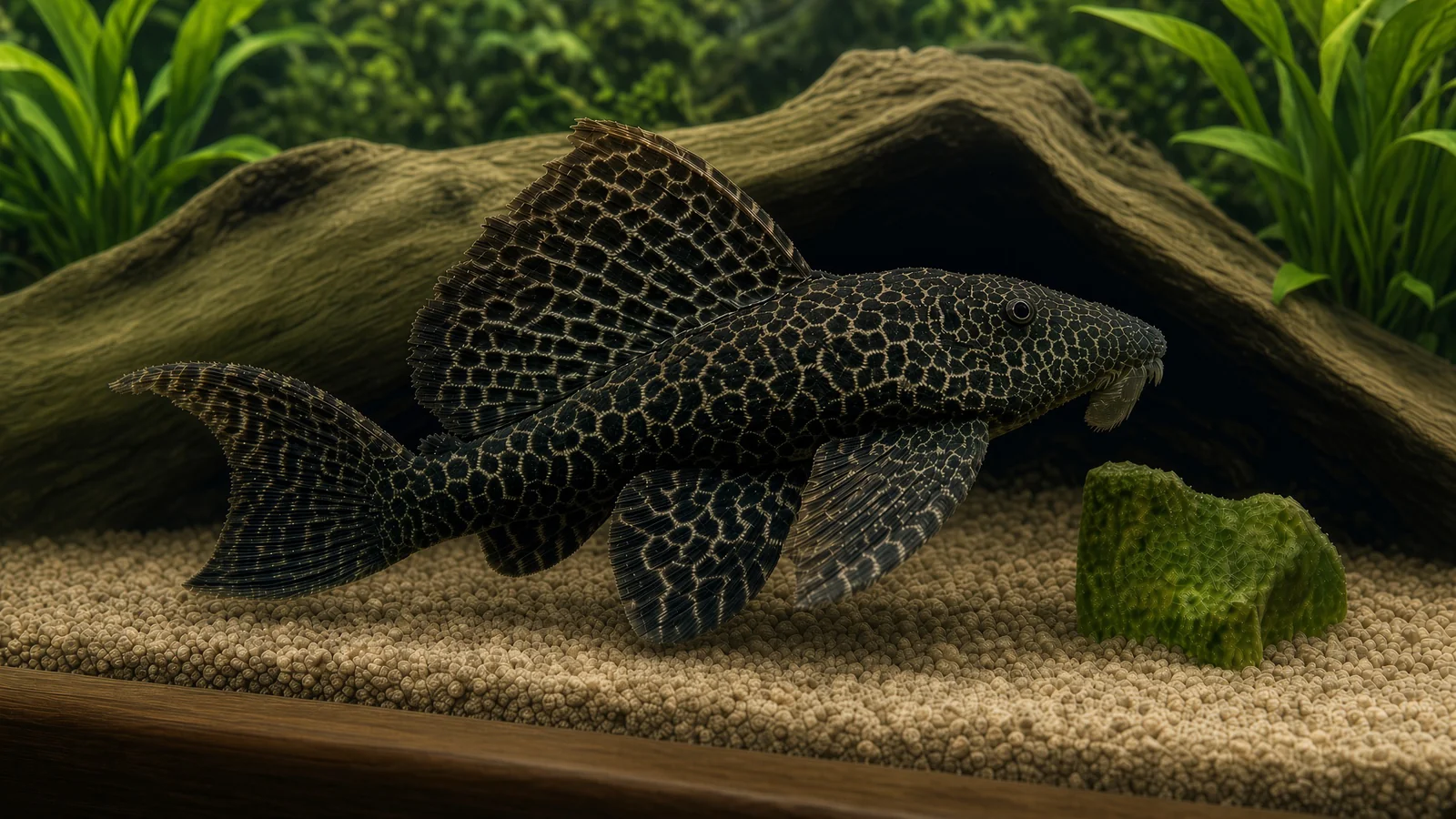
Sailfin plecos display leopard or giraffe-like patterns with contrasting spots on dark backgrounds. Young specimens are peaceful, but adults become territorial and may show aggression toward conspecifics.
The sailfin pleco’s striking leopard-like pattern with contrasting spots makes it one of the most decorative armored catfish species.
Other Species
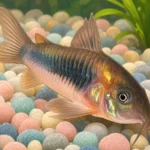
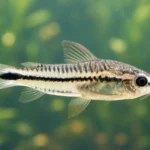
The common pleco reaches up to 14 inches in length. Whiptail catfish (Loricaria) features an elongated slender body measuring 5-6 inches. Otocinclus represents a miniature species at approximately 1.2 inches, perfectly suited for smaller aquariums.
Over 600 loricariid species exist, many designated by L-numbers—a classification system for species lacking formal scientific descriptions.
Pleco Fish Tank Requirements
The minimum recommended tank volume for bristlenose plecos is 13-20 gallons. Optimal water temperature ranges from 72-79°F, though plecos adapt well to varying conditions. These catfish prefer slightly acidic water with pH 6.0-7.0 but tolerate broader parameter ranges.
Natural driftwood is essential for keeping pleco fish. By rasping the wood surface, they obtain cellulose necessary for proper digestion. Without this component, their health may deteriorate.
Tanks need hiding spots—caves, tubes, and driftwood where fish retreat during daylight hours. Plecos exhibit primarily crepuscular and nocturnal behavior, avoiding bright lighting and preferring diffused illumination.
Weekly water changes of 20-30% are necessary for maintaining pleco health. Loricariid catfish possess an interesting adaptation: they can absorb atmospheric oxygen through intestinal blood vessels, occasionally rising to the surface for air gulps.
Feeding and Compatibility
Pleco fish diets should consist primarily of high plant-content foods. While they consume algae coating tank surfaces and decorations, algae alone proves insufficient. Provide specialized sinking tablets for bottom feeders, blanched cucumber, zucchini, and lettuce.
With inadequate algae and plant matter, plecos may damage delicate aquarium plants by nibbling leaves. Balanced nutrition is therefore crucial.
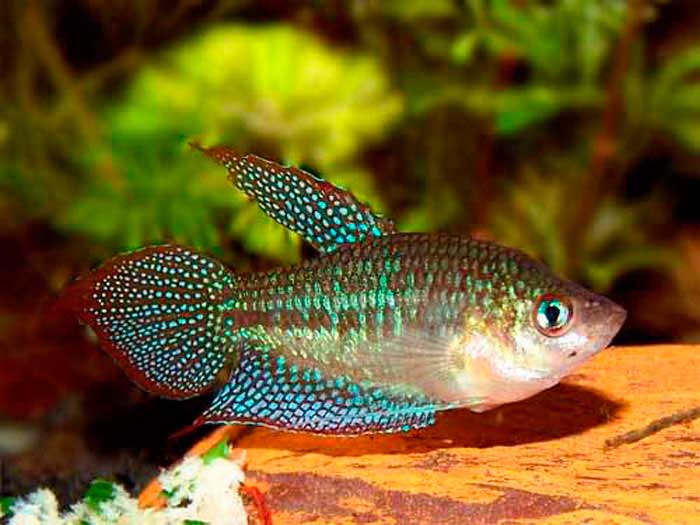
Bristlenose plecos are peaceful and coexist well with most aquarium fish. They make excellent tankmates for swordtails, betta fish, and three spot gouramis. Avoid housing them with scaleless fish, which they may injure with their sucker mouths while attempting to rasp slime coatings.
Aging plecos become territorial, especially males. In smaller tanks, keep one male with several females to prevent conflicts.
Bristlenose pleco displaying typical coloration with reticulated pattern and well-developed fins that help it grip various surfaces in the aquarium.
Breeding Pleco Fish
To stimulate bristlenose breeding, perform water changes and raise temperature by 3-5°F. Females deposit eggs in secluded locations—often inside tubes, behind filters, or in specially placed ceramic caves.
Clutches typically contain 30-200 orange-colored eggs. After spawning, males assume parental duties: guarding eggs, fanning them with fins to ensure fresh water flow, and removing dead eggs with their mouths until fry emerge.
Bristlenose fry initially feed on yolk sac contents, then transition to algae and specialized fry foods. I recommend ensuring driftwood presence and sufficient algae availability during this period.
Practical Care Tips
Tank Selection. Bristlenose plecos require tanks from 13 gallons; sailfin plecos need at least 55 gallons. Consider adult fish size when purchasing juveniles.
Decoration. Place natural driftwood, multiple hiding spots, and create shaded zones. Substrate can be any type without sharp edges.
Lighting. Avoid excessively bright illumination. Use floating plants to create shadowed areas.
Safety Precautions. Loricariid pectoral fins contain spines that can inflict painful punctures. Exercise caution when handling fish.
Disease Prevention. Maintain stable water parameters, avoid sharp temperature fluctuations, and provide varied nutrition.
Plants. When keeping plecos with delicate plants, ensure adequate vegetable matter in their diet to prevent them from targeting aquarium vegetation.
Pleco fish are hardy and beneficial aquarium inhabitants that, with proper care, become not only efficient cleaners but also fascinating subjects for observation. Their unusual behavior, male parental care, and adaptability to various conditions make these catfish an excellent choice for both beginning and experienced aquarists.