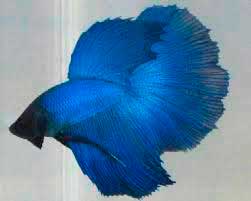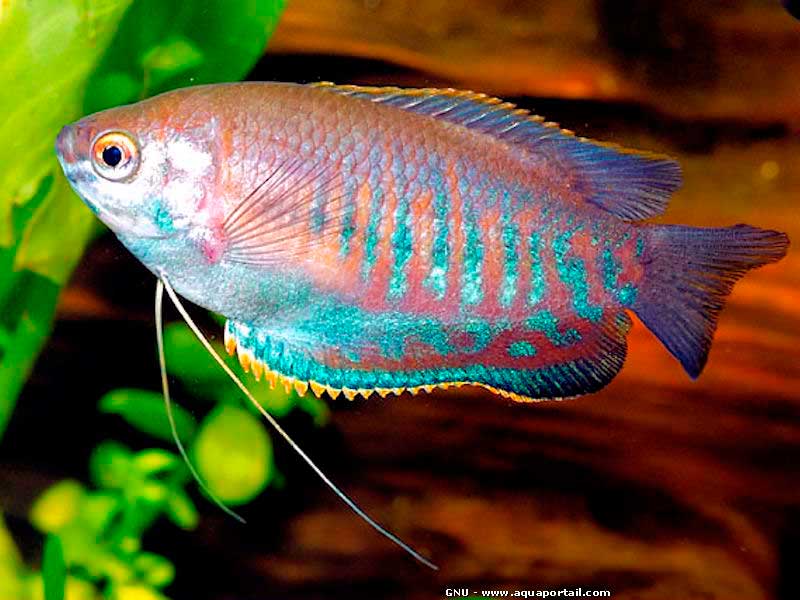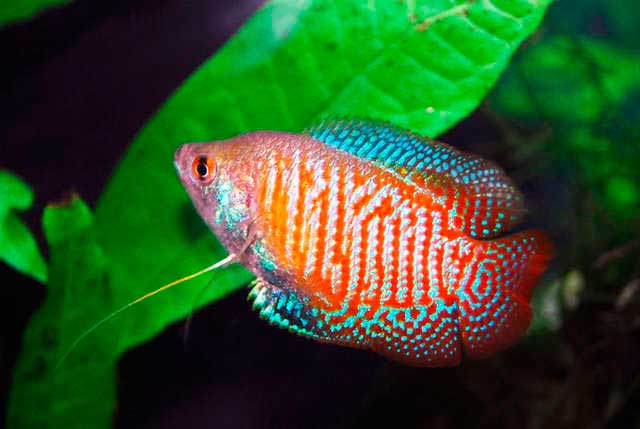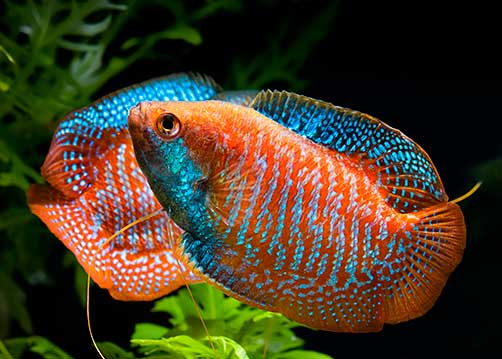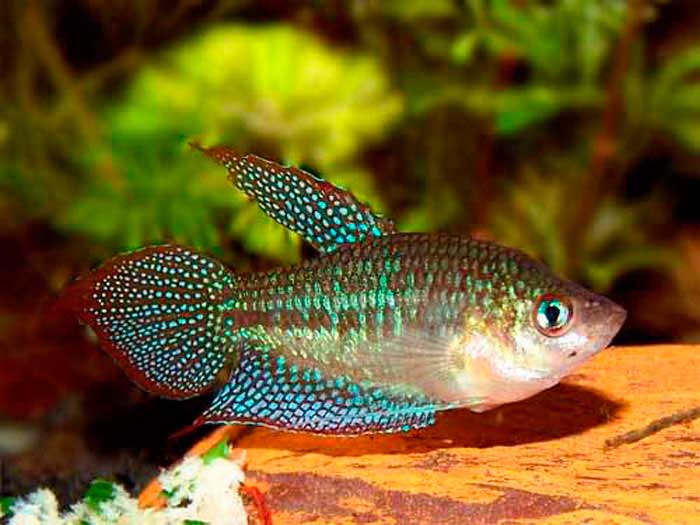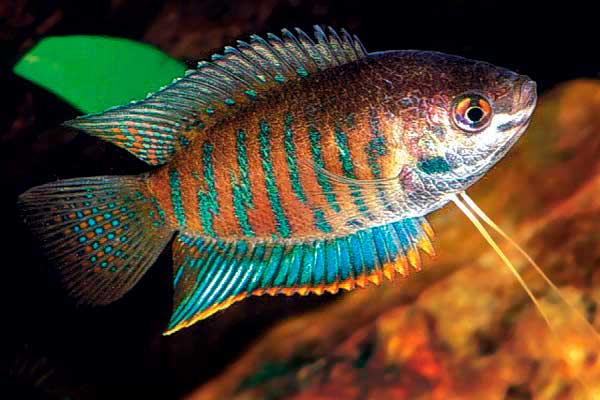
The striped coliza is a very beautiful fish, having a similar coloration to that of the lalius, but its size is much larger. Therefore, the impression it makes is much greater. The species was first described in 1801 by Bloch and Schneider. European aquarists recognized this fish in 1897. In Russia, it appeared for the first time in 1904.
Colisa labiosa
Colisa labiosa is a very graceful fish, as well as other members of the genus are known to aquarists around the world for more than a hundred years. Lyabiosa is probably the largest of the colizae. Its coloration resembles the coloration of lalius. However, unlike its smaller counterpart, this fish is more peaceful, despite its impressive by aquarium standards of size.
Lalius breeding
In the articles “Lalius in the aquarium” and “Lalius fish” we talked about the existing varieties, content and paid some attention to reproduction of representatives of this species. Today we will consider in more detail the breeding of lalius in the home.
Lalius in the aquarium
Lyalius is a very beautiful aquarium fish. Lalius in the aquarium amateurs in recent years, it appears quite rarely. In my opinion, she is forgotten undeservedly. Even a large number of new species that have now appeared behind the glass of our room water bodies should not be the reason for forgetting the wonderful in every way species that have proven themselves over the years as the best species for the room aquarium.
Dwarf Gourami (Trichopsis pumila): Care Guide
The dwarf gourami (Trichopsis pumila, Arnold, 1936) is one of the most charming and delicate inhabitants of the home aquarium. These miniature labyrinth fish have earned their place in our tanks, and decades of collective experience have taught us how to keep them thriving. As the smallest representatives of the labyrinth fish family, their tiny size combined with a peaceful temperament makes them perfect candidates for planted nano tanks and species-only setups.
Moon gourami
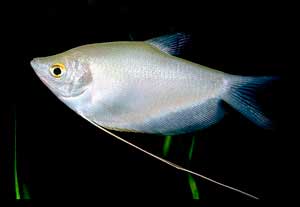
Gourami moon appeared behind the glass of our aquariums relatively recently. On the territory of Russia imported in 1981. He immediately won the love of amateurs. Became quite popular due to its original coloration. Which resembles the lunar shine of the water surface on a clear night.
Honey gourami
Honey Gourami — Description and Natural Habitat
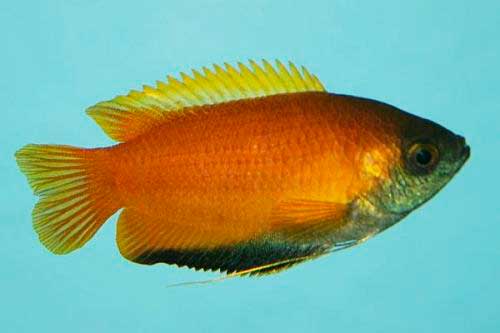
The Honey Gourami (Trichogaster chuna, Hamilton, 1822) is one of the most charming small labyrinth fish in the aquarium hobby. Known for its warm amber coloration and peaceful temperament, it has become a firm favourite among fishkeepers worldwide — from complete beginners to seasoned aquarists.
Blue gourami
Blue gourami appeared in our aquarists relatively recently, it happened around 1958. Since then, this fish occupies a strong position in the collections of amateurs. Popularity of the fish contributes to its relatively peaceful disposition.
Spotted gourami
Gourami spotted or common gourami is a very peaceful, interesting to observe fish. At home, the local population uses trichogaster trichopterus as food. In our country it is a popular aquarium fish. First described by the Russian scientist naturalist German by origin Peter Simon Pallas (1741-1811gg).