What Makes the Glass Catfish Unique
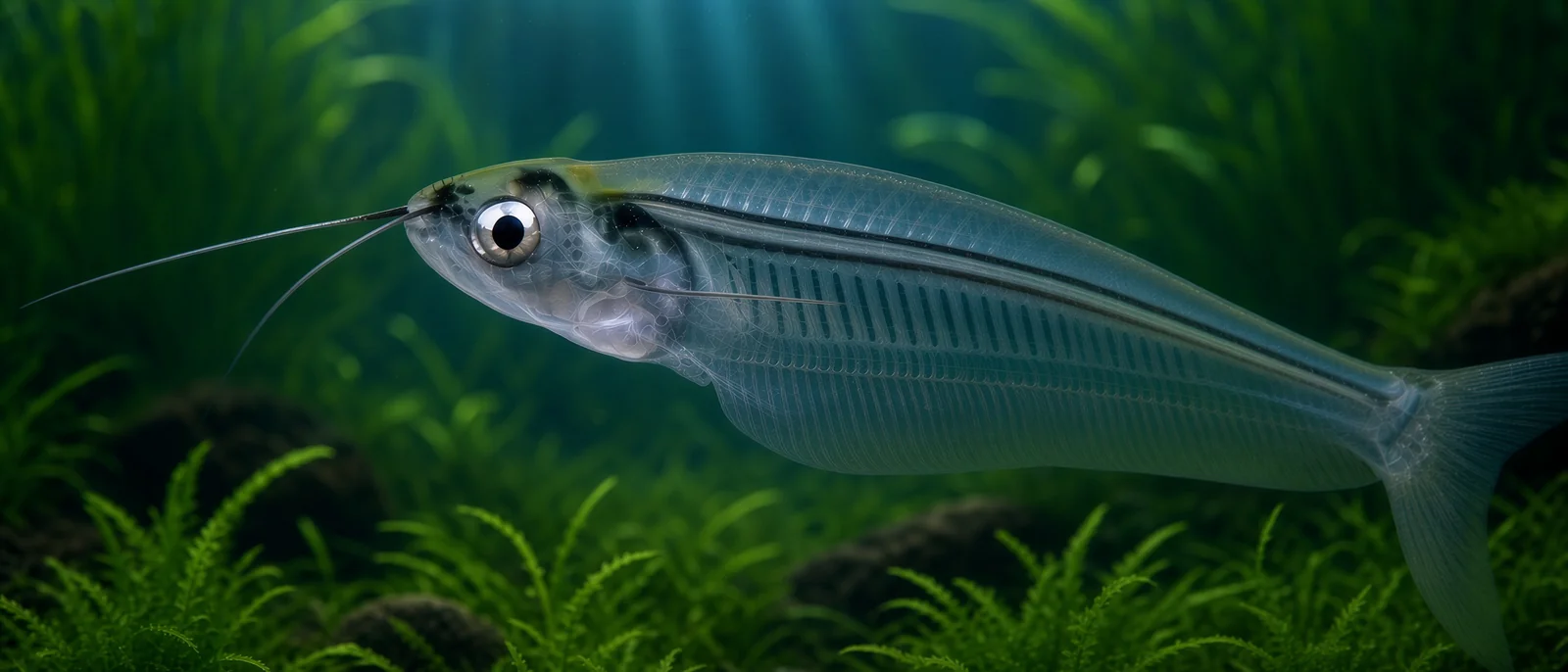
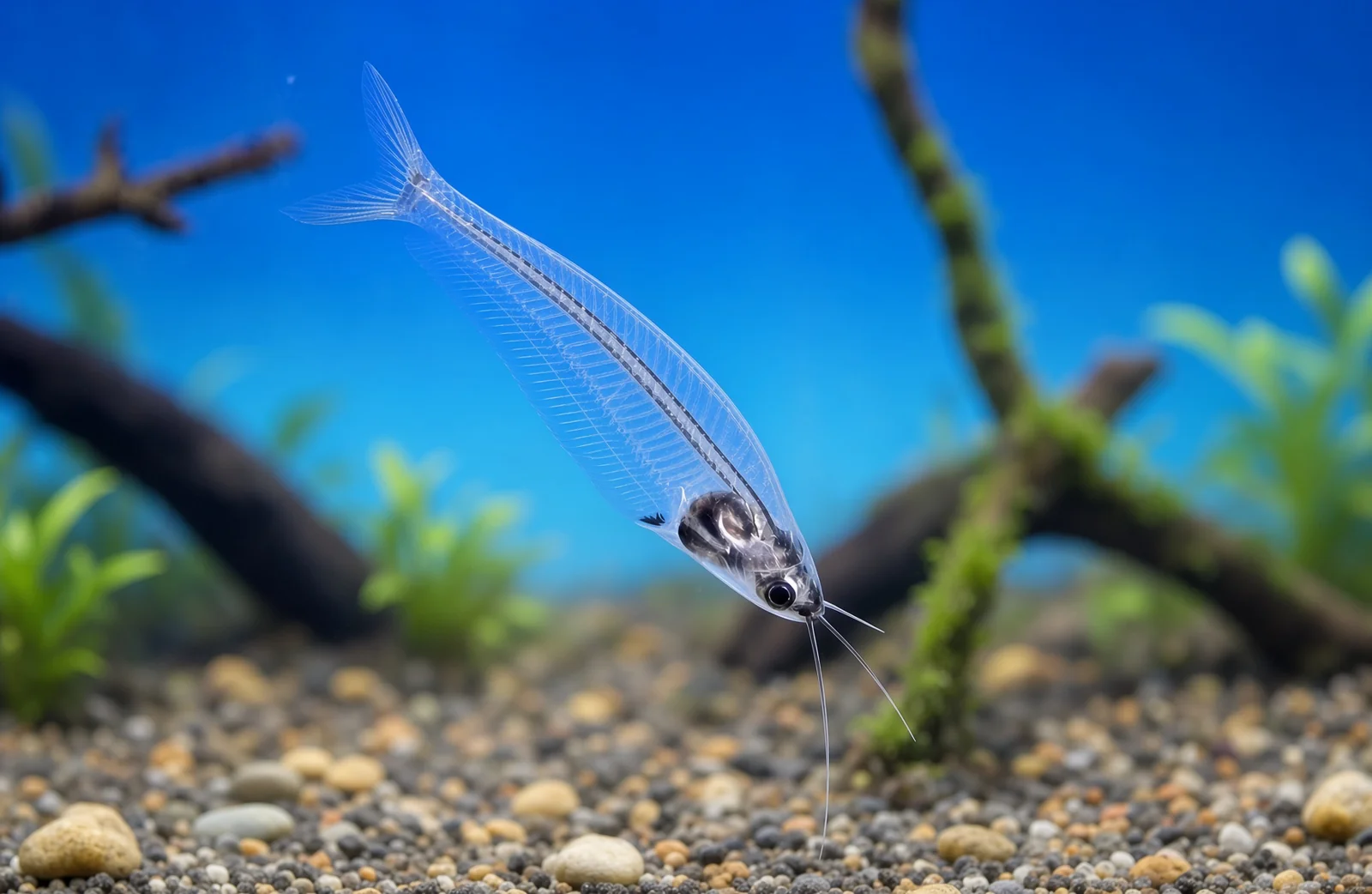
The glass catfish (Kryptopterus vitreolus) stands out as one of the most remarkable aquarium fish, offering a literal window into the workings of a living organism. Its nearly transparent body has earned it nicknames like “ghost fish” or “phantom catfish.” You can see right through the fish to observe internal organs, skeletal structure, and even the aquarium background behind it. The only opaque part is a silvery sac just behind the head that houses vital organs.
This species belongs to the Siluridae family and was recognized as distinct only in 2013 by scientists Ng Heok H. and Maurice Kottelat. Before that, it was mistakenly identified as Kryptopterus bicirrhis—a different, larger species. Interestingly, glass catfish appeared in aquarium culture much earlier, dating back to 1934.
In my experience, glass catfish aren’t ideal for beginners, but intermediate aquarists can successfully keep them with proper understanding of their needs.
Natural Habitat and Physical Description
Glass catfish inhabit river systems throughout Southeast Asia, primarily in Thailand. In nature, they occupy still or slow-moving waters, often murky, where they school together and catch passing food items in the current.
The body is elongated and laterally compressed. The anal fin extends from head to tail, creating a distinctive silhouette. The dorsal fin is extremely small with a single ray and remains pressed against the body most of the time. Two long whisker-like barbels near the mouth help the fish navigate its environment.
Under different lighting conditions, the body displays iridescent hues with metallic shimmer while maintaining transparency. The genus name “Kryptopterus” translates to “hidden wing,” referencing the reduced dorsal fin.
In nature, maximum size reaches 8–10 cm, though aquarium specimens typically stay between 5.5–6.5 cm. Sexual dimorphism is minimal, though females are usually larger and rounder. Fish reach sexual maturity at 1.5–2 years, with aquarium lifespan around 5 years, potentially up to 8 years with excellent care.
Glass Catfish Tank Requirements
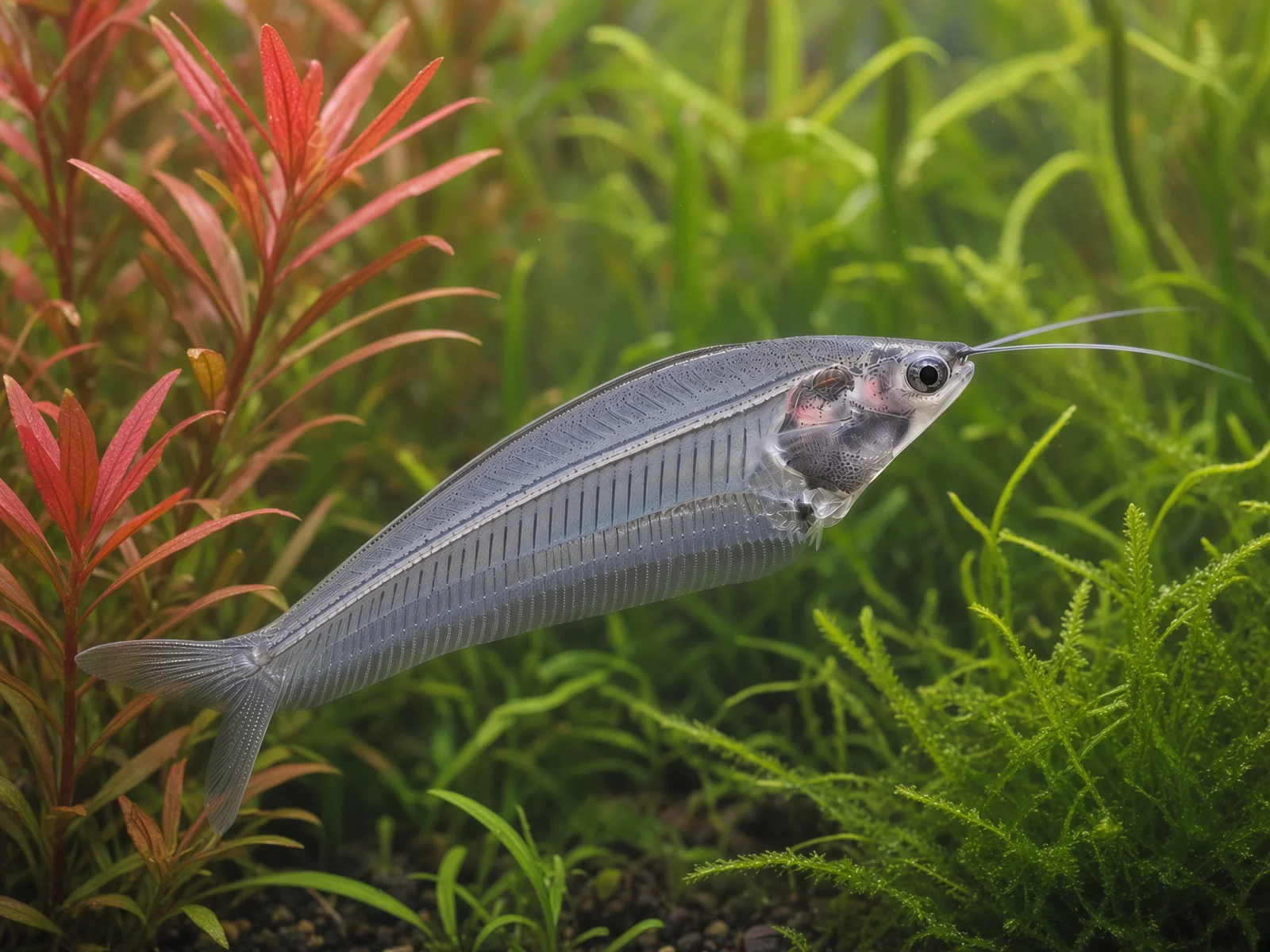
Glass catfish are schooling fish—this is crucial for their wellbeing. Keep groups of at least 6 individuals, preferably 8–10. Solitary specimens feel insecure and hide constantly, negatively impacting health and lifespan.
For a group of 8–10 fish, provide a tank of at least 100–120 liters. The aquarium must have a secure lid, as these fish can jump out.
Water parameters:
- Temperature: 20–27°C (68–81°F)
- pH: 6.0–7.5
- Hardness (dH): 1–15°
Avoid sudden temperature fluctuations and chemistry changes. Glass catfish are sensitive to nitrate and ammonia levels and overall water quality, so introduce them only to tanks with established biological balance.
Effective filtration with aeration is necessary, but the filter shouldn’t create strong currents—these fish prefer still water or gentle flow. Perform regular water changes of one-quarter to one-third volume weekly.
Lighting should be subdued and diffused. Fish feel more confident in shaded areas, so floating plants help scatter light and create security. Plant heavily while leaving open swimming spaces. Shade-tolerant species work well.
Use fine gravel or sand in dark tones as substrate. Include driftwood and caves for hiding spots. Fish occupy middle to upper water layers.
Compatible Tank Mates for Glass Catfish
Glass catfish are extremely peaceful and timid with calm temperaments. Suitable neighbors include peaceful small species: guppies, danios, rasboras, Corydoras, characins, labyrinth fish, and dwarf cichlids. They coexist well with popular species like swordtails or betta fish, provided the latter don’t show aggression.
Avoid housing with large or aggressive fish. Unsuitable tank mates include large species like goldfish, comets, or other goldfish varieties such as ranchu, wakin, or exotic types like bubble eyes and celestial eyes—not due to aggression, but because of incompatible temperature and care requirements.
Feeding Your Glass Catfish
Glass catfish prefer live and frozen foods: brine shrimp, tubifex, daphnia, bloodworms, and glassworms. They accept dry foods in the form of sinking flakes and granules, but these must be small due to the fish’s tiny mouth.
Important consideration: these catfish don’t feed from the bottom, preferring to catch food mid-water or from plant leaves. Food should sink slowly so fish can consume it in middle layers.
Feed during darker hours, 1–2 times daily in small portions. Glass catfish eat very slowly, so monitor that more active tank mates don’t steal their food.
Breeding and Health Considerations
Breeding glass catfish in home aquariums occurs rarely and usually accidentally. Nearly all commercially available fish are wild-caught or farm-raised in Southeast Asia.
Quarantine new arrivals before introducing them to the main tank, as they may carry parasites. Glass catfish are sensitive to water quality, and deteriorating conditions increase disease susceptibility.
I recommend regular water parameter monitoring and consistent weekly water changes. This is key to long, healthy lives for your transparent companions. With proper care, glass catfish become true aquarium showpieces, delighting observers with their unusual appearance for years to come.