Understanding Goldfish Reproduction Basics
Goldfish breeding in a home aquarium is a rewarding experience that requires proper knowledge and preparation. Many aquarists wonder about the reproductive process and what conditions are necessary for successful spawning. In my experience, the key factors include selecting healthy breeding stock, creating optimal spawning conditions, and providing proper care for eggs and fry.
Goldfish reach sexual maturity at 1-2 years of age, depending on care quality and variety. Males typically mature several months earlier than females. You can identify males by white tubercles that appear on gill covers and pectoral fins, especially prominent during breeding season. Females are generally larger with rounder bodies.
It’s important to understand that goldfish are egg-layers, not livebearers. When a female is ready to spawn, her abdomen becomes noticeably rounded and soft to gentle touch—this indicates mature eggs ready for release. Males become increasingly active during this period, chasing females around the tank and nudging them toward plants.
Spawning readiness also manifests in behavior changes: fish become more energetic, males perform courtship displays, and the entire group shows heightened activity. The breeding season typically occurs in spring months when daylight increases and water temperature rises naturally.
Preparing for Goldfish Breeding
Successful spawning requires a separate breeding tank of at least 50 liters for a pair of breeders. Larger fish need proportionally bigger tanks. Place fine-leaved plants (Java moss, hornwort, elodea) or synthetic spawning mops on the bottom—these serve as spawning substrate where females deposit eggs.
Maintain water temperature in the breeding tank at 22-24°C, which is 2-3 degrees higher than normal keeping temperature. This temperature increase stimulates spawning activity. Water should be fresh, dechlorinated, with strong aeration. Medium hardness (8-15°dGH) and neutral pH (7.0-7.5) work best.
Before introducing fish to the breeding tank, separate males and females for 1-2 weeks and feed them abundantly with live or frozen foods: bloodworms, daphnia, brine shrimp. This conditioning improves egg and milt quality. Select the healthiest, most active specimens—typically one female and two to three males for better fertilization rates.
The Spawning Process
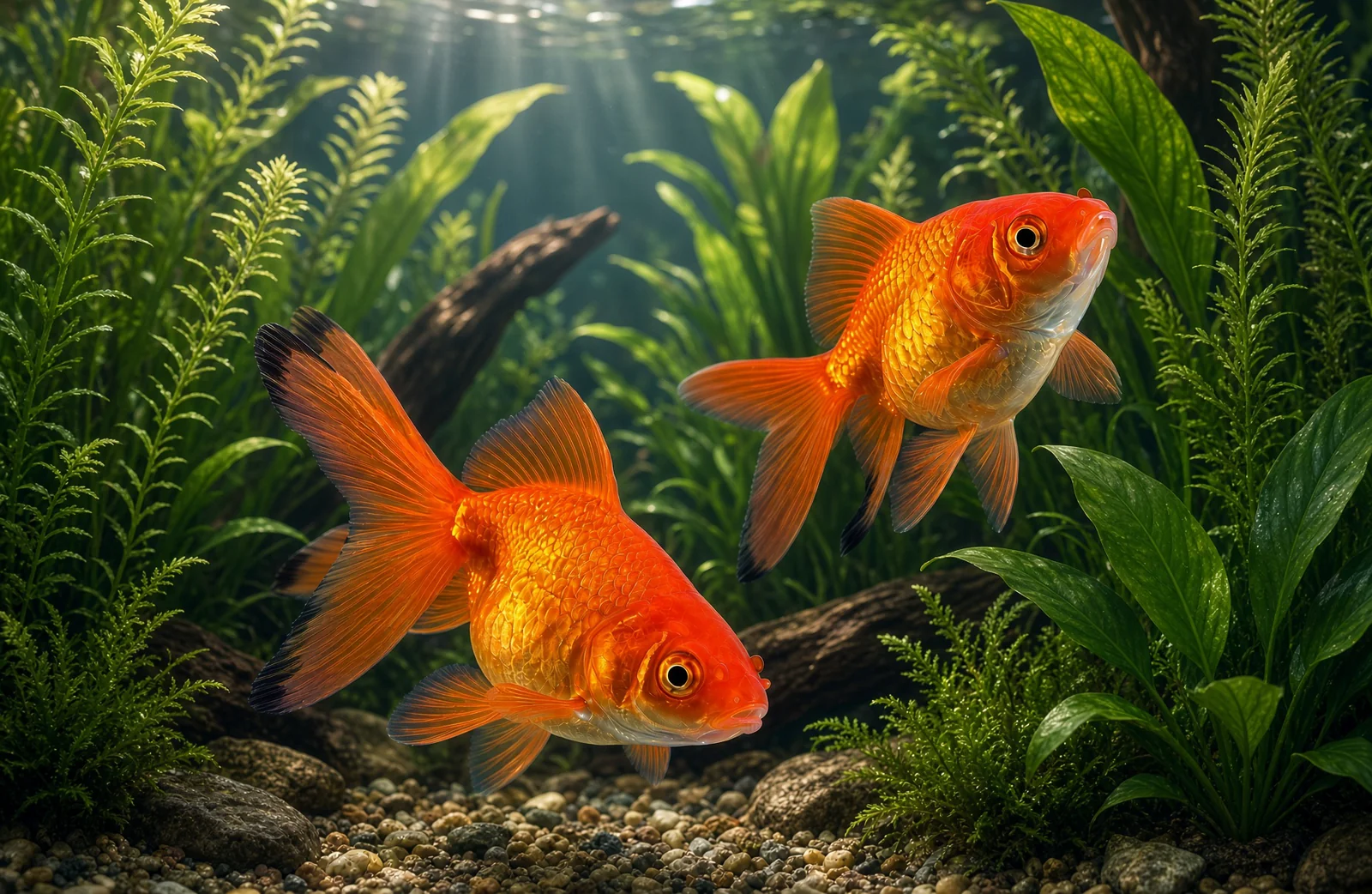
Spawning usually begins early morning and can continue for several hours. Males actively chase the female, pressing her against plants and stimulating egg release. The female deposits adhesive eggs in batches, attaching them to plant leaves and substrate. A mature female can lay 2,000 to 4,000 eggs per spawning, depending on size and age.
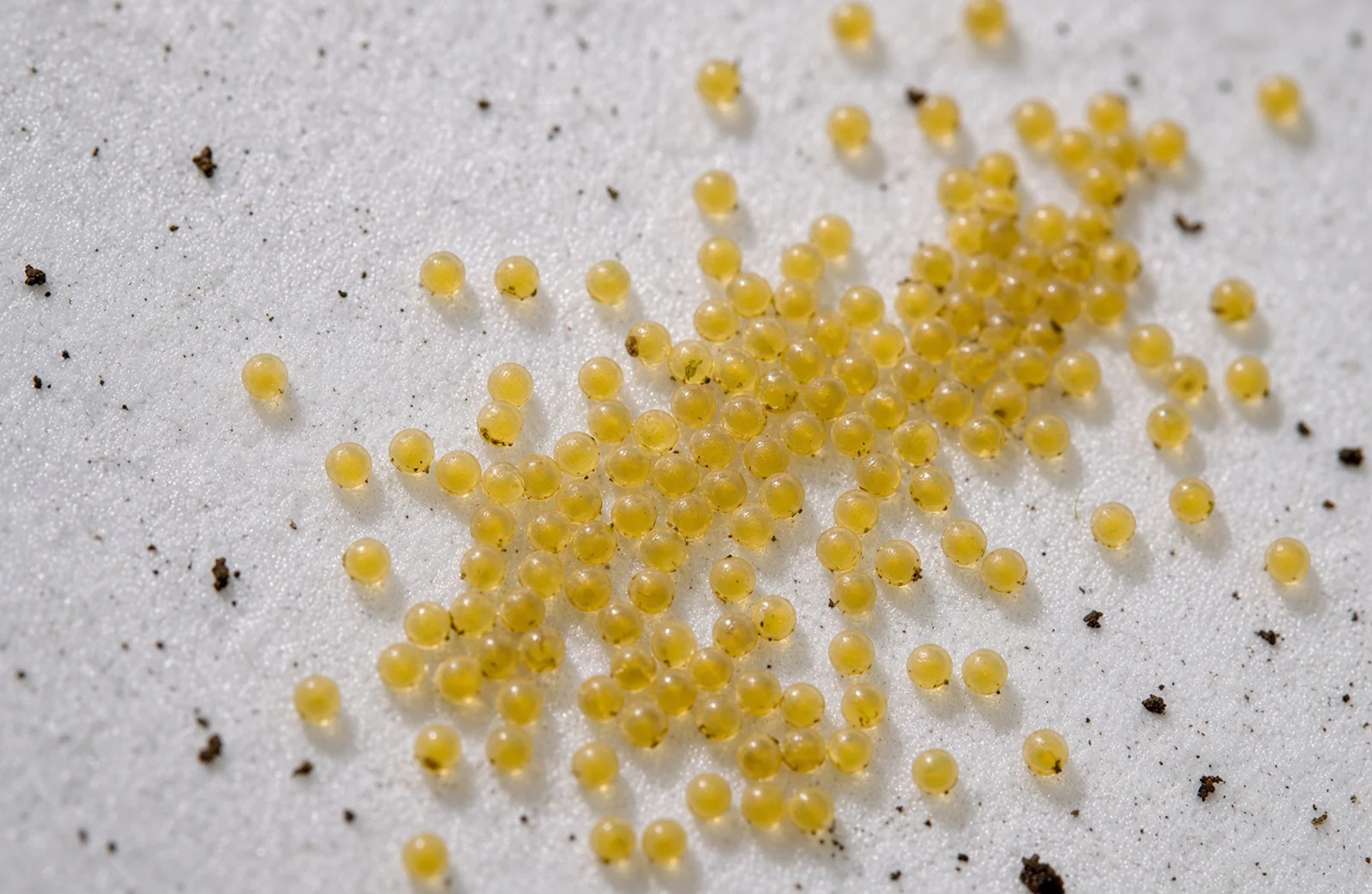
Males immediately fertilize the eggs by releasing milt. Fertilized eggs appear transparent with an amber tint, approximately 1-1.5 mm in diameter. Unfertilized eggs turn white within several hours—remove these promptly to prevent fungal growth.
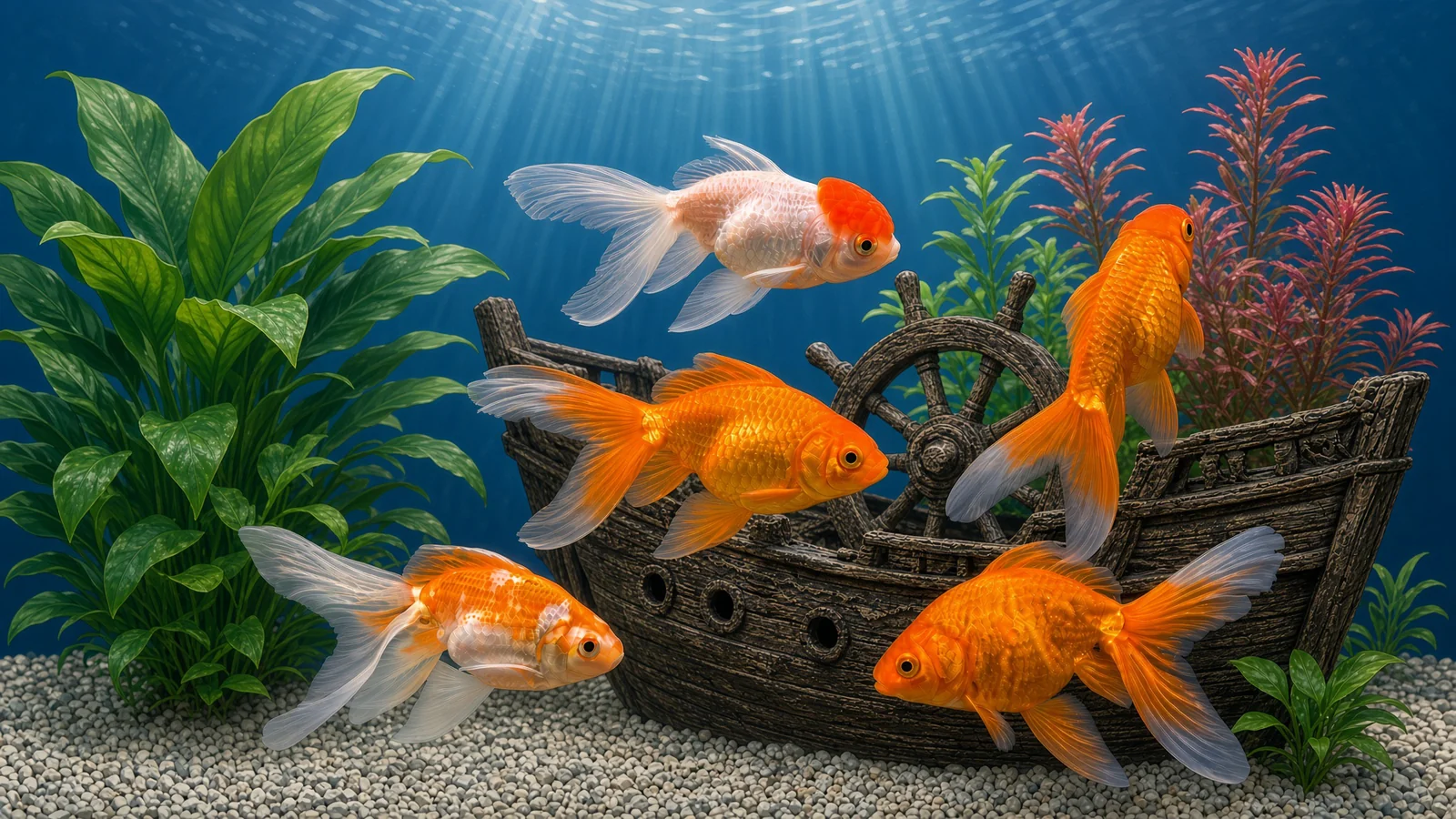
Remove parent fish from the breeding tank immediately after spawning, as goldfish readily consume their own eggs. If you keep different varieties like comet goldfish or ranchu goldfish, remember that the breeding process is identical—all belong to the species Carassius auratus.
Egg Care and Fry Development
Eggs develop at 22-24°C over 4-5 days. During this period, maintain water cleanliness and moderate aeration. Inspect the clutch daily and remove whitened eggs with tweezers or a pipette. You can add a few drops of methylene blue to prevent fungal infections.
Newly hatched larvae remain motionless for the first 2-3 days, hanging on tank walls and plants while absorbing their yolk sacs. When fry begin swimming horizontally and actively seeking food, start feeding them. Initial food includes infusoria, rotifers, liquified egg yolk, or specialized commercial fry foods.
Feed young fish 4-6 times daily in small portions. As they grow, transition to baby brine shrimp (nauplii), microworms, then chopped tubifex and small daphnia. Avoid overfeeding and perform regular water changes—up to 20-30% daily, as fry are sensitive to water quality degradation.
Fry growth is uneven, so sort them periodically by size to prevent cannibalism. By one month of age, young fish display characteristic breed features. Coloration develops gradually over several months—many fry are born dark and lighten as they mature.
Practical Breeding Tips
Successful goldfish breeding depends heavily on water quality and breeder nutrition. I recommend intensifying live food feeding one month before planned spawning and performing several large water changes for stimulation.
If spawning doesn’t occur, try simulating seasonal changes: lower temperature by several degrees for a week, then gradually raise it and increase photoperiod to 12-14 hours. This often triggers reproductive behavior.
When raising fry, water cleanliness is critically important. Use a sponge filter with fine pores to avoid sucking in young fish. Regular small water changes are preferable to infrequent large ones—this prevents stress in growing fish.
Note that different goldfish varieties such as wakin or bubble eye goldfish can crossbreed, but offspring don’t always inherit parental breed characteristics. To maintain line purity, breed fish of the same variety.
Some beginning aquarists confuse egg-laying goldfish reproduction with livebearer species like swordtails. Unlike livebearers, goldfish don’t experience “pregnancy” in the conventional sense—females simply accumulate eggs that are fertilized externally.
Common Breeding Problems
One widespread difficulty is egg consumption by parent fish. Even if you don’t remove adults promptly, some eggs usually survive in dense plant growth. For guaranteed clutch preservation, use a separator grid on the breeding tank bottom—eggs fall through the mesh while fish cannot reach them.
High egg mortality may result from poor water quality, low fertilization rates, or inadequate breeder conditioning. If most eggs turn white, check water parameters and extend the conditioning period next time.
Fry may die from starvation in early days if you haven’t provided sufficient starter food. Culture infusoria in advance in a separate jar using banana peel or dried lettuce leaves. Adding small amounts of green water (with phytoplankton) to the breeding tank also helps.
Deformities in fry sometimes occur with inbreeding or improper incubation conditions (sudden temperature fluctuations, water contamination). Cull obviously defective individuals at early stages.
Goldfish breeding requires patience and attention to detail, but the reward of healthy offspring makes the effort worthwhile. Understanding the reproductive process allows you not only to obtain fry but also to gain deeper insight into these fascinating creatures’ biology. With proper care and preparation, even beginning aquarists can successfully breed goldfish at home.