Molly Fry Care: How to Raise and Save Your New Fry
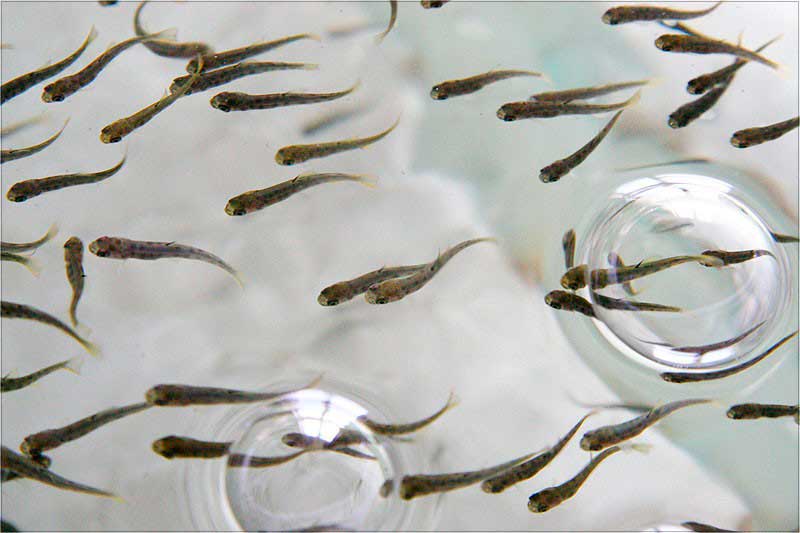
Molly fry can appear in your aquarium almost out of nowhere — even if you never planned to breed your fish. Mollies (Poecilia spp.) are livebearers, and females can store sperm for months, producing successive batches of fry without any additional mating. That’s why it pays to know exactly what to do when you suddenly find dozens of tiny fish darting around your community tank.
In this guide, we’ll cover everything you need to successfully raise molly fry: how to spot the signs of imminent birth, how to set up a proper fry tank, what to feed your youngsters, and when they’re finally ready to join the main aquarium. We’ll also take a closer look at the impressive Molly Velifera and the charming Balloon Molly — two varieties that deserve special attention.
Recognising the Signs of Birth in Molly Fish
Being prepared is always better than dealing with an emergency. Here are the key signs that your female molly is about to give birth:
- The belly becomes noticeably enlarged and takes on an almost square or boxy shape.
- The gravid spot (a dark patch near the anal fin) becomes darker and larger.
- The female becomes less active, seeks hiding spots, and loses her appetite 1–2 days before birth.
- She may hover near the surface or the bottom more than usual.
Personal tip: Always observe your females before feeding time. A well-fed female with a round belly can easily be mistaken for a pregnant one.
As soon as you notice these signs, prepare a breeding or fry tank immediately.
Emergency Care for Molly Fry in a Community Tank

If molly fry have already appeared in your community aquarium and no separate tank is ready, act fast. Nearly every fish in a community tank — including other livebearers like Xenotoca eiseni — will see the fry as a tasty snack.
Emergency steps:
1. Take a clean glass jar or container of at least 3 litres.
2. Rinse it thoroughly without soap and add water from the main tank.
3. Gently net the fry and transfer them to the container.
4. Provide gentle aeration immediately.
5. Set up a proper grow-out tank as quickly as possible.
This is a temporary fix only. Get a proper setup running without delay.
Setting Up the Perfect Molly Fry Tank
A dedicated grow-out tank is essential for raising molly fry (Poecilia sphenops, Poecilia latipinna, Poecilia velifera) successfully. Here are the key requirements:
Water Parameters and Equipment
| Parameter | Recommended Value |
|---|---|
| Tank volume (starter) | From 10 litres |
| Tank volume for Velifera fry | From 30 litres |
| Temperature | 26–28 °C (79–82 °F) |
| pH | 7.2–8.0 |
| Hardness (dGH) | 10–25° |
| Salinity (optional) | 0.5–1 tsp marine salt per 10 litres |
| Filtration | Sponge filter only |
| Aeration | Essential |
| Lighting | Moderate, 8–10 hours/day |
| Substrate | Thin layer or bare bottom |
| Plants | Floating plants (Riccia, duckweed, hornwort) |
Key setup rules:
– Use only a sponge filter — standard power filters will suck in fry.
– A heater with a thermostat is non-negotiable.
– Floating plants like Riccia fluitans and duckweed provide hiding spots and harbour infusoria as a natural food source.
– Maintain impeccable cleanliness: siphon the bottom daily and change 15–20% of water every 2–3 days.
Feeding Molly Fry
Molly fry are omnivores and need a varied diet from day one. Here’s a feeding schedule that works well in practice:
First 2 weeks:
– Artemia nauplii (Artemia salina) — the gold standard for livebearer fry
– Infusoria (Paramecium caudatum) — ideal for the smallest fry
– Microworms (Panagrellus redivivus)
– Commercial fry powder (e.g., Sera Micron, JBL NovoBaby)
From week 3 onwards:
– Finely crushed flake food with a vegetable component
– Baby brine shrimp
– Blanched spinach or zucchini (mollies need plant matter in their diet)
– Micro pellets

Feed 3–5 times daily in small portions and remove any uneaten food promptly to maintain water quality.
Molly Fry Growth Chart
| Age | Size | Notes |
|---|---|---|
| Newborn | 5–8 mm | Immediately free-swimming and feeding |
| 2 weeks | 10–12 mm | Colour patterns begin to appear |
| 1 month | 15–20 mm | Transition to slightly larger foods |
| 2 months | 25–30 mm | Sex can be determined |
| 3–4 months | 35–45 mm | Males reach sexual maturity |
| 5–6 months | 50+ mm | Ready for the community tank |
Special Notes on Velifera and Balloon Molly Fry
The Sailfin Molly (Poecilia velifera) produces noticeably larger fry than the common black molly or sphenops. Many hobbyists claim that velifera females rarely eat their young, but I always recommend separating them anyway — a 30-litre tank is the minimum for this species.
The Balloon Molly, due to its compressed body shape, may produce slightly fewer and smaller fry. These fry are more delicate and benefit especially from very stable water conditions and high-quality nutrition from the start.
For more inspiration on livebearer diversity, check out our article on Guppy on our dedicated English section.
Authoritative Sources
FAQ: Molly Fry — Frequently Asked Questions
When can molly fry be moved to the main aquarium?
Generally, wait until the fry reach at least 2–2.5 cm (about 1 inch) in length. At this size, most adult community fish will no longer see them as food. Always consider the size and temperament of the fish already in the main tank before making the move.
How many fry does a molly produce at once?
Young females typically produce 10–30 fry per birth, while larger, more experienced females can produce 50–100 or more. Poecilia velifera females are among the most prolific, often delivering 60–80 fry in a single batch.
Do I need to add salt to the fry tank?
It is optional but beneficial. A small amount of marine aquarium salt (about half a teaspoon per 10 litres) can reduce stress and help prevent fungal infections. Avoid iodised table salt.
How do I tell male and female molly fry apart?
Sex becomes distinguishable at around 6–8 weeks of age. Males develop a gonopodium — a modified, rod-shaped anal fin — while females retain the typical fan-shaped anal fin. Males also tend to be slightly smaller than females of the same age.
Can I raise molly fry with platy or guppy fry?
Yes, provided the fry are of similar size. All three species share compatible water requirements and feeding habits. Just make sure the tank is large enough to avoid overcrowding, which can lead to stress and stunted growth.
Last updated: July 12, 2026