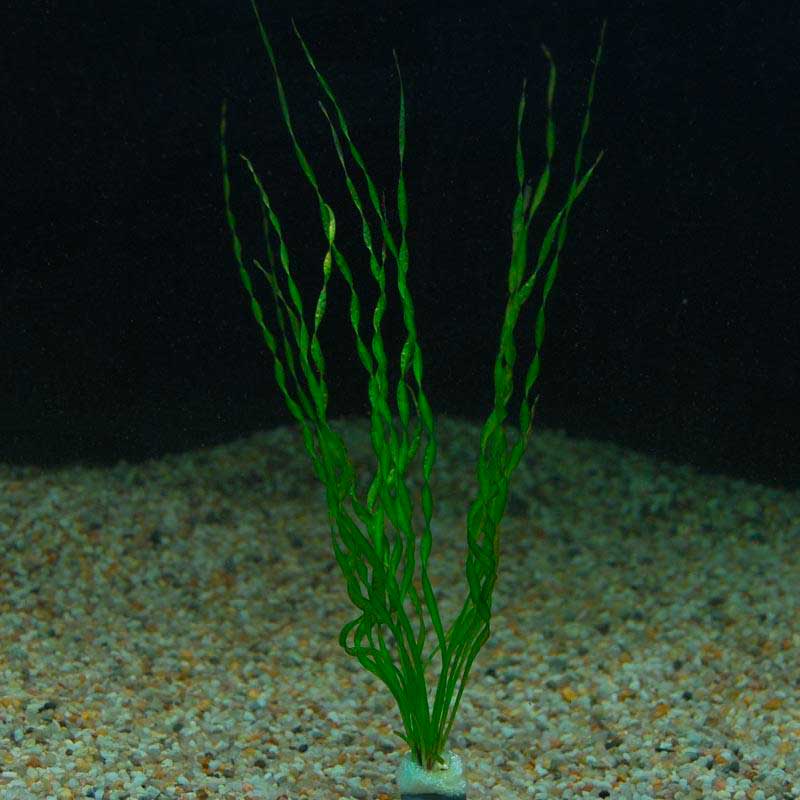
Echinodorus vesuvius appeared behind the glass of our aquariums quite recently, namely in 2007. This species is still a rarity in the underwater gardens of aquarists in the former Soviet Union. However, its decorative properties make it desirable in every aquarium household. And the simplicity of maintenance allows you to recommend it even to beginners. Its emerald narrow narrow spirally twisted leaves really resemble rising streams of smoke over the vent of the volcano of the same name, thanks to which the species got its name.
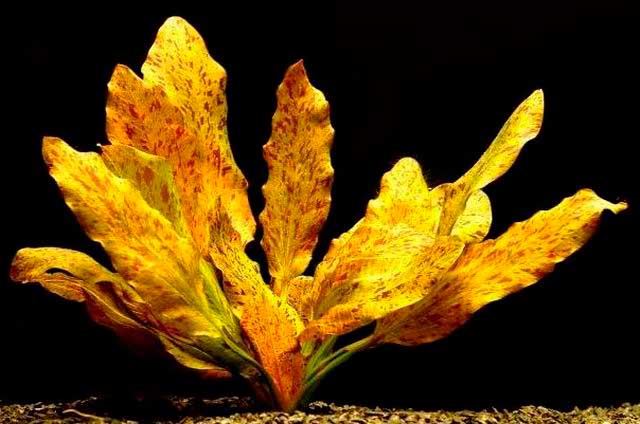
Echinodorus ocelot
Echinodorus ocelot is a mottled form, which is reflected in its name. This coloring is not lost in this species in low light. Very beautiful Echinodorus ozelot looks very beautiful when planted alone. And will be able to revitalize any underwater landscape. The species is very unpretentious. With its maintenance can cope with even a novice aquarist.
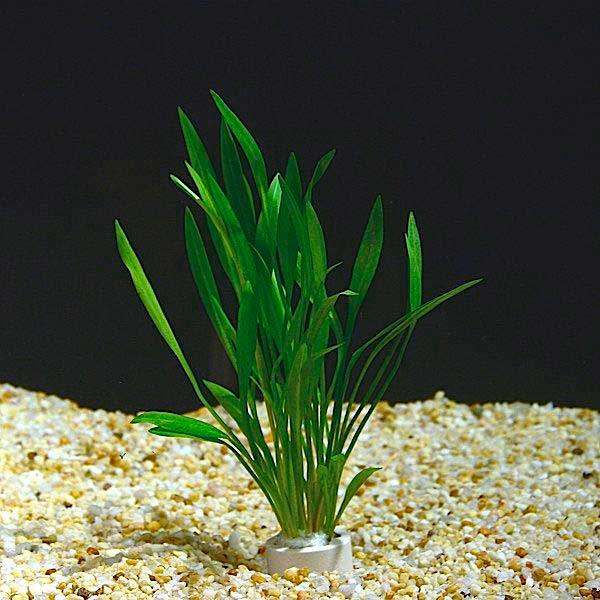
Echinodorus delicate
Echinodorus delicate got its name for its appearance. Indeed, its thickets resemble a soft, fluffy carpet, which you want to touch with your hand. Sometimes it is called grassy, its leaves really resemble grass on the lawn. However, this species is a grass.
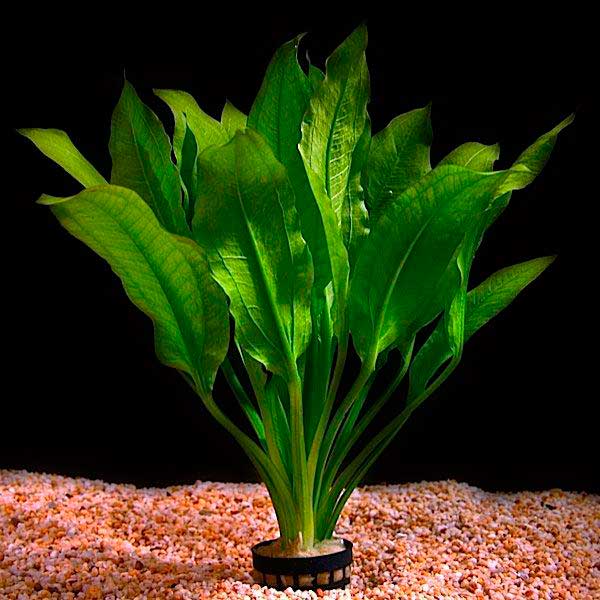
Echinodorus amazonianus
Echinodorus amazonianus is a very beautiful, widespread plant among aquarists around the world. Its popularity is promoted not only by its luxurious appearance, but also by the fact that Echinodorus amazonianus is very unpretentious and undemanding to the conditions of maintenance. Therefore, it can decorate a room pond even a novice amateur.
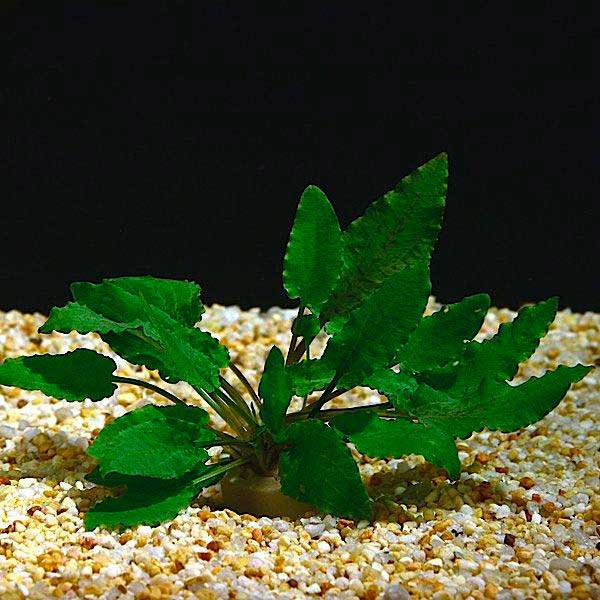
Cryptocoryne Beckettii
Cryptocoryne Beckettii is from the genus Cryptocoryne, family Aroidaceae. It is a relatively easy to maintain plant with a very decorative appearance. Its leaves, which have differently colored sides, are collected in a small rosette. Height, which rarely exceeds 12 centimeters, which makes it a suitable plant for decorating the front or middle plan of the aquarium, where it can form not very dense thickets. The plant is beautiful by itself, so it will fit perfectly into any composition that your imagination can draw you.
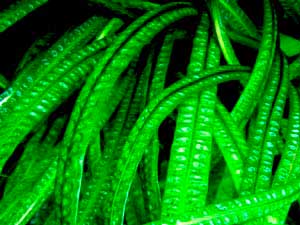
Cryptocorina balance
The Cryptocorina balance plant belongs to the genus Cryptocoryne. It has a reputation as a somewhat capricious and delicate child, requiring constant attention and care. But knowing a few small peculiarities of its physiology you can minimize the work of caring for it.
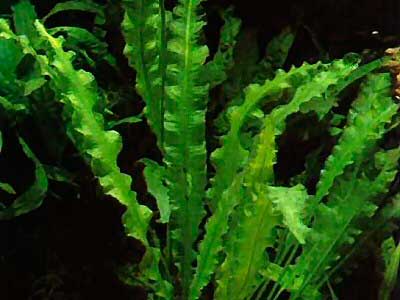
Cryptocoryne aponogetonifolia
Cryptocoryne aponogetonifolia is a beautiful aquarium plant that grows in the ground. It has a fairly large size, under favorable conditions can grow up to 100 cm high. In aquarium cultivation is usually smaller – about 35 – 40 centimeters high.
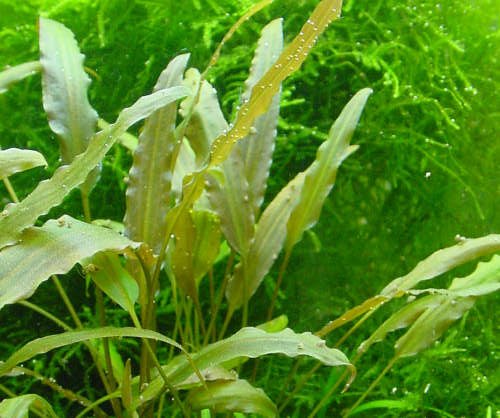
Cryptocoryne wendtii
Cryptocoryne wendtii is the most unpretentious of the cryptocorynes. Very decorative, so it is well-deserved love among amateurs, as well as professionals. Possesses great adaptability accompanied by a large phenotypic variability. Despite the adaptability badly reacts to sudden changes in the environment. Cryptocoryne Wendt likes stability. If you follow some simple rules will please your eyes with long lanceolate leaves that give the room pond the appearance of a tropical forest.
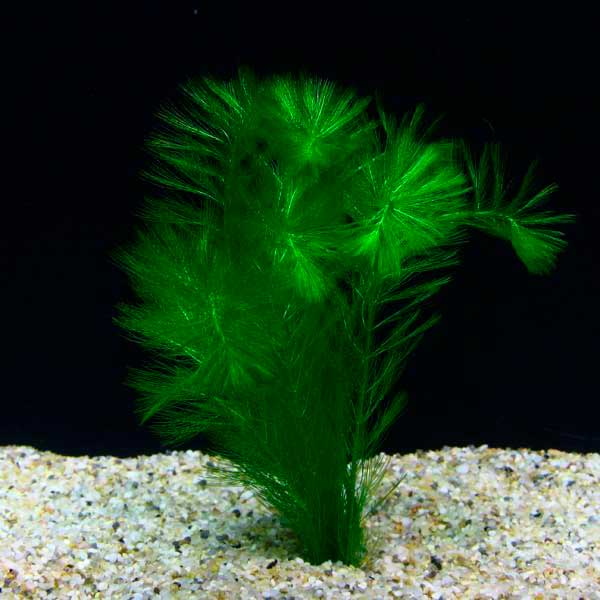
Myriophyllum elatinoides
Myriophyllum elatinoides named so for the similarity of its pinnate strongly dissected leaves with needles very unpretentious and undemanding species. Urruta can be kept in cold-water aquariums. It will create a background of lush emerald thickets, while being a wonderful shelter for fry of viviparous fish, as well as a substrate for spawning spawning eggs.