Appearance and Physical Characteristics
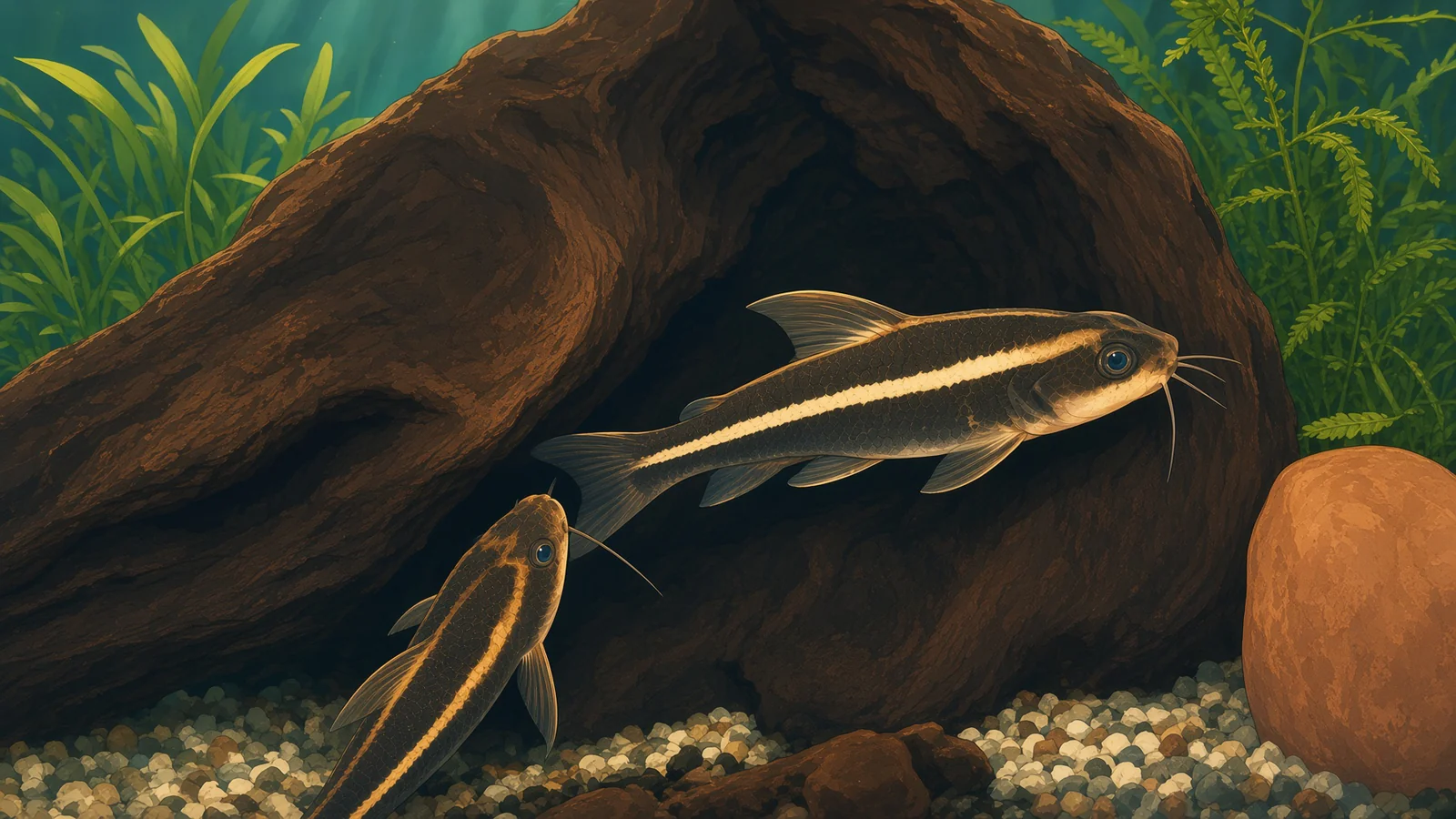
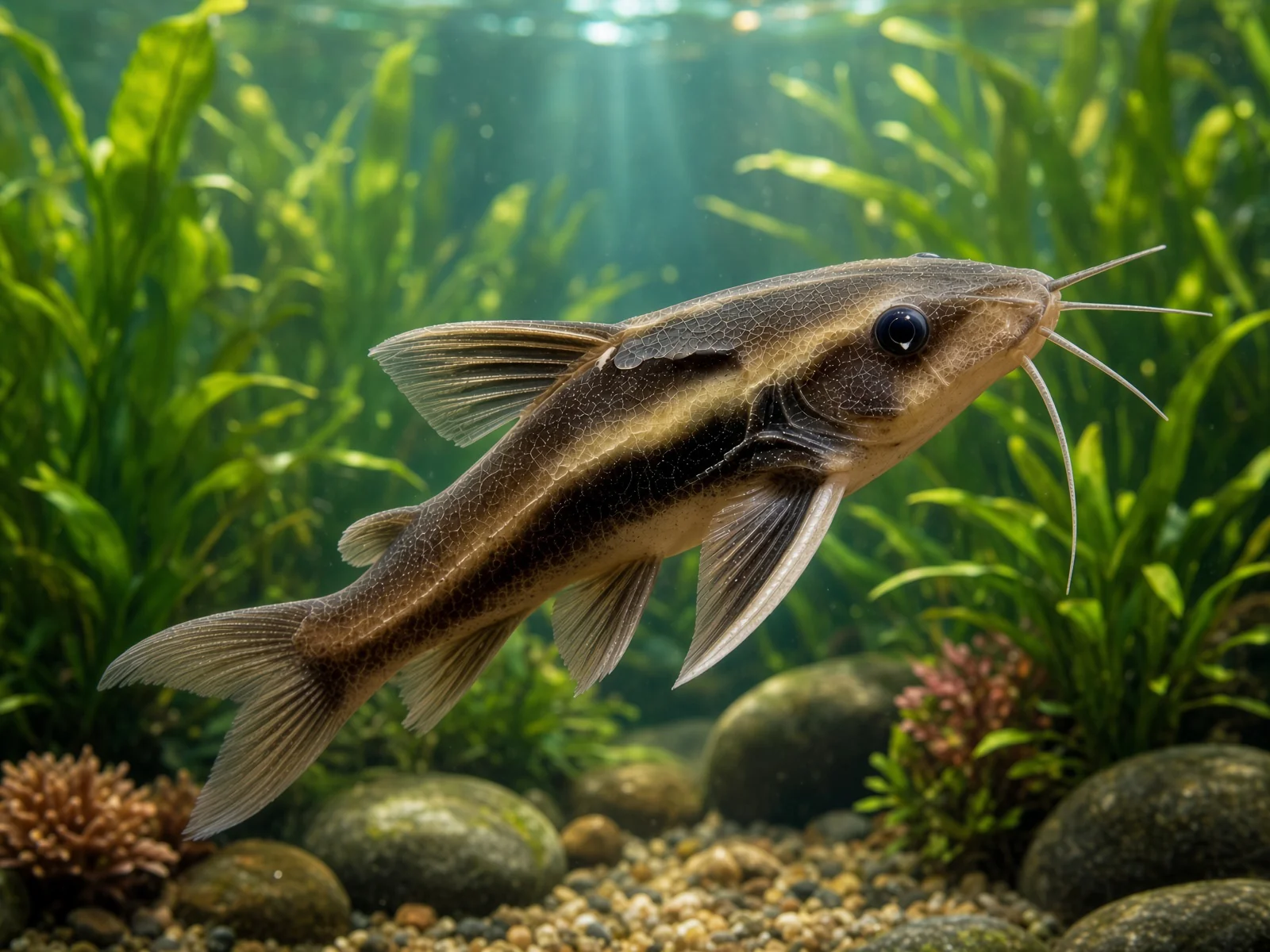
The striped raphael catfish belongs to the thorny catfish family and stands out with its distinctive banded pattern and robust armor plating. The body is covered with thick skin reinforced by bony plates, while characteristic spines run along the lateral line. Bold black and white or yellowish stripes make this species easily recognizable among aquarium inhabitants.
Coloration is most vibrant in juveniles, with stripes becoming less contrasting as the fish matures and sometimes fading almost completely. Viewed from above, the body has an arrow-like shape that allows the catfish to maneuver easily through tight spaces. The head features three pairs of barbels: one pair on the upper jaw and two on the lower jaw, which help the fish navigate in darkness and locate food.
In nature, the striped raphael catfish reaches lengths up to 24 cm, though aquarium specimens typically grow to 15–18 cm. Males are smaller and more slender than females, particularly noticeable when viewed from above. Lifespan in home aquariums ranges from 12–15 years, while wild specimens can live up to 20 years.
A distinctive feature that earned this species the nickname “talking catfish” is its ability to produce sounds using the pectoral fins and swim bladder. The fish uses these vocalizations to communicate with conspecifics and during moments of danger or stress.
Natural Habitat
The striped raphael catfish inhabits the basins of major South American rivers: the Amazon, Orinoco, Tocantins, Parnaíba, and Essequibo. This species can be found in waters throughout Colombia, Venezuela, Brazil, Peru, Bolivia, Guyana, Suriname, and French Guiana.
In the wild, these catfish prefer still or slow-moving waters where they hide among tree roots, driftwood, and dense aquatic vegetation. They favor sandy substrates in which they can burrow when threatened. Natural diet consists of mollusks, crustaceans, detritus, and aquatic insects.
The striped raphael catfish maintains a primarily nocturnal lifestyle, spending daylight hours in hiding spots and emerging after dark to forage. Juveniles during their first year may show some daytime activity, but with maturity they transition completely to nighttime activity patterns.
Striped Raphael Catfish Tank Requirements
Comfortable housing for a striped raphael catfish requires a minimum tank volume of 100 liters, though 120–150 liters is preferable for an adult specimen. If keeping multiple catfish, allocate 40–50 liters of water per individual.
Optimal water temperature ranges from 22–29°C, with 24–26°C most commonly recommended. pH should stay between 5.8–7.5, and hardness between 2–20 dGH. This species tolerates a broad spectrum of water parameters, making it suitable for beginning aquarists.
Substrate should be soft—sand or small rounded gravel without sharp edges works well. The striped raphael catfish enjoys digging in substrate, so plant roots should be protected with stones or choose species with robust root systems. The catfish doesn’t damage plants themselves, only consuming small algae on their surfaces.
Lighting should be subdued—floating plants can create shaded areas. In my experience, red or blue nighttime lighting allows observation of catfish activity without disturbing the fish.
Provide abundant hiding spots: caves, driftwood, ceramic tubes, inverted pots. This is essential for the comfort of a fish that spends most daylight hours in shelter. Filtration and aeration should be effective but without creating strong currents. Weekly water changes of 20–30% are recommended.
Feeding and Diet
The diet should consist primarily of protein-rich foods with plant matter supplements. Vegetable-based foods should comprise approximately 20–30% of the overall menu.
Suitable live foods include bloodworms, earthworms, tubifex, and small shrimp. Specialized sinking pellets or tablets for bottom-dwellers also work well. Feed after lights-out when the catfish become active and emerge from hiding.
Importantly, striped raphael catfish are prone to overfeeding—cases of fish dying from this cause are documented. Strictly control food quantities and occasionally implement fasting days. Underfeeding is preferable to overfeeding, a rule particularly relevant for this species.

Compatibility with Other Fish
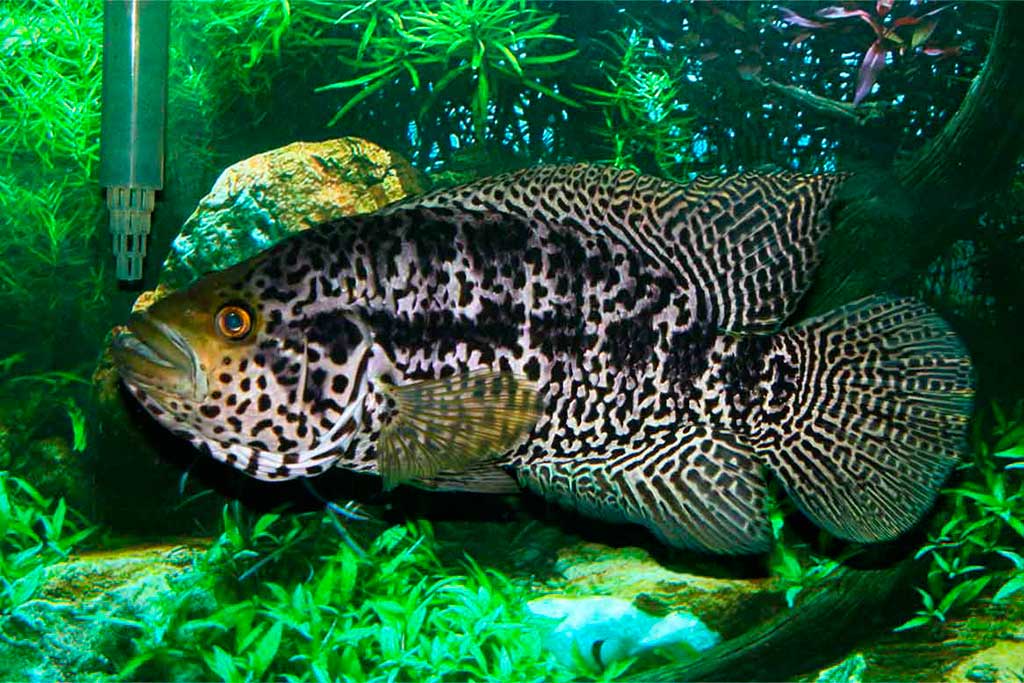
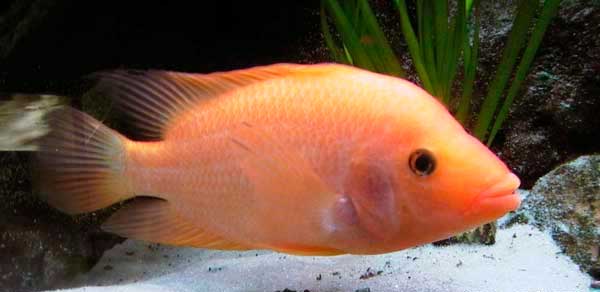
The striped raphael catfish is peaceful toward medium and large-sized fish, but small fish that can fit in its mouth may be consumed. Thanks to its armor plating, this catfish can coexist even with large aggressive cichlids unable to harm it.
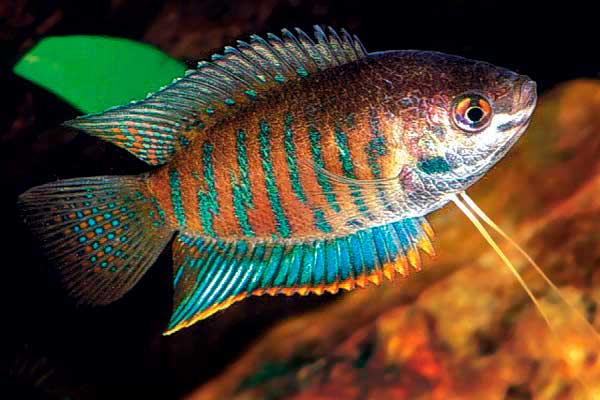
It lives harmoniously with characins, cyprinids, gouramis, as well as swordtails and mollies. Suitable for community tanks with bristlenose plecos and hoplo catfish. Not appropriate for aquariums housing neon tetras, guppies, danios, and other small species that might become prey.
The striped raphael catfish may hunt snails and shrimp, making their cohabitation inadvisable. When keeping multiple specimens, catfish may display territorial behavior and engage in disputes, though without serious injuries. Over time they establish territory sharing and live peacefully.
An interesting characteristic of juvenile striped raphael catfish is their ability to function as cleaners, removing parasites from larger fish. This behavior doesn’t occur in all individuals and typically disappears with maturity.
Handling Considerations and Breeding
When catching a striped raphael catfish, use a jar or container rather than a net—the fish’s spines easily tangle in mesh, potentially causing injury. Spine punctures are painful for humans, so exercise caution during aquarium maintenance.
Home aquarium breeding is extremely rare and typically requires hormonal injections. Sexual maturity occurs in the second or third year of life. Females are larger and fuller-bodied than males, especially noticeable from above. Most aquarists purchase already-grown specimens, as stimulating spawning in home conditions is nearly impossible without specialized knowledge and preparations.
I recommend the striped raphael catfish as a first catfish for beginning aquarists—the species is undemanding, hardy, and tolerant of a wide range of water conditions. With proper care, it will enjoy a long lifespan and become a fascinating observation subject, particularly during evening and nighttime hours.