Understanding Ich (White Spot Disease)
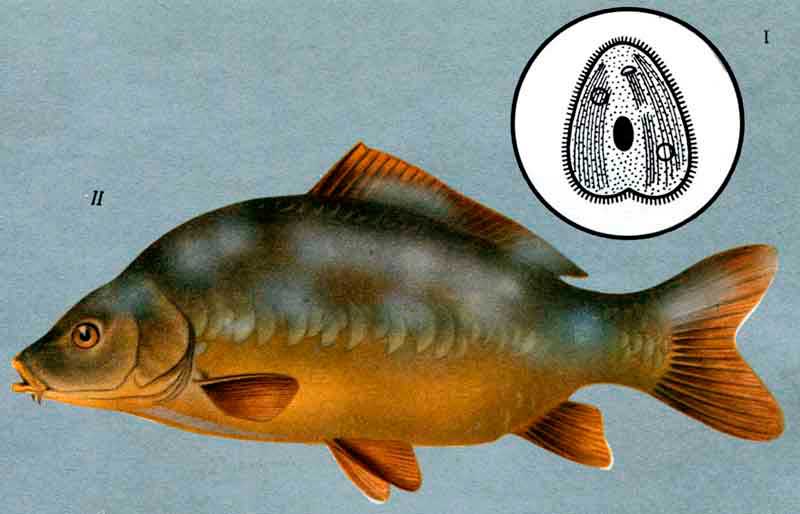
Ich, scientifically known as Ichthyophthirius multifiliis, is one of the most common and dangerous diseases affecting aquarium fish. In my experience, early recognition and proper treatment can save virtually all tank inhabitants. The parasite is a ciliated protozoan, roughly spherical or egg-shaped, measuring 0.5-1 mm in diameter. It moves through water using hair-like cilia covering its body.
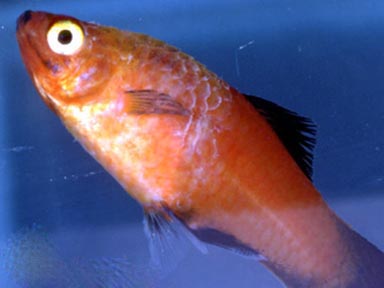
The parasite shows extremely low host specificity, meaning it can infect most freshwater fish species regardless of age or care conditions. From mollies to bettas, no fish is truly immune when conditions favor the parasite.
Life Cycle of the Parasite
Understanding the three-stage life cycle is critical for effective treatment. The cycle includes: parasitic stage within the host’s skin, reproductive cyst stage, and free-swimming “swarmers” (theronts) in the water column.
The cycle begins when a mature parasite leaves the fish and forms a protective cyst on aquarium surfaces—glass, plants, or decorations. Inside this cyst, the organism divides repeatedly, producing up to 2,000 daughter cells from a single parent. These daughter cells, called swarmers or theronts, have 2-3 days to find a host fish or perish.
Once a swarmer locates a fish, it penetrates the skin or gills, feeding on epithelial cells while growing. Eventually, the mature parasite breaks through the epithelium and exits to complete the cycle again.
Temperature dramatically affects cycle duration: approximately 7 days at 25°C (77°F), extending to 8 weeks at 6°C (43°F). This temperature dependency is key to treatment strategies.

Clinical Signs and Symptoms
The incubation period from initial infection to visible symptoms is about 5 days. I recommend careful observation during this critical window.
Early Warning Signs
The invasion moment can be detected by increasingly restless behavior. Fish attempt to dislodge parasites by positioning themselves in strong current, or rubbing (flashing) against substrate, plants, and decorations. This behavioral change is your first alert.
Primary Symptom
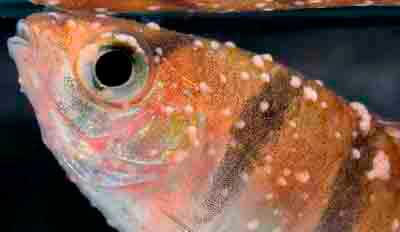
The hallmark sign is the appearance of small white spots, approximately 1 mm in diameter, resembling grains of salt scattered across the body, fins, and gills. Initially, a few spots appear on fins, but within 1-2 days their number increases dramatically.
During heavy infestation, white spots cover the fish almost entirely. At this stage, the fish becomes lethargic, apathetic, and frequently gulps air at the surface. This happens because gill filaments are destroyed by parasites, forming blood clots that impair respiration.
Special Risk for Fry
Young fish face particular danger from ich. Due to their small body size and developing immune systems, fry succumb much faster than adults. In my experience, untreated fry rarely survive.
Immediate action is essential at the first symptoms. Without intervention, mass mortality typically begins by the end of the second week.
Accurate Diagnosis
Visual symptoms alone are insufficient for diagnosis, as several diseases present similarly—including velvet disease (oodiniasis), lymphocystis, or microsporidian infections. Definitive diagnosis requires microscopic examination of skin and gill scrapings to identify the characteristic infusoria.
I recommend submitting a mucus scraping to a veterinary laboratory for confirmation before starting treatment. Accurate diagnosis ensures appropriate therapy.
Treatment Strategies
Successful treatment depends on understanding that medications are most effective against free-swimming stages. Parasites within cysts on the fish body are largely protected from treatment, so therapy targets the swarmer stage in the water column.
Temperature Method
Temperatures above 32°C (90°F) kill ich within 12 hours. Gradually raising aquarium temperature to 32-34°C (90-93°F) exceeds the parasite’s survival threshold.
Important consideration: Not all fish species tolerate such high temperatures. Research your specific fish before using this method. For tropical species, it’s ideal; for coldwater fish, rely solely on medications.
Treatment Environment
Treatment can occur in the main aquarium or a hospital tank. A quarantine tank should contain no substrate, plants, or complex decorations—only bare glass and inert hiding places. Water must be vigorously aerated, especially at elevated temperatures.
Medication Options
Modern medications have simplified ich treatment considerably. In my experience, these products are most effective:
Specialized Medications:
- TetraMedica Contralck—among the most effective options
- Sera Costapur—reliable alternative
- TetraMedica GoldOomed—formulated for goldfish
- SERA med Professional Protazol—broad-spectrum treatment
Traditional Remedies: A proven mixture (per 25 liters): 0.05g quinine, 50,000 IU biomycin, 5mg trypaflavine. Other options include bicillin-5, malachite green, and formalin.
Treatment Protocol
Match hospital tank temperature to the main aquarium before transferring fish. After transfer, gradually raise temperature to 32-34°C (90-93°F). Monitor fish closely—reduce temperature slightly if distress appears.
After 24 hours, remove one-third of the water and replace with fresh water containing the same medication concentration (except quinine in traditional protocols). Repeat this daily water change.
Maintain elevated temperature for at least 3 days to eliminate all infusoria, though I recommend extending treatment to 7-10 days, as white spots may persist longer on some fish.
Critical Considerations
Frequent water changes are essential during treatment, as biological equilibrium is disrupted. Bacterial blooms may cloud the water. Reduce feeding or use high-quality foods that don’t foul water.
Follow medication instructions precisely, respecting dosages. For scaleless fish, reduce many medication doses by half.
Prevention Measures

Ich typically enters aquariums with new fish or live food. Prevention centers on strict quarantine protocols for all new arrivals.
Never add new fish directly to your main aquarium without a 7-10 day quarantine period. I recommend extending this to 14 days for complete security. The challenge is that ich can remain viable in a dormant state for up to a month.
A useful technique: add a few established fish to the quarantine tank with newcomers. If these “canaries” remain healthy after one week, the new fish likely aren’t carriers.
Additional Preventive Steps
- Avoid sudden temperature fluctuations that weaken immunity
- Prevent overstocking
- Maintain stable water parameters
- Perform regular water changes
- Provide complete nutrition
- Quarantine live plants from natural waters
In my experience, healthy fish in well-maintained aquariums with stable conditions rarely develop ich, even if the parasite is present. Strong immunity is the best defense.
When first symptoms appear, don’t panic. Modern medications and proper protocols can eliminate ich in 7-10 days without losses. The key is acting quickly and systematically. If complications arise or you suspect additional diseases like columnaris or costiosis, consult a veterinarian specializing in fish health. For aquarium beginners, understanding ich is essential foundational knowledge.
Article updated: 2026-07-23