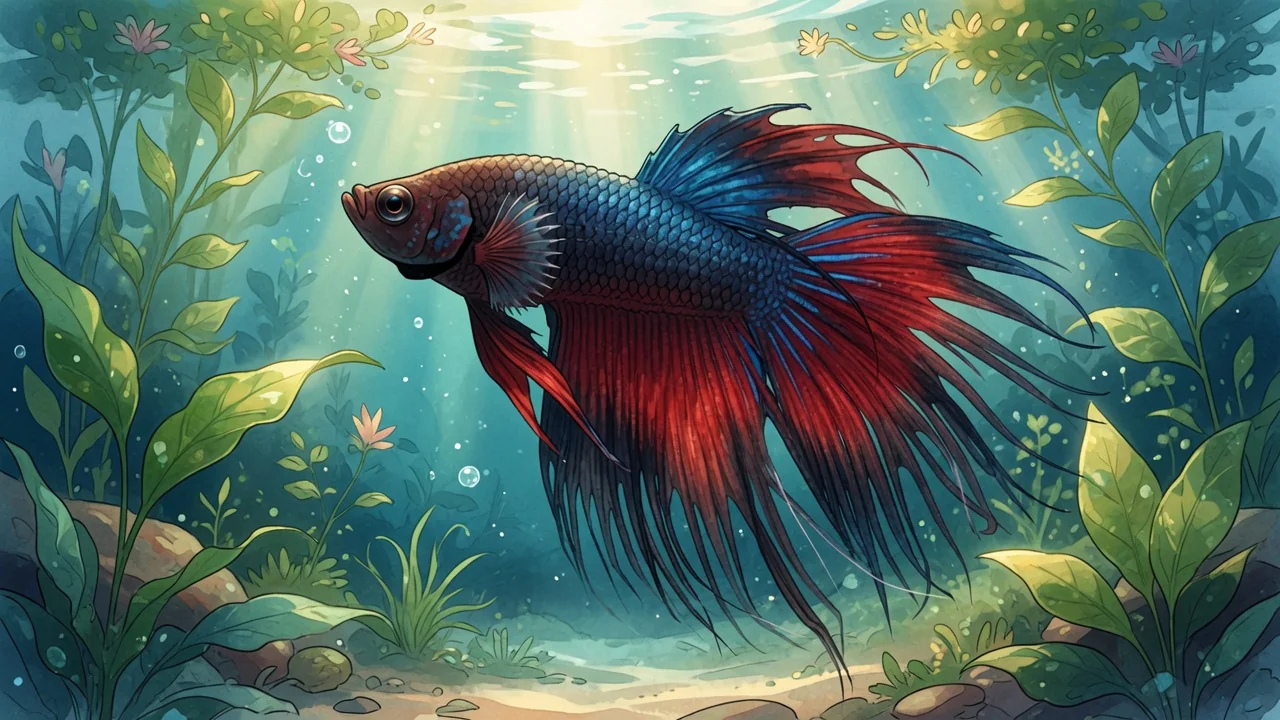
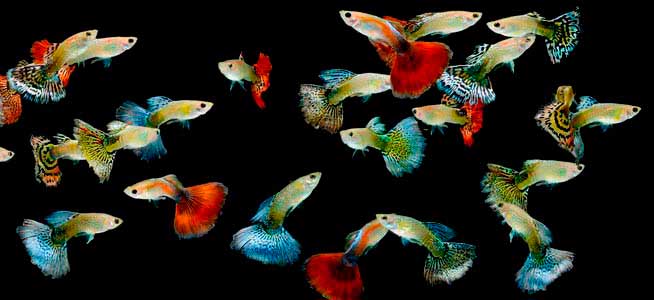
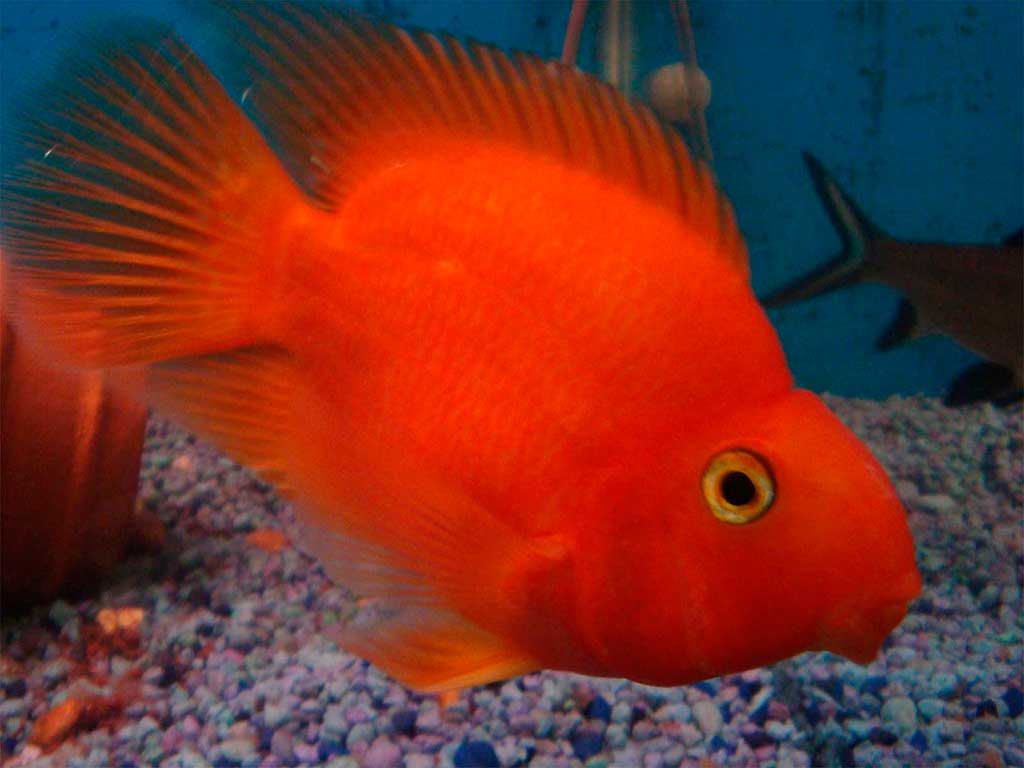
The red black betta represents one of the most striking color combinations in the Betta splendens family. This selective breeding achievement combines vibrant red hues with deep black accents, creating a dramatic contrast that catches the eye immediately. In my experience, these fish display their best colors in tanks with dark substrate and live plants, where the red-black pattern truly stands out.
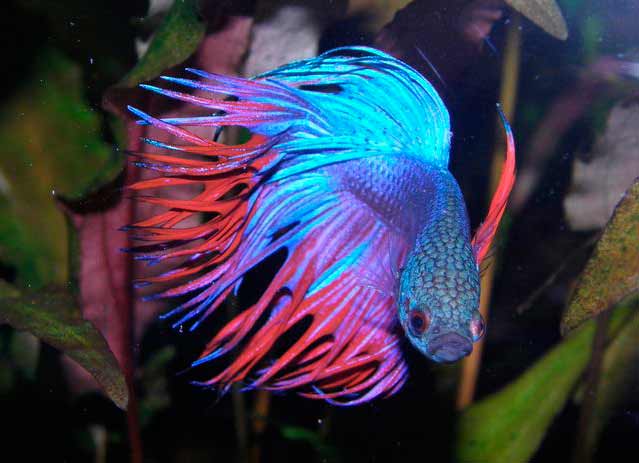
Selective breeding has produced numerous color variations in bettas, from solid blues and greens to multicolor patterns. The red black betta typically features a red body ranging from bright scarlet to deep burgundy, with black coloring appearing on the fins. What makes this particularly interesting is how the red fins often show blue or green iridescence when light hits them at certain angles.
The intensity of coloring peaks during spawning periods or when males display territorial behavior. This natural color enhancement is part of their communication system.
Physical Characteristics and Gender Differences
Male red black bettas reach approximately six to seven centimeters in length, while females typically stay smaller at four to five centimeters. Sexual dimorphism is quite pronounced in these fish.
Males develop significantly larger and more colorful fins compared to females. Their caudal and dorsal fins flow dramatically, especially in veiltail varieties. Females have shorter fins and less saturated coloring, though quality breeding lines can produce fairly vibrant females as well.
For more detailed information about betta characteristics, check out this guide on betta fish.
Tank Setup for Red Black Bettas
Proper water parameters are essential for keeping these fish healthy. The optimal temperature range is twenty-four to twenty-eight degrees Celsius. Water pH should stay between six and eight, with general hardness between five and fifteen degrees.
The minimum tank size for a single red black betta is ten liters, though twenty liters or more is preferable. Larger volumes provide more swimming space and make maintaining stable water parameters easier.
Breathing Requirements and Aeration
Bettas possess a labyrinth organ that allows them to breathe atmospheric air from the water surface. This means aeration isn’t strictly necessary. However, the air temperature above the water should match the water temperature closely — cold air can cause respiratory problems when the fish gulps it.
A lid or cover glass is essential, as bettas are capable jumpers, particularly when stressed.
Water Flow and Filtration
Strong currents are unsuitable for red black bettas, as they prefer calm water. Their natural habitat consists of slow-moving or stagnant waters in Southeast Asia — swamps, ponds, rice paddies, and ditches with dense vegetation. Use a filter with gentle flow, directing the output toward the tank wall or diffusing it with special attachments.
Plants and Decorations
Live plants benefit water quality and provide shelter. Bettas don’t damage plants and thrive in heavily planted tanks. Java moss, anubias, cryptocorynes, and vallisneria work well.
Decorations and artificial plants must have smooth edges to protect the delicate fins. Choose rounded stones, smooth driftwood, and purpose-made aquarium ornaments.
Feeding Your Red Black Betta
The diet should consist primarily of protein-rich foods — live or frozen options. Suitable choices include bloodworms, brine shrimp, black mosquito larvae, tubifex, and daphnia. Live food at least twice weekly helps maintain color intensity and overall health.
Specialized dry foods and pellets formulated for bettas contain balanced nutrients and color enhancers that help preserve the vibrant red-black coloring.
Feed once or twice daily in small portions the fish can consume within one to two minutes. Bettas tend toward overeating, so portion control matters. Overfeeding poses more risk than underfeeding and can lead to obesity and health complications.
Higher water temperatures intensify coloring and increase metabolism, which should factor into your feeding schedule.
Compatibility with Tank Mates
Male red black bettas show extreme aggression toward each other and will fight to the death. Only one male per tank is possible. Females are less aggressive and can live in groups with sufficient space — fifty liters or more for three to four females.
Bettas can coexist with peaceful medium-sized species and small active fish. Good companions include corydoras catfish, otocinclus, neon tetras, and rasboras. Avoid fish known for fin-nipping, such as certain barbs and characins.
Don’t house bettas with other long-finned species — males may mistake them for rivals. You can learn more about general betta behavior in this article about cockerel fish or fighting fish.
Breeding Red Black Bettas
Sexual maturity occurs at three to five months of age. For breeding, use a young pair aged six to eight months — these produce the healthiest offspring.
Males build bubble nests at the water surface, cementing air bubbles with saliva. To trigger spawning, raise the water temperature to twenty-six to twenty-nine degrees Celsius. A breeding tank of at least twenty liters should contain floating plants — they provide anchoring points for the nest.
Remove the female immediately after spawning, as the male may become aggressive toward her. The male tends the eggs and larvae until the fry begin swimming horizontally — typically three to four days after hatching.
Raising Fry
First food for fry includes infusoria or specialized micro-foods. After several days, transition to baby brine shrimp. Feed frequently — four to five times daily in small amounts.
Sort fry by size as they grow to prevent cannibalism. Around two months of age, males begin developing characteristic long fins and should be separated into individual containers.
Practical Care Tips
I recommend weekly water changes of twenty-five to thirty percent. This maintains stable parameters and removes accumulated metabolic waste.
Life expectancy for red black bettas averages two to three years with proper care. Quality feeding, clean water, and stress-free conditions are key to longevity.
Monitor your betta’s behavior closely: lethargy, appetite loss, color fading, or clamped fins can signal health problems or unsuitable conditions. In such cases, test water parameters and adjust as needed. For health concerns, consult this guide on betta splendens and their diseases.
Final Thoughts
The red black betta is a stunning fish that adds dramatic visual impact to any aquarium. With straightforward care requirements, this beauty will reward you with vibrant coloring and engaging behavior. Proper tank mate selection, quality nutrition, and stable water parameters form the foundation for successfully keeping this remarkable aquarium fish.