Aphyosemion boehmi: Care Guide for Gabon Killifish
Description and Origin
Aphyosemion boehmi, commonly known as Boehm’s Aphyosemion or Gabon Killifish, was described by Radda and Huber in 1977. The species was discovered in Gabon in 1976 and is found exclusively in the Ngounie River basin in western Gabon. These fish inhabit slow-moving or standing waters, including streams, seasonal pools, and swampy areas.
In my experience, Aphyosemion boehmi is one of the most attractive representatives of the genus, though it demands particular attention to keeping conditions.
Appearance
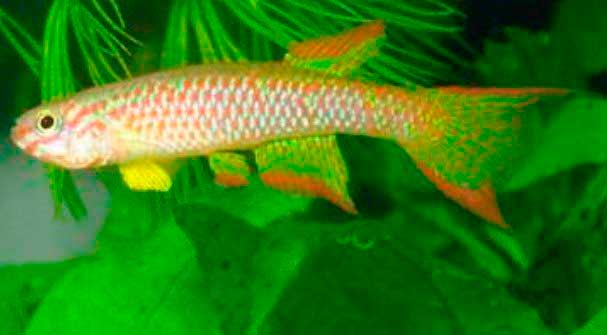
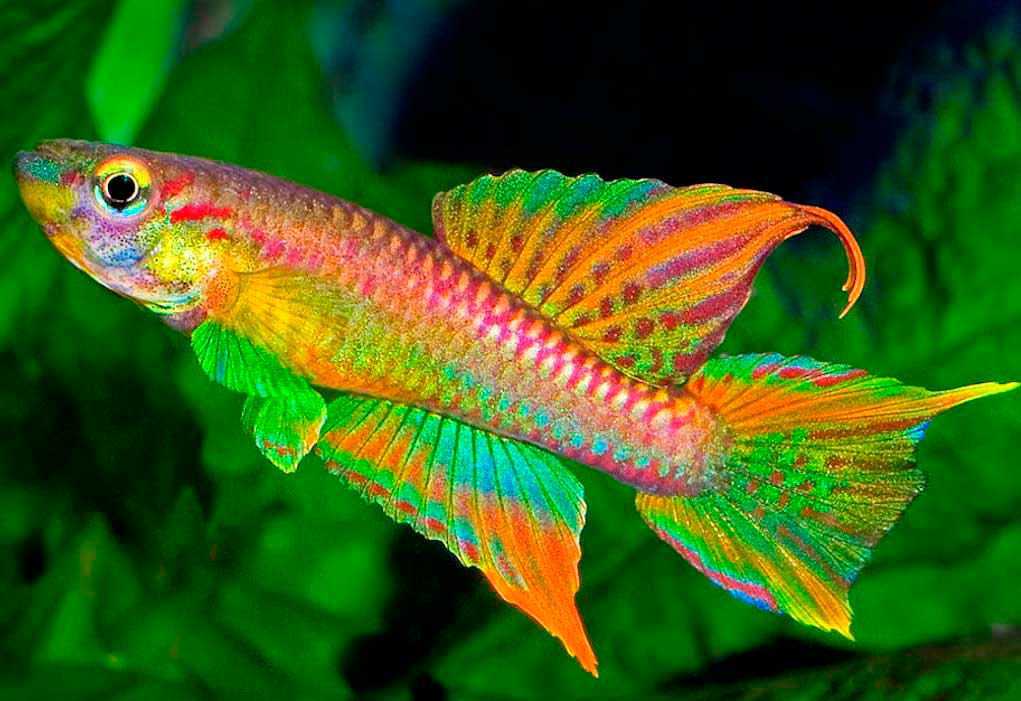
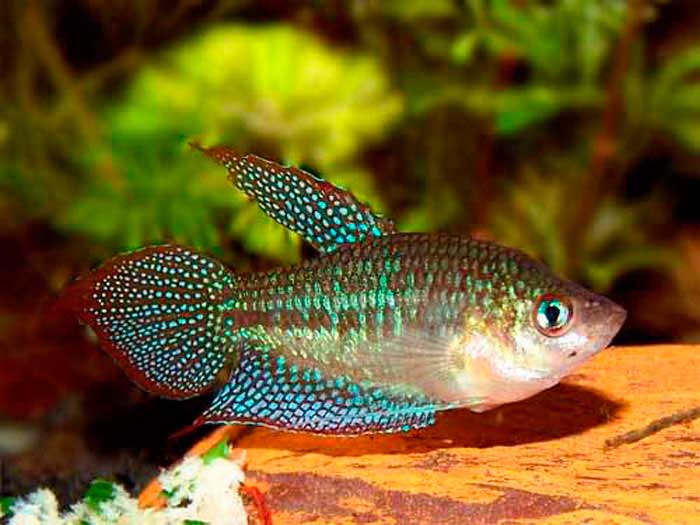
Males reach a length of 5-6.5 cm, while females are somewhat smaller. The back of males has a brownish tint, and the sides are colored in yellow-green with red dots scattered in a staggered pattern. Males display a stunning palette of colors, including rich blues, iridescent greens, deep reds, and bright orange hues.
The anal fin has a yellowish tint with red speckles and black edging below. The dorsal fin is similar in coloration to the anal fin but has a red edge on top. The tail is lyre-shaped and asymmetrical, decorated with red dots and stripes. The male’s body has an arc-shaped bend.
Females have less ornate coloration, with transparent fins and predominantly brown coloring.
Parameter
Value
Scientific name
Aphyosemion boehmi
Family
Nothobranchiidae
Maximum size
5-6.5 cm
Lifespan
2-3 years
Temperament
Peaceful, timid
Care difficulty
High
Keeping Conditions for Aphyosemion boehmi
For these fish, I recommend organizing a species aquarium with a volume of about 20-30 liters. Gabonese aphyosemions are quite fearful creatures, so it’s essential to provide them with shelters where they can hide in case of danger.
The water should be soft (2-6 dGH), slightly acidic with pH 6.0-7.0, and maintained at a temperature of 23-25°C. In the back corners of the aquarium, it’s advisable to arrange small thickets of plants. Suitable options include vallisneria, Java moss, and hornwort. Driftwood, fallen leaves, and floating plants will provide additional shelters and help maintain water quality.
Aphyosemion boehmi is a predator and should be fed quality flakes, pellets, live or frozen foods such as brine shrimp, daphnia, and bloodworms. In my experience, proper feeding with live foods significantly enhances the coloration of males.
Breeding
For breeding, I prepare a container of 3 to 10 liters. Peat is placed at the bottom, or spawning mops can be used. The water should be soft and slightly acidic. The temperature is gradually raised to 24-26°C.
It’s better to place one male and several females for spawning. Male aphyosemions perform complex courtship dances, displaying bright colors and spread fins, after which they lead the ready female to the spawning site. Fecundity in this species is small.
The eggs develop for 10-14 days. An important advantage is that the eggs do not require a dry period for development, unlike some other African killifish. In the first days, the fry should be fed infusoria. As they grow, you can switch to microworms or nauplii of cyclops or brine shrimp.
The fry grow slowly. By one month of age, they reach a size of no more than one centimeter. When the fry are two months old, males acquire a yellowish coloration. Sexual maturity is reached at about 14-16 weeks, and adult fish size can be achieved only after six months.
Compatibility
Aphyosemion boehmi is a peaceful but shy fish. I don’t recommend keeping it with active or aggressive species. If you decide to place them in a community aquarium, choose calm neighbors that prefer similar water parameters—much like the peaceful Lalius, which also appreciates quiet tankmates. However, the best option remains a species-only setup.
As you can see, Gabonese Aphyosemion boehmi is a fish quite challenging both for keeping and breeding. However, those who invest the effort and time will be rewarded with an aquarium featuring magnificent fish that not everyone can successfully maintain.