Aphyosemion wachtersi is one of the most colorful representatives of the Aphyosemion genus, deserving attention from aquarists due to its relatively straightforward breeding process. This small killifish is notable for spawning without the egg diapause characteristic of most other aphyosemions.
Natural Habitat
In the wild, Aphyosemion wachtersi inhabits tropical forests in the Lesala River basin, part of the Ogowe River system in Gabon. Living under the canopy of humid tropical forests where rivers virtually never dry up has spared this species from adapting to prolonged droughts. This is precisely why egg development requires no diapause—the suspension of vital activity during unfavorable conditions.
Description and Appearance
| Parameter | Value |
|---|---|
| Scientific name | Aphyosemion wachtersi |
| Family | Nothobranchiidae |
| Male size | 3-4 cm |
| Female size | 2.5-3 cm |
| Lifespan | 2-3 years |
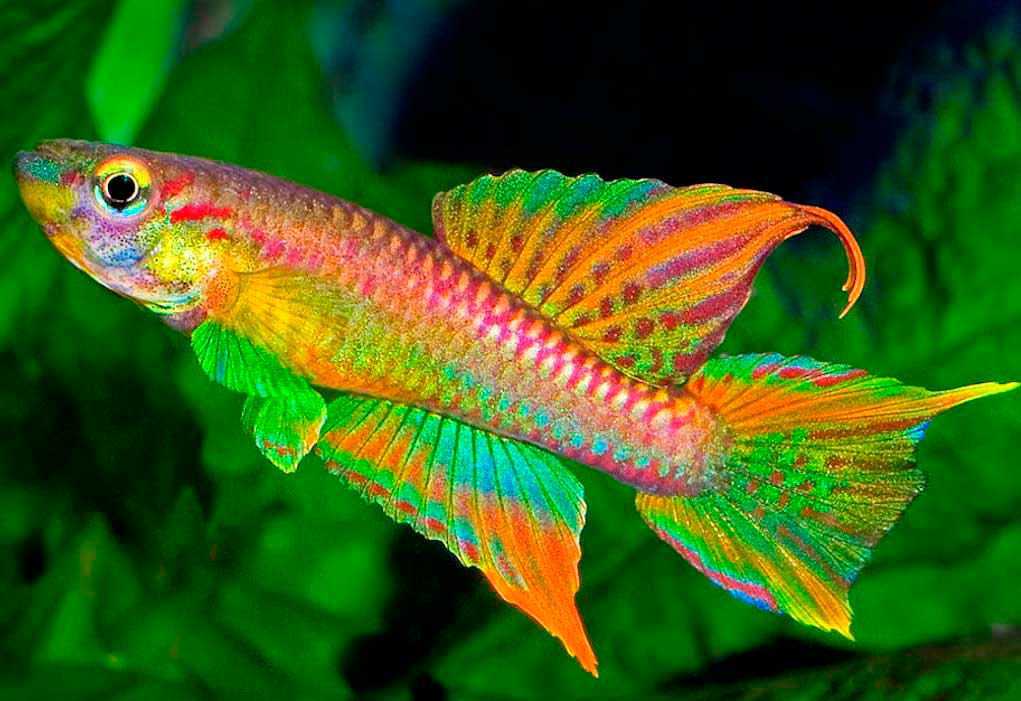
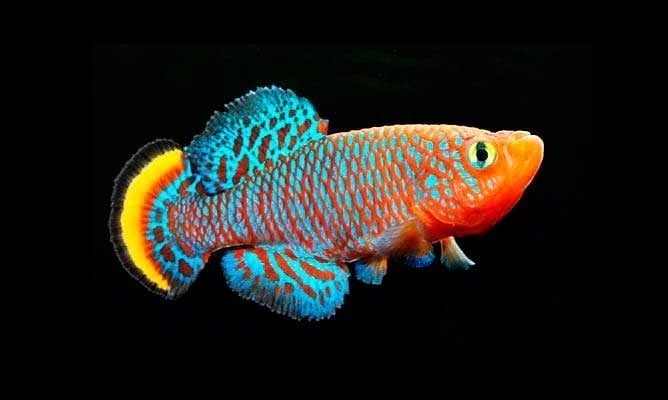
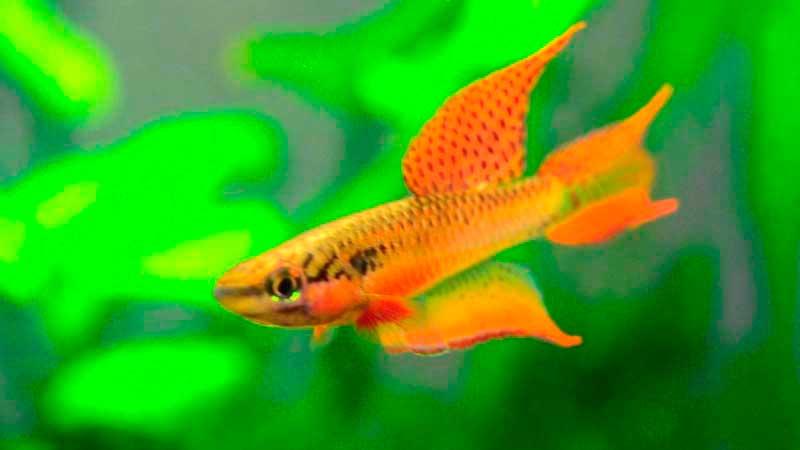
Aphyosemion wachtersi remains small: males reach 3-4 centimeters, females are typically slightly smaller. Male coloration impresses with its variety of hues. The back displays a brownish tone, the lower flanks are yellowish, and the belly is beige. The sides shimmer with a blue-green iridescence.
Just above the midline, the body features carmine-red speckling, creating the characteristic aphyosemion pattern on the head. Closer to the tail, red dashes and dots merge into a continuous line. The anal and caudal fins appear divided into two parts by a horizontal red line: below it, the fins are yellow, above it they display a turquoise tint.
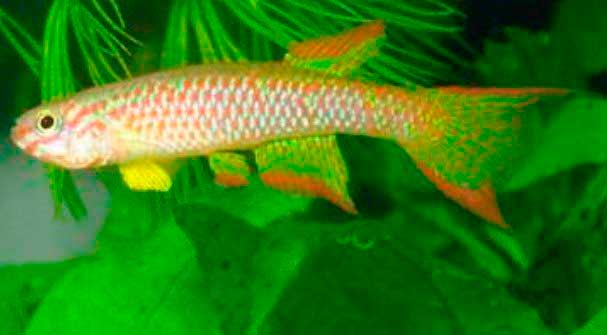
Female coloration is characterized by predominant brown tones. Like most killifish species, they have less variegated patterns but are not without charm, possessing delicate dotted markings on their flanks.
Aphyosemion Wachtersi Care
While a pair can survive in a tank as small as 10 liters, I recommend using at least 15-20 liters to create stable conditions. In my experience, larger water volume makes parameter control easier and reduces stress for the fish.
Water Parameters
| Parameter | Value |
|---|---|
| Temperature | 18-22°C (optimal 20°C) |
| pH | 5.5-6.5 |
| Hardness (GH) | 2-8°dGH |
| Water changes | 20-30% weekly |
Close attention should be paid to water parameters. Since the natural habitat is tropical forest, the aquatic environment is rich in organic sediments and more acidic than what typical aquarium fish prefer. The pH level should be maintained in the 5.5-6.5 range.
Temperature for Aphyosemion wachtersi should be lower than for most tropical species. In natural conditions, temperatures sometimes drop to 17°C. Of course, you shouldn’t overchill the fish, but excessive heating is also unacceptable. I recommend maintaining around 20°C—at this temperature, the fish are most active and healthy.
Equipment and Aquascaping
Additional aeration and filtration are possible but not mandatory with small fish populations. Since this is a riverine species, creating a gentle water current with an aquarium pump or air-driven filter is beneficial.
The aquarium should be densely planted to create shaded areas. Suitable plants include Java moss, cryptocorynes, and ferns. Floating plants can be added to diffuse light. Use dark, fine substrate with added almond or oak leaves to acidify the water.
Feeding
Aphyosemion wachtersi prefers live foods: small bloodworms, chopped tubifex and earthworms, artemia nauplii, daphnia, and cyclops. In my experience, the fish readily accept quality frozen foods but show less enthusiasm for dry options. To maintain vibrant coloration and stimulate spawning, live foods should form the dietary foundation.
Feed small portions 1-2 times daily. Like many killifish species, they can be prone to overfeeding, so moderation is key.
Breeding Aphyosemion Wachtersi
Breeding can be triggered by gradually raising pH by 0.5-1 units and increasing water temperature by 1-2°C. As mentioned earlier, the eggs develop without diapause, which simplifies the breeding process compared to annual killifish.
Development lasts approximately two weeks at 20-22°C. Provide spawning mops or fine-leaved plants like Java moss for egg deposition. The fish are continuous spawners, laying small batches of eggs regularly.
Fry should initially be fed infusoria or liquid fry food. After 3-5 days, you can introduce small portions of artemia nauplii. Growth is relatively slow compared to larger aquarium fish species like goldfish, but steady with proper feeding.
In general, aphyosemion breeding requires attention to detail and patience. If you have successful experience with this species, sharing your insights would benefit fellow aquarists exploring these fascinating killifish.
Article updated: 2026-07-15