Natural Habitat and Distribution
Aphyosemion batesii, commonly known as Bates’ killifish, belongs to the family Nothobranchiidae and was first described by Boulenger in 1911 as Fundulus batesii. The type locality includes the Bitye River (Dja River basin) and Bumba River in the Congo River basin, southern Cameroon. The species is also found in the Kole River near Malassa, east of Mekambo, in Gabon.
In nature, this species inhabits swampy streams and waterlogged areas of tropical forests where distinct wet and dry seasons occur. The water in these habitats is soft and acidic, with temperatures ranging from 22-24°C, pH 4.4-5.8, hardness 0.5-1.5 dH, and depths varying from 20 to 25 cm. As the dry season approaches and temperatures rise to 24-26°C, this serves as a natural spawning trigger for the fish.
Physical Description
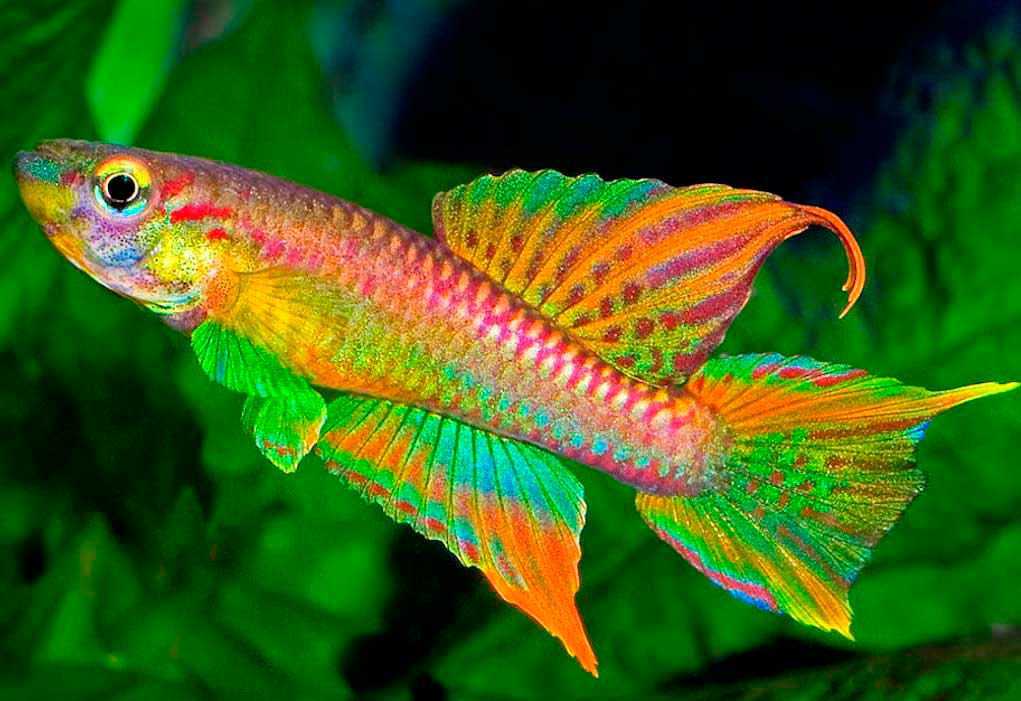
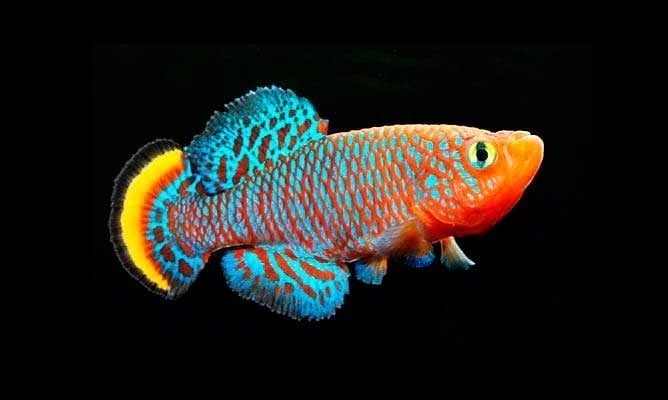
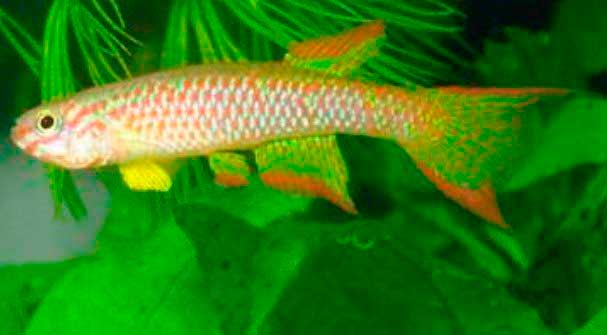
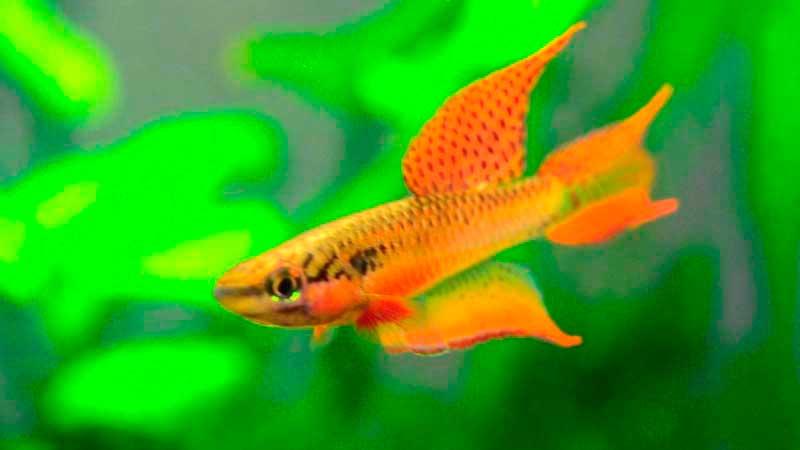
Aphyosemion batesii has a rounded head transitioning into an elongated, spindle-shaped body that becomes somewhat flattened near the caudal fin. Males reach lengths of 7-10 centimeters, while females are slightly smaller at 6-8 cm. Male coloration features light brown base tones with reddish hues dominating the dorsal region and bluish-white tints on the belly. The dorsal and anal fins display elongated first rays, and the caudal fin is distinctly lyre-shaped.
| Parameter | Value |
|---|---|
| Scientific Name | Raddaella batesii (Boulenger, 1911) |
| Family | Nothobranchiidae |
| Male Size | 7-10 cm |
| Female Size | 6-8 cm |
| Temperature | 22-27°C |
| pH | 4.4-6.5 |
| Hardness | 0.5-3 dH |
| Lifespan | 2-3 years |
Aquarium Requirements
Keeping Aphyosemion batesii doesn’t require a large aquarium—a 40-liter tank is sufficient for a pair or small group. In my experience, fine-leaved plants that create shaded areas work best for this species. Unlike many members of the genus Aphyosemion, this species adapts reasonably well to captive conditions when basic requirements are met.
In captivity, where the drought period is eliminated, these fish typically live around three years. With proper nutrition, they are relatively peaceful and can coexist with other similarly-sized species sharing comparable water parameters—such as small rasboras or peaceful tetras. However, I must emphasize that insufficient feeding can trigger cannibalistic behavior, particularly toward fry.
Water Parameters
Optimal results are achieved in soft, slightly acidic water. I recommend maintaining temperatures at 22-24°C for routine keeping, increasing to 26-27°C only when conditioning for breeding. Regular water changes of 20-30% weekly are critically important for maintaining fish health. The soft, acidic conditions preferred by this species are similar to those required for keeping Cyprinodontidae in general.
Feeding
Aphyosemion batesii is a predatory species preferring live and frozen foods: daphnia, cyclops, bloodworms, and brine shrimp. While they may accept quality dry foods, these are consumed less enthusiastically. Feed 1-2 times daily in small portions to prevent water quality deterioration.
Breeding Aphyosemion Batesii
Fish become sexually mature at approximately six months of age. Select breeding specimens exceeding five centimeters in length. An important characteristic of Raddaella group killifish is their classification as “switching spawners”—they can deposit eggs both in substrate and on plants, providing flexibility in breeding setups.
Spawning Tank Setup
Successful breeding requires simulating the onset of drought conditions. Use an all-glass vessel with a capacity of 10-20 liters. Line the bottom with a 1-2 cm layer of boiled peat moss. Water should be aged, soft (up to 2 dH), and slightly acidic (pH 5.5-6.5).
After introducing the breeding pair, gradually increase water temperature to 26-27°C. The spawning period typically lasts about one week. Daily, the female deposits 20-40 light yellow eggs measuring approximately 1.5 mm in diameter. Following fertilization, the male strikes the substrate with his tail, stirring up the peat to cover the eggs.
Egg Incubation and Diapause
After spawning concludes, remove the parent fish. Carefully extract the peat containing eggs, gently squeeze out excess water, and wrap it in paper. Store this package in a dark, cool location with good air circulation at temperatures around 19-21°C. This storage period should last 9-10 weeks.
During storage, regularly check that the peat remains slightly moist but not wet, and ensure no mold develops. This process mimics the natural diapause period that eggs undergo during the dry season—without this dormancy, proper embryonic development cannot occur.
Hatching
After the diapause period, remove the peat from the paper and place it in a container with soft, preferably distilled water. The peat will initially float but will become saturated and sink within a few minutes. Gradually raise the water temperature to 26-27°C. Within hours, relatively large fry measuring 3-5 millimeters will begin emerging from the eggs.
Fry Care
By hatching time, you should have appropriately-sized food prepared. Newly hatched cyclops or Artemia nauplii work best as first foods. In my experience, the fry grow rapidly when fed 2-3 times daily with small portions. After two weeks, you can introduce finely chopped tubifex or grindal worms.
Maintain pristine water quality through frequent small water changes—I recommend 10-15% daily for the first month. The fry are sensitive to water quality deterioration, and careful attention during this period significantly impacts survival rates. Similar attention to water quality is essential when breeding other killifish species.
Growth rates vary among individuals, so size-sorting may become necessary to prevent larger fry from consuming smaller siblings. By three months, juveniles typically reach 3-4 cm and begin showing adult coloration patterns.
Article updated: 2026-07-17