Species Description
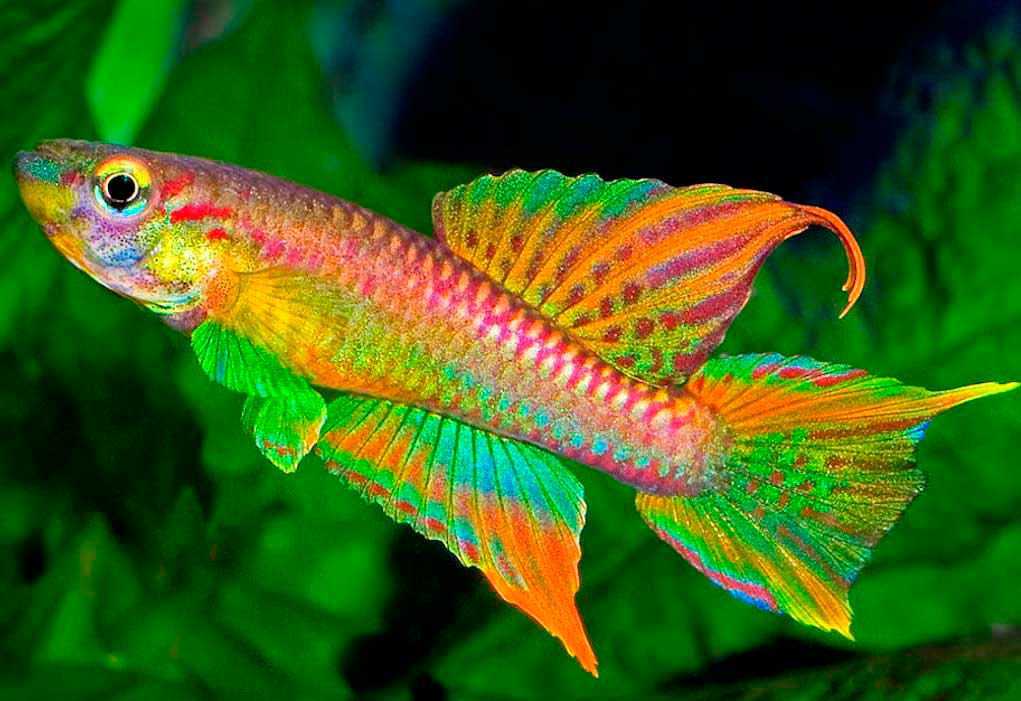
Aphyosemion filamentosum “Ikeja” is a distinctive color variation of the well-known species A. filamentosum, inhabiting the Lagos area of Nigeria within a radius of approximately 30 kilometers. This killifish attracts aquarists with its unusual coloration and compact size, making it an excellent choice for species-specific nano setups.
Appearance and Size
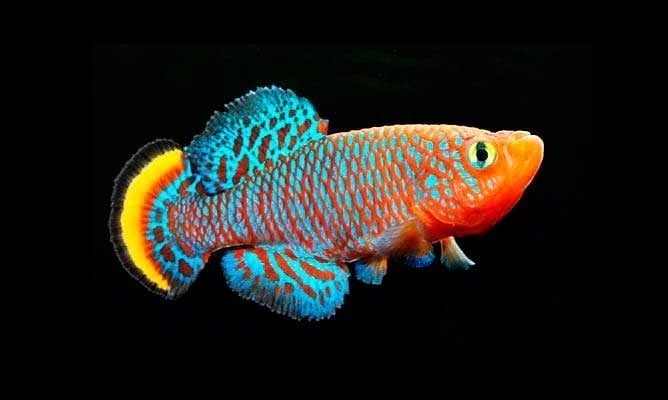
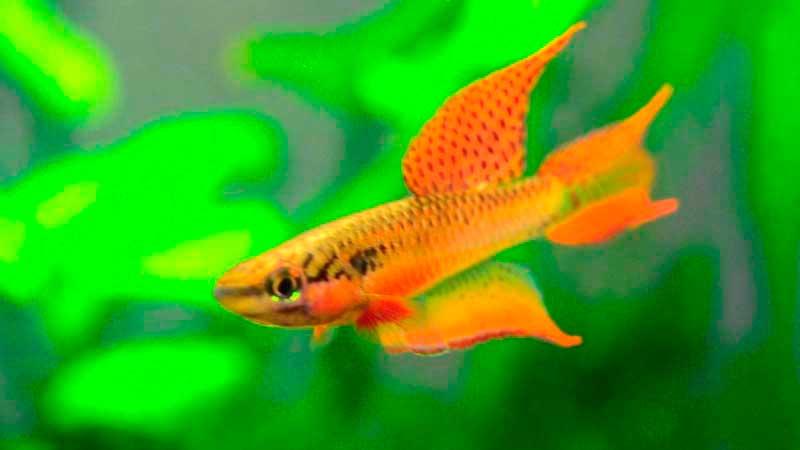
Males reach lengths of 5-5.5 cm, while females are somewhat smaller at around 4.5 cm. The base body color is light yellow with a characteristic blue-green iridescence on the back. Purple spots are scattered randomly across the entire body, creating a unique pattern on each individual. A horizontal brown line runs along the anal fin and lower portion of the caudal fin. The caudal fin has a distinctive trident shape with a truncated middle ray.
Tank Parameters
| Parameter | Value |
|---|---|
| Minimum volume | 15 liters |
| Temperature | 20-22 °C (68-72 °F) |
| pH | 6.0-6.5 |
| Hardness | 2-8 dGH |
| Lifespan | 1.5-2 years |
Housing Requirements
In my experience, Aphyosemion ikea thrives best in small aquariums of 15 liters or more with soft, slightly acidic water at temperatures around 20 °C. When keeping multiple pairs, males may engage in territorial disputes that result in damaged fins. This not only compromises their appearance but can also lead to secondary infections in the damaged areas.
I recommend lining the bottom with a 2-3 cm layer of peat, which creates a natural environment and helps maintain optimal water parameters. For plants, Java moss and microsorium work exceptionally well as they tolerate cooler water. You can also adapt spiral vallisneria and elodea, though their growth slows at lower temperatures. Similar to setting up tanks for other sensitive species like Aphyosemion striatus, subdued lighting is essential—killifish prefer shaded areas.
Filtration should be moderate without strong currents, as these fish come from calm waters.
Feeding
Aphyosemion ikea prefers small live foods: daphnia, cyclops, small bloodworms, and brine shrimp. You can train them to accept quality frozen foods. Dry foods are more challenging—not all individuals readily accept them, but patience and consistency can yield results. Feed small portions 2-3 times daily for optimal health.
Biological Characteristics
This species occupies an intermediate position between annual and perennial killifish. Breeders can deposit eggs both on plants (without diapause) and in substrate (with a resting period). This dual reproductive strategy is an evolutionary adaptation to unstable conditions in African waters.
Breeding
Eggs on Plants
Obtaining offspring from eggs laid on plants is more challenging. Such eggs don’t undergo diapause and begin developing immediately. Since spawning is prolonged, fry hatch at different times. Young killifish are prone to cannibalism, requiring multiple separate containers for different size groups—much like raising cardinal tetra fry, but with stricter size sorting.
Eggs in Substrate
For substrate spawning, place a breeding pair in a 5-10 liter tank. Cover the bottom with 2-3 cm of peat with water level at 5-7 cm. Spawning typically lasts about two weeks.
After spawning concludes, gently squeeze the peat and store it in plastic bags at approximately 24 °C for about 11 weeks. Then flood the peat with water at 17 °C. Hatching occurs within 2-3 hours.
Crucially, not all fry hatch initially—some eggs remain dormant as a protective mechanism against weather fluctuations in nature. After two days, transfer hatched fry to a separate container. Squeeze the peat with remaining eggs again, repackage, and store for another two weeks at elevated temperature. This cycle sometimes requires 3-4 repetitions until all eggs hatch.
Raising Fry
Feed newly hatched fry with infusoria and rotifers, gradually transitioning to brine shrimp nauplii and microworms. Remember to sort young fish by size as they grow to prevent cannibalism—a critical step that many beginners overlook.
Aphyosemion ikea is a beautiful fish that rewards careful attention to water parameters and feeding. If you have experience keeping and breeding killifish, your observations can help fellow aquarists succeed with this stunning species.
Article updated: 2026-07-14