Understanding Betta Fish Natural Diet
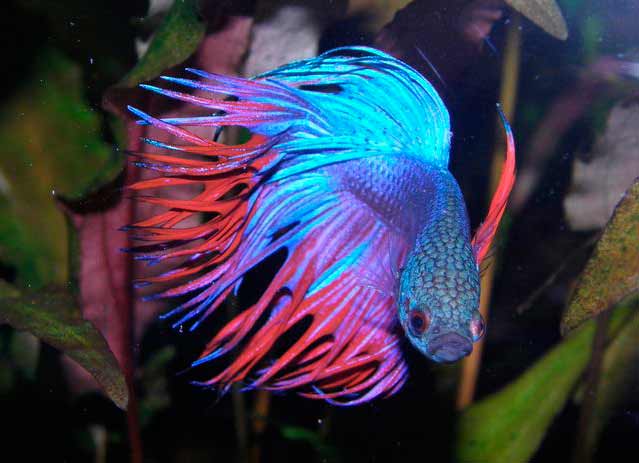
Betta splendens are carnivorous fish with specific dietary requirements shaped by their natural habitat. In the wild, bettas inhabit shallow rice paddies and slow-moving streams across Southeast Asia, where they hunt insects, larvae, and small crustaceans near the water surface.
The betta’s mouth structure is uniquely adapted for surface feeding—positioned upward on the head, allowing them to snatch prey from above. This anatomical feature directly influences feeding choices: bettas prefer floating foods or those suspended in upper water layers. Their relatively small mouths require appropriately sized food particles that can be easily consumed.
Protein forms the cornerstone of a healthy betta diet. These fish need substantial animal protein to thrive, reflecting their predatory nature. Understanding these fundamental needs helps answer the question of what to feed betta fish effectively.
Live Food Options for Bettas
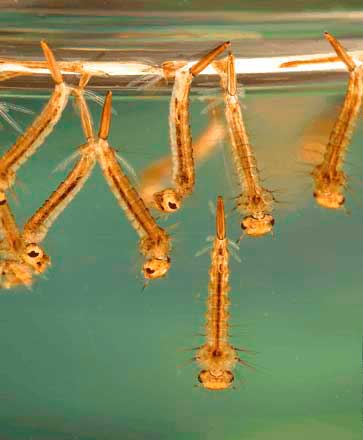
Live foods closely mimic the natural diet of betta fish, making them highly nutritious choices. Bloodworms, brine shrimp (artemia), daphnia, tubifex worms, and glassworms all serve as excellent live food sources.
Bloodworms rank among the most popular options, though they’re rich and somewhat difficult to digest. Feed these sparingly to prevent digestive complications. Brine shrimp offer excellent nutrition and are easier on the digestive system, making them suitable for more frequent feeding.
The primary drawback of live foods involves disease risk. Live organisms can carry parasites, bacteria, and other pathogens into your aquarium. Bloodworms particularly require careful handling and preparation. In my experience, frozen alternatives provide similar nutritional benefits with significantly reduced health risks for home aquariums.
Frozen Foods: Safe and Nutritious
Frozen foods represent an ideal middle ground between live and dry options. The freezing process eliminates most harmful microorganisms while preserving nutritional content. Frozen bloodworms, brine shrimp, daphnia, mysis shrimp, and chopped seafood all work well for bettas.
You can also offer finely chopped beef heart or shrimp meat as occasional treats. Always thaw frozen foods completely and rinse before feeding. This preparation removes excess juices that could cloud water while ensuring the food reaches proper temperature.
Frozen foods provide the protein content bettas require while offering variety that prevents nutritional deficiencies. Rotating between different frozen options keeps your betta interested in meals and ensures balanced nutrition.
Dry Foods: Convenient Daily Feeding
Dry foods offer unmatched convenience for regular feeding schedules. Specialized betta pellets and flakes designed specifically for these fish contain balanced nutrition suitable for daily use. However, not all dry foods work equally well for bettas.
Pellets formulated for bettas typically float, matching their surface-feeding behavior. Choose small pellets that fit comfortably in your betta’s mouth—oversized pellets may be ignored or difficult to consume. Some pellets sink quickly, making them unsuitable for fish with upturned mouths.
Flakes remain buoyant longer and break into smaller pieces as they soften, accommodating bettas with smaller mouths. The downside: dry foods expand when wet. Overfeeding dry food can cause bloating and swim bladder problems as pellets or flakes swell inside the fish’s stomach.
Selecting Quality Betta Food
When choosing what to feed betta fish, examine ingredient lists carefully. Premium betta foods should contain:
High animal protein content (minimum 40-45%)—essential for carnivorous fish health and muscle development.
Carotenoids to enhance and maintain vibrant coloration. Bettas cannot produce these pigments internally; they must obtain them through diet. Beyond color enhancement, carotenoids offer anti-inflammatory and antioxidant properties that support healing—particularly important for cockerel fish or fighting fish prone to fin damage.
Vitamins and minerals supporting immune function, fin health, and overall vitality.
Specialized betta formulas from reputable manufacturers typically provide optimal pellet size and nutritional balance. Brands like Tetra Betta offer products specifically developed for betta requirements.
Prioritize floating foods that remain accessible at the surface where bettas feed naturally. Sinking foods settle into substrate and filtration systems, decomposing and degrading water quality while remaining unavailable to your fish.
Feeding Schedule and Portion Control
Proper feeding frequency matters as much as food selection. Feed adult bettas once or twice daily with portions they can consume within 2-3 minutes. This timeframe prevents overfeeding while ensuring your fish receives adequate nutrition.
Remove uneaten food promptly using a net to prevent decomposition and water quality decline. Overfeeding poses far greater risks than underfeeding for bettas. Warning signs of overfeeding include bloated abdomen, stringy feces, lethargy, and extended periods resting on the bottom.
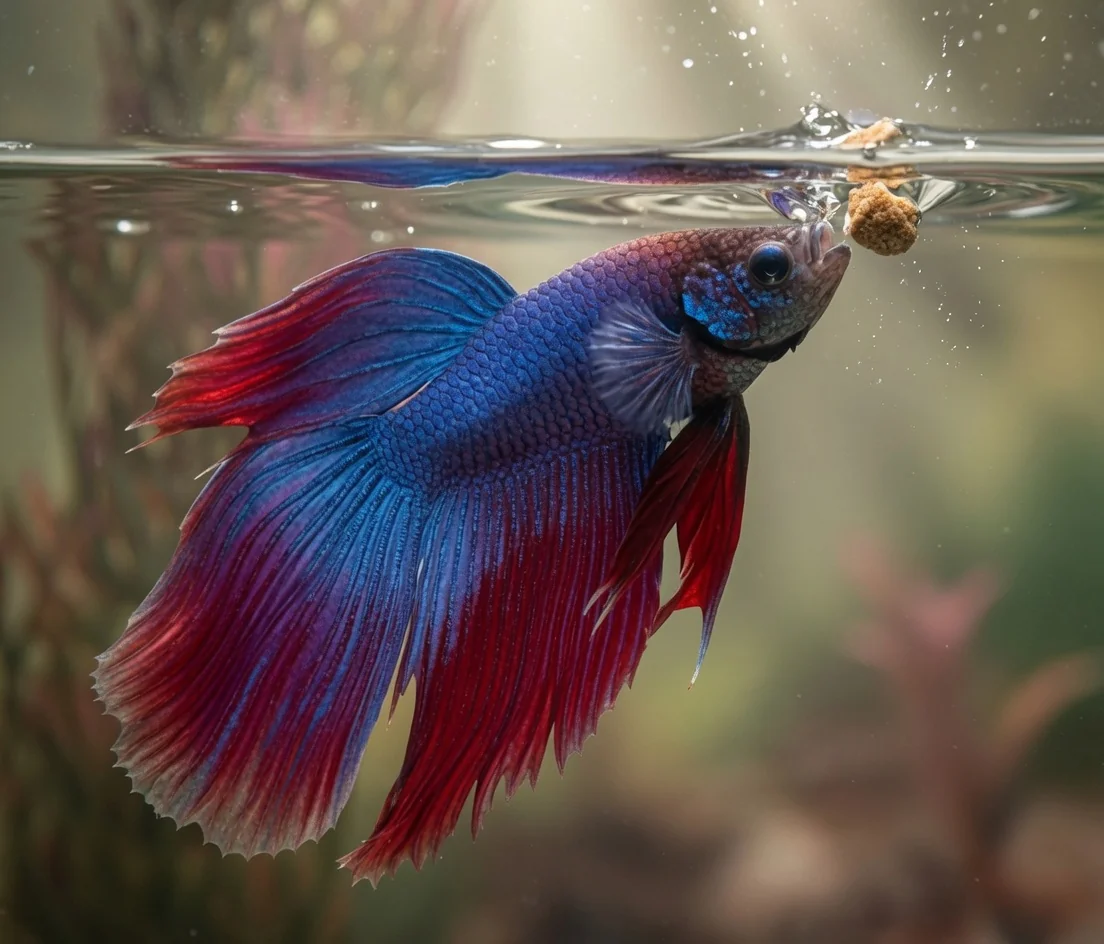
Appropriate portion sizes equal roughly 5% of the fish’s body weight. For average adult bettas, this translates to 2-4 specialized pellets or a pinch of flakes approximately the size of the fish’s eye. Bettas can survive 2-3 weeks without food by utilizing internal reserves, so missing occasional feedings won’t harm healthy fish.
Building a Balanced Diet Plan
Rotate food types regularly. Monotonous diets lead to nutritional deficiencies regardless of food quality. Alternate between dry and frozen foods, varying specific types every few days. Sample schedule: Monday-Tuesday (pellets), Wednesday (frozen brine shrimp), Thursday-Friday (flakes), Saturday (frozen daphnia), Sunday (fasting day).
Implement weekly fasting. Skip feeding one day per week, allowing the digestive system to rest and clear. This practice prevents constipation and bloating, common issues in captive bettas.
Avoid mixing food types. Don’t combine frozen and dry foods in single feedings. Different foods require varying digestion times; simultaneous feeding can cause digestive upset.
Skip inappropriate foods. Never feed bread—it doesn’t digest properly, swells dangerously in the stomach, and pollutes water. Avoid foods formulated for other fish species without verifying nutritional compatibility.
Prepare live foods properly. If using live foods, rinse thoroughly under running water and quarantine in a separate container for several hours before feeding. This reduces pathogen introduction risk.
Monitor your betta’s response. Healthy bettas actively take food from the surface, consume offerings completely, and maintain streamlined bodies without bloating. If your fish refuses food for more than two consecutive days or shows abdominal swelling, reassess diet and portions. Understanding betta splendens and their diseases helps identify when feeding issues indicate health problems.
Practical Feeding Tips
I recommend maintaining a feeding log during your first months of betta keeping. Record food types, portion sizes, and your fish’s reactions. This documentation helps establish optimal routines and reveals problems early.
Observe feeding behavior closely. Enthusiastic surface feeding indicates health and proper food selection. Hesitation, food rejection, or bottom-dwelling during feeding times may signal illness, stress, or unsuitable food choices.
Adjust portions based on individual fish. Some bettas have heartier appetites; others remain satisfied with minimal food. Body condition provides the best portion guide—your betta should appear streamlined without visible rib bones or bloated belly.
Consider seasonal adjustments. Bettas in cooler water (below 76°F/24°C) have slower metabolisms and require less food. Warmer temperatures increase activity and feeding needs.
Common Feeding Mistakes to Avoid
Overfeeding remains the most frequent error in betta care. Excess food causes immediate digestive problems and long-term health issues including obesity and organ damage. It also degrades water quality rapidly, creating toxic conditions.
Feeding inappropriate foods ranks second. Generic tropical fish foods often lack sufficient protein for bettas or contain excessive plant matter their digestive systems can’t process efficiently.
Inconsistent schedules confuse fish and disrupt digestive rhythms. Establish regular feeding times and maintain them as closely as possible.
Ignoring individual preferences limits nutrition. Some bettas prefer certain foods; forcing rejected options creates stress and may result in inadequate nutrition.
Conclusion
Determining what to feed betta fish requires balancing convenience, safety, and nutritional value. Quality dry foods provide reliable daily nutrition, frozen options add variety and protein, while live foods serve as occasional treats when properly prepared.
The fundamental principle: feed moderately, maintain consistent schedules, and provide variety. Properly nourished bettas live 3-5 years, retaining brilliant colors and active behavior throughout their lives. Combined with appropriate housing and care, correct feeding forms the foundation of betta health and longevity.