Why Goldfish Care Matters from Day One
Goldfish often arrive as gifts to people who’ve never kept an aquarium before. For this first fish to live a long, healthy, and active life, you need to follow some fundamental care principles. In my experience, most goldfish problems stem from two mistakes: choosing the wrong tank size and overfeeding.
Tank Size Requirements for Goldfish Care
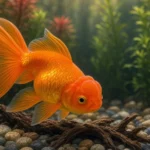
Goldfish grow to at least 15 cm (6 inches), with some varieties reaching 30 cm (12 inches). They need adequate space to thrive.
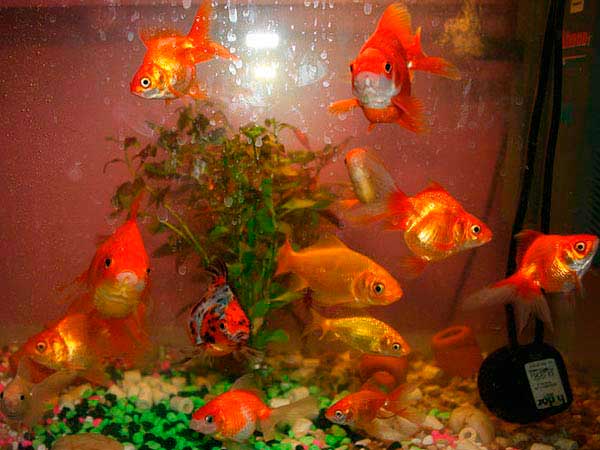
Ideally, you should provide at least 50 liters (13 gallons) per goldfish, with a pair requiring a minimum 100-liter (26-gallon) tank. I recommend starting with a 100-120 liter aquarium right away—this gives your fish both volume and swimming space.
Remember: goldfish are among the longest-lived aquarium fish, with an average lifespan of 13-15 years. Under proper conditions, they can live even longer, so don’t cut corners on tank size.
Essential Equipment and Setup
Your goldfish tank must have a powerful filter with aeration, as goldfish breathe dissolved oxygen from the water. In my experience, filter turnover should be 3-4 times the tank volume per hour.
Use coarse-grained substrate on the bottom. Fine gravel is unsuitable because goldfish may swallow it, causing digestive problems. Plant a moderate amount of hardy aquatic plants—vallisneria, spatterdock, or anubias work well. Floating plants like riccia or duckweed are also beneficial.
Avoid decorations with sharp edges that could damage fins or eyes. I recommend smooth stones and driftwood instead.

Cycling Your Tank Before Adding Goldfish
Before introducing your goldfish, you need to establish biological equilibrium in the water. You can cycle the tank by adding a few small fish like danios or snails for 2-3 days to a week before your goldfish arrive.
Goldfish Care: Proper Feeding Practices
Goldfish have very active metabolisms, so feeding 2-3 times daily works best. Use specialized flake or pellet foods. I recommend soaking dry food in aquarium water for a few minutes before feeding—this prevents digestive issues.
Goldfish eat live foods (bloodworms, daphnia, earthworms) and plant matter (duckweed, riccia). You can also offer blanched lettuce, nettle, or cabbage leaves—scald them with boiling water and chop before feeding.
Critical point: goldfish are prone to overeating. Feed small portions that your fish can consume in 2-3 minutes. Determine the right amount by observing your fish during the first feeding, offering food in small increments. In my experience, overfeeding is one of the primary causes of goldfish health problems.
Water Parameters and Maintenance
Goldfish are coldwater fish, thriving at 18-23°C (64-73°F). This is an important distinction from most tropical species.
Water Parameters Table
| Parameter | Value |
|---|---|
| Temperature | 18-23°C (64-73°F) |
| pH | 7-8 |
| Hardness (dH) | 8-18 |
| Ammonia | 0 |
| Nitrates | up to 40 mg/L |
| Water column height | at least 25 cm (10 inches) |

Perform weekly water changes of 20-25% of total volume. This mimics the flowing water of natural habitats—removing old water and adding fresh, dechlorinated water. Never do complete water changes, as this disrupts biological balance.
I recommend using test kits to regularly check water parameters, especially during the first months after setup.
Compatibility with Other Fish
Goldfish do best in species-only tanks—meaning only with other goldfish. Their coldwater requirements and slow swimming make them incompatible with most tropical species. Active fish can nip at their flowing fins.
Proper Goldfish Care Brings Lasting Rewards
Comfortable housing and consistent, knowledgeable care—that’s what goldfish need. In my experience, following these straightforward guidelines means your goldfish will reward you with beauty and vitality for many years. It’s a fascinating hobby, especially when you watch your fish grow and flourish under the right conditions.
Article updated: 2026-08-11