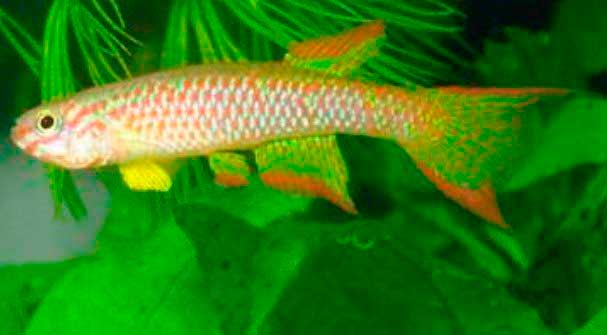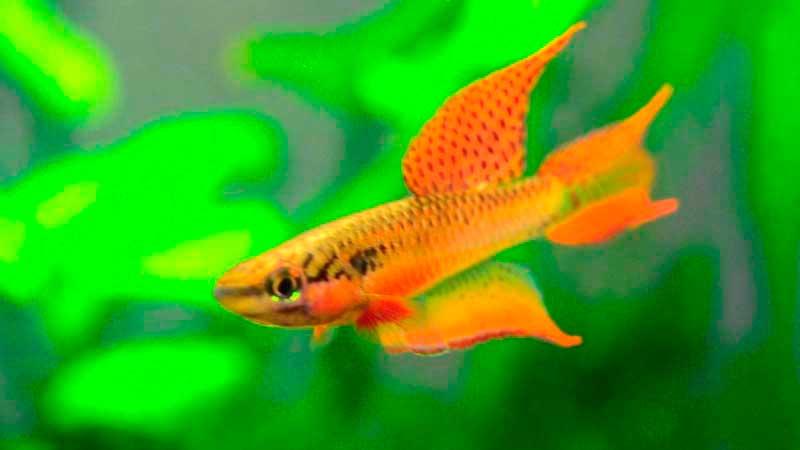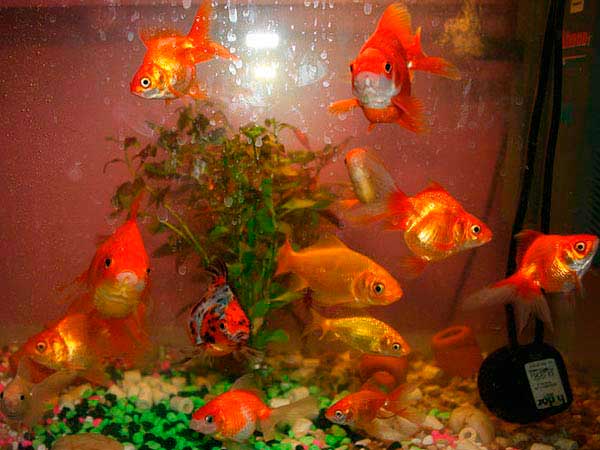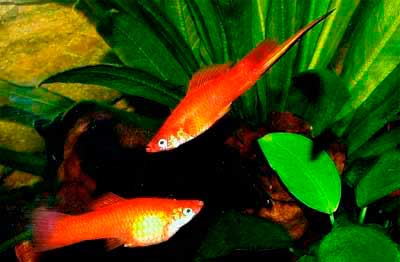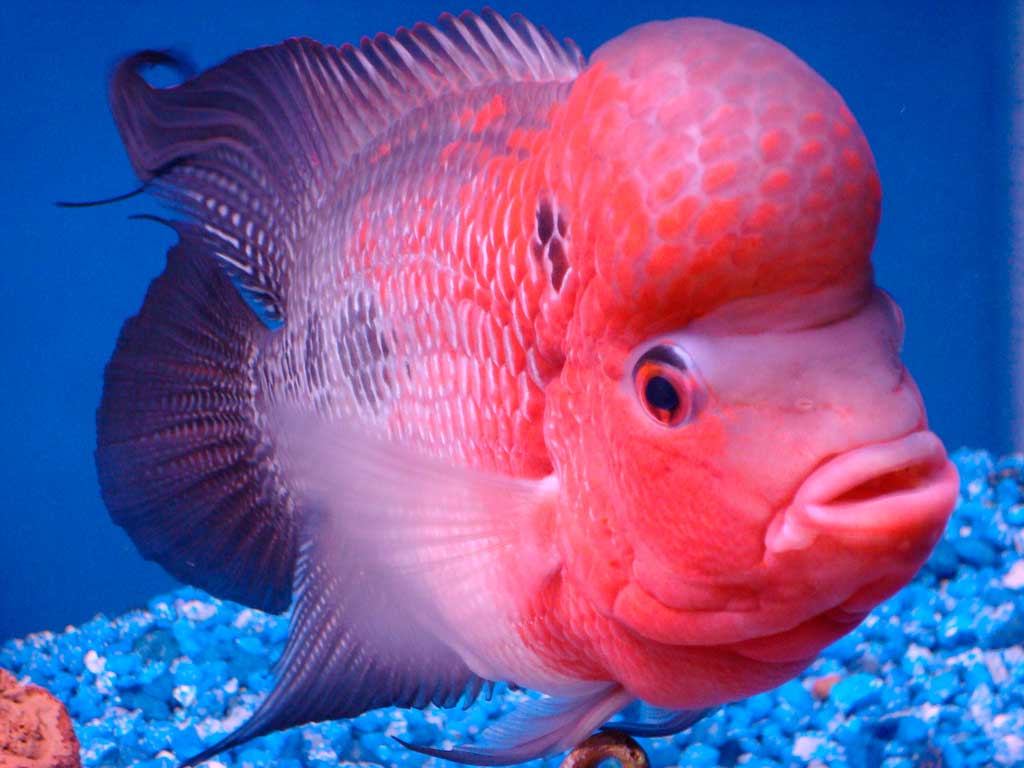
Haplochromis cornflower is an exceptionally beautiful fish that can decorate any aquarium of suitable size.
Striped coliza
The striped coliza is a very beautiful fish, having a similar coloration to that of the lalius, but its size is much larger. Therefore, the impression it makes is much greater. The species was first described in 1801 by Bloch and Schneider. European aquarists recognized this fish in 1897. In Russia, it appeared for the first time in 1904.
Ancistrus
The ancistrus catfish is quite a funny creature. Unlike some other catfish, the ancistrus is constantly on the move and likes areas with a fast water current.
Colisa labiosa
Colisa labiosa is a very graceful fish, as well as other members of the genus are known to aquarists around the world for more than a hundred years. Lyabiosa is probably the largest of the colizae. Its coloration resembles the coloration of lalius. However, unlike its smaller counterpart, this fish is more peaceful, despite its impressive by aquarium standards of size.
Gudgeon in the aquarium
Gudgeon in the aquarium – the idea is not so new. Previously, this fish was quite often observed by aquarists.
Lalius breeding
In the articles “Lalius in the aquarium” and “Lalius fish” we talked about the existing varieties, content and paid some attention to reproduction of representatives of this species. Today we will consider in more detail the breeding of lalius in the home.
Lalius in the aquarium
Lyalius is a very beautiful aquarium fish. Lalius in the aquarium amateurs in recent years, it appears quite rarely. In my opinion, she is forgotten undeservedly. Even a large number of new species that have now appeared behind the glass of our room water bodies should not be the reason for forgetting the wonderful in every way species that have proven themselves over the years as the best species for the room aquarium.
Apteronotus breeding
Breeding apteronotus is not too complicated, but as any “not too complicated event” has its own quite specific features.
Genus Aphyosemiona
Genus Aphyosemiona belonging to the carpozooba family. This genus includes, perhaps, the most beautiful representatives of the carpozooba family.