Understanding Mystus Catfish Species
Mystus catfish belong to a genus of approximately 30 species of bottom-dwelling predators native to South and Southeast Asia. These fish inhabit rivers and lakes from Pakistan and India through to Vietnam. While wild specimens can reach 45 cm in length, aquarium-kept mystus catfish typically grow to 15–25 cm depending on the specific species.
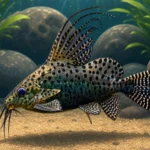
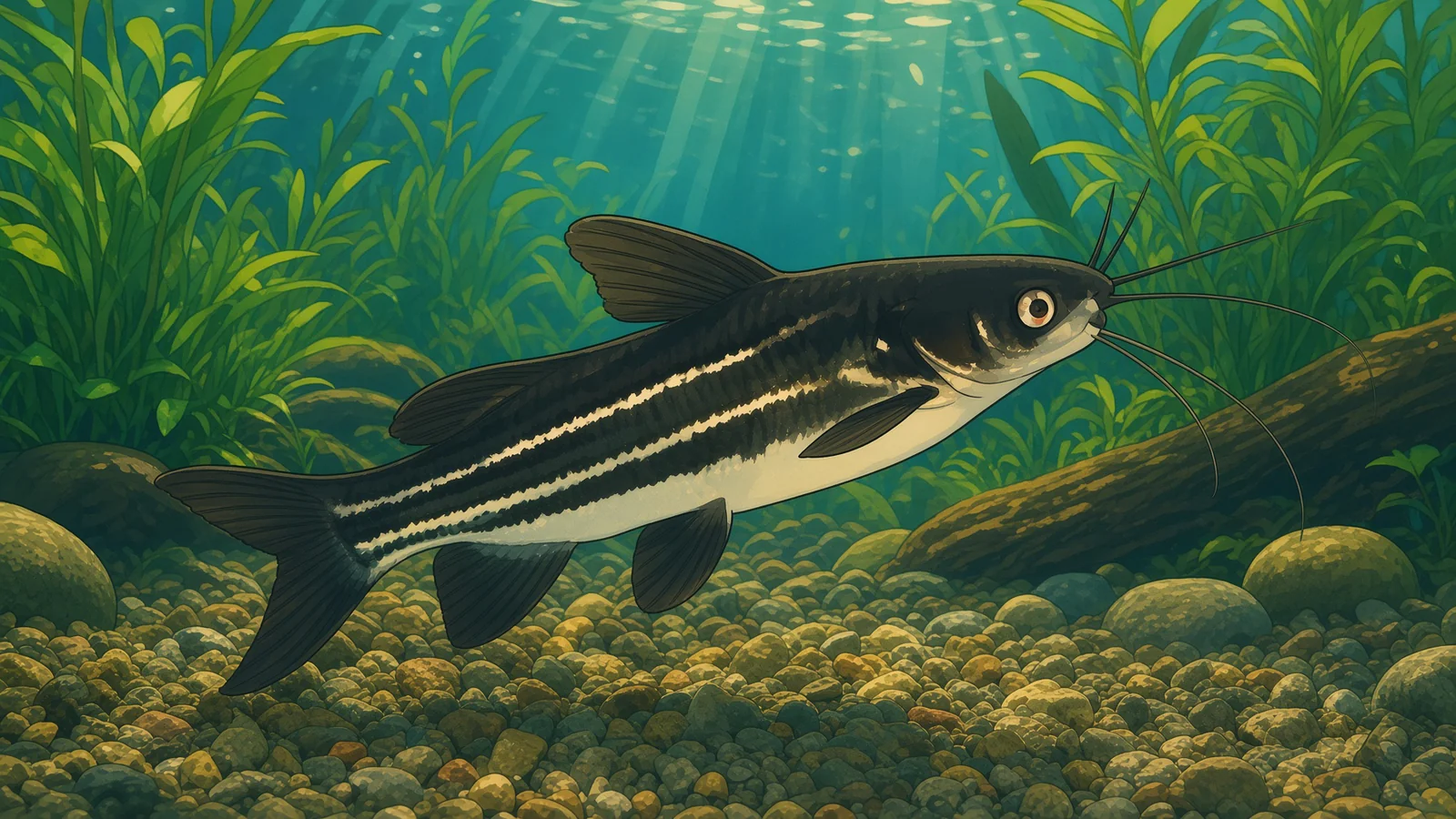
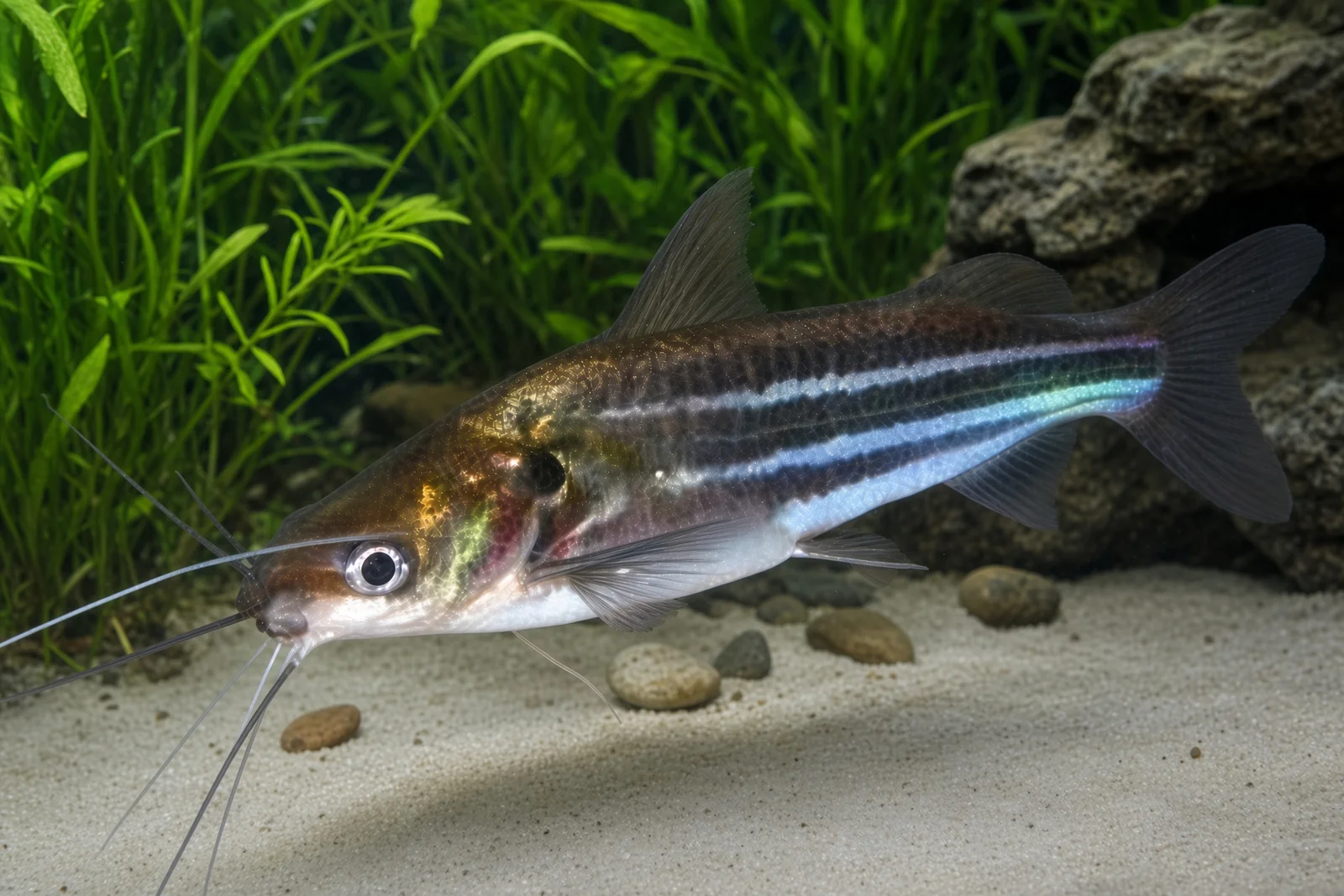
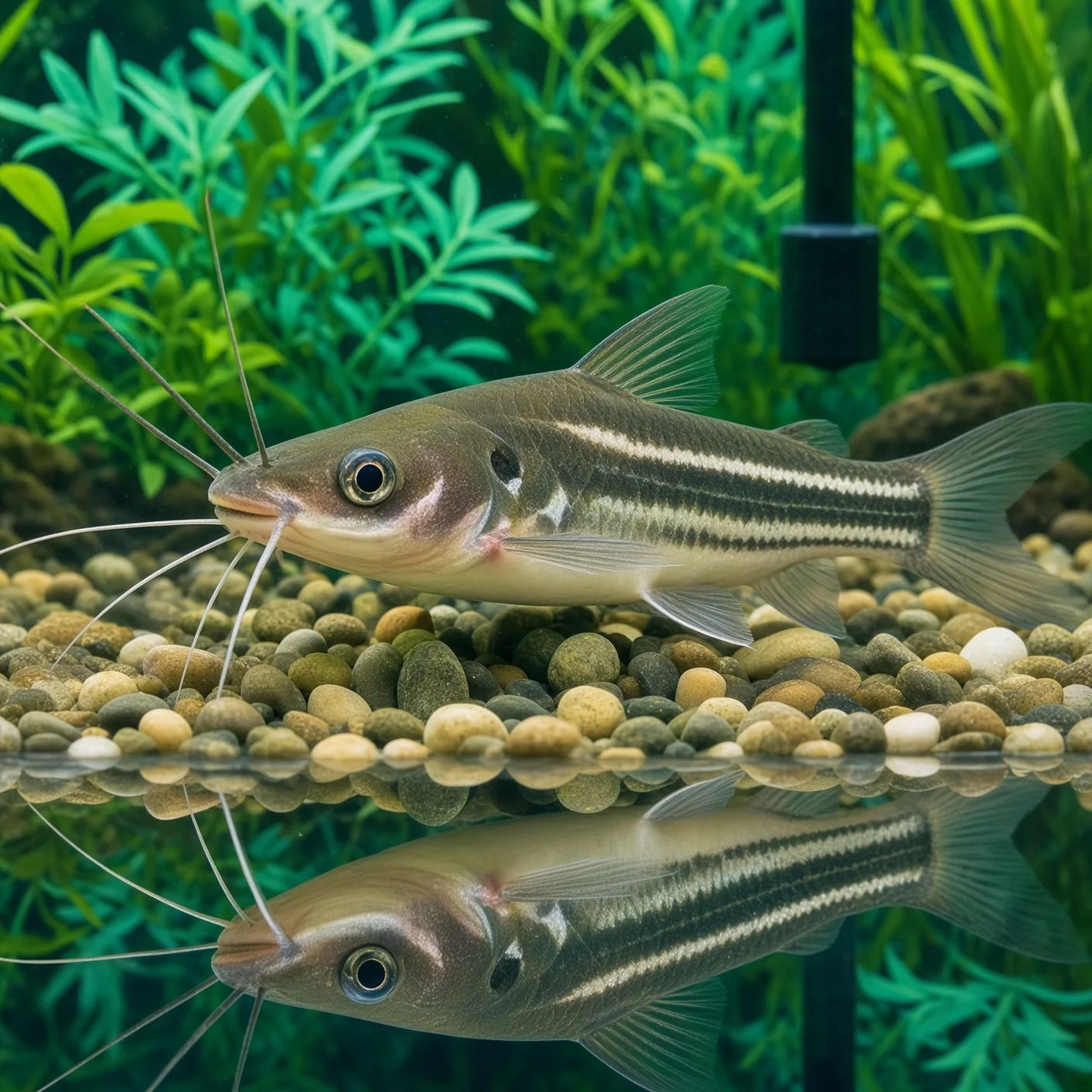
The body is elongated and laterally compressed, featuring a large head and distinctively forked tail fin. Three pairs of long barbels—one on the upper lip and two on the lower—serve as sensory organs, helping the fish navigate murky water and darkness. Coloration ranges from silvery-pink bellies to blue or purple backs, often marked with horizontal dark stripes along the body.
A distinctive trait of mystus catfish is their ability to produce creaking sounds using their pectoral fins. This characteristic helps identify species even at juvenile stages before external features fully develop. Some species, particularly the upside-down catfish varieties, enjoy swimming belly-up, earning them the nickname “upside-down cats.”
The first ray of the dorsal fin has evolved into a rigid spine that can be venomous. If stung, the affected area should be flushed with hot water for an extended period to relieve painful symptoms.
Tank Requirements for Mystus Catfish
A group of 3–5 mystus catfish requires a tank of at least 120–150 liters with horizontal swimming space. These active fish enjoy chasing each other, so they need room to move. Always use a secure lid—mystus are excellent jumpers and will escape from open tanks.
Optimal water parameters:
- Temperature: 22–28°C (72–82°F)
- pH: 6.0–7.5
- Hardness: 5–25 dH
Mystus catfish prefer moderate to strong current mimicking their natural river habitats, so install a powerful filter and ensure good aeration. Keep lighting subdued—use floating plants to diffuse light, as these fish are most active during twilight and nighttime hours.
Provide numerous hiding spots in the aquarium: caves, driftwood, rock formations, and tubes. Aim for at least one shelter per fish, otherwise territorial disputes among mystus catfish become more aggressive. Choose soft sand or fine gravel substrate to protect their sensitive barbels.
Plant species with strong root systems or use artificial decorations. Mystus actively dig in substrate and may uproot or damage delicate plants. In my experience, Java fern and Anubias attached to driftwood tolerate these catfish well.
Perform weekly 25% water changes or complete changes every two weeks. Monitor for zero ammonia and nitrites while keeping nitrates low. Mystus catfish are sensitive to sudden parameter shifts and can go into shock, so acclimate new fish slowly using the drip method.
Feeding Your Mystus Catfish
Mystus are predators and opportunistic scavengers. In nature, they consume small fish, insects, larvae, worms, and crustaceans. In aquariums, base their diet on live and frozen foods: bloodworms, earthworms, shrimp, and pieces of white fish. Supplement with quality sinking pellets and catfish tablets.
Feed mystus catfish after lights-out or during evening hours when they become active. Young specimens need daily feeding, while adults should be fed every other day to prevent obesity. Include one fasting day per week.
These catfish will consume plant matter, especially tender new leaves. Offer blanched vegetables like lettuce or zucchini slices occasionally. This dietary variety reduces interest in live aquarium plants.
Compatibility and Behavior
Mystus catfish should be kept in groups of 3–5 individuals. Solitary specimens become either excessively shy or overly aggressive. These fish are territorial and will spar with each other, but with adequate hiding spots and space, conflicts rarely result in serious injury.
Avoid housing multiple males together—the optimal combination is one male with 2–3 females. Otherwise, the dominant male will constantly harass competitors.
Mystus catfish are incompatible with small fish species. Danios, neons, guppies, and cardinal tetras will be swallowed whole thanks to the catfish’s large mouth. Long-finned varieties like fancy goldfish or comet goldfish will be harassed and nipped.
Suitable tankmates for mystus catfish include:
- Large barb species
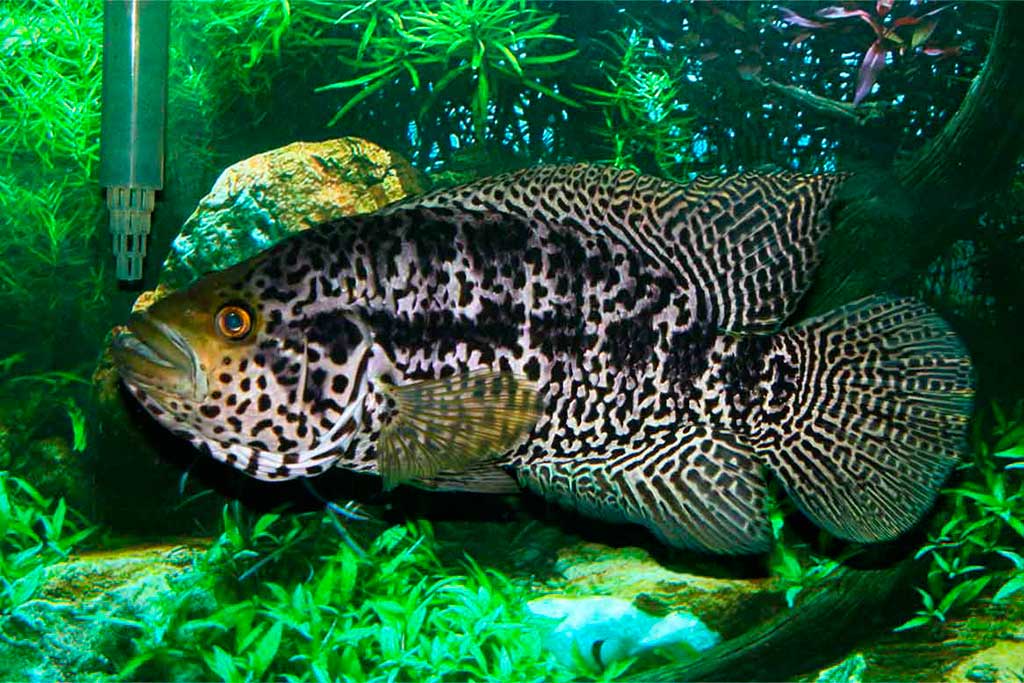
- Medium to large cichlids
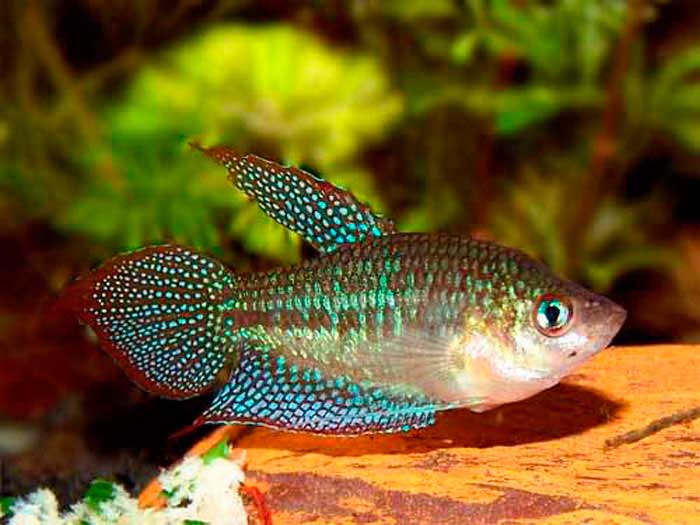
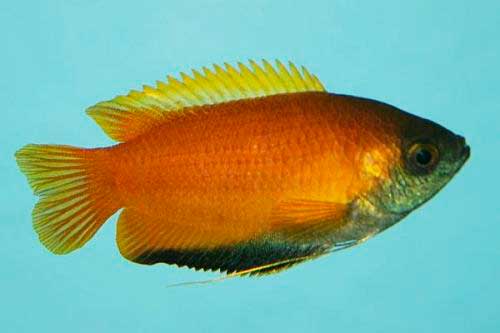
- Gouramis
- Rainbowfish
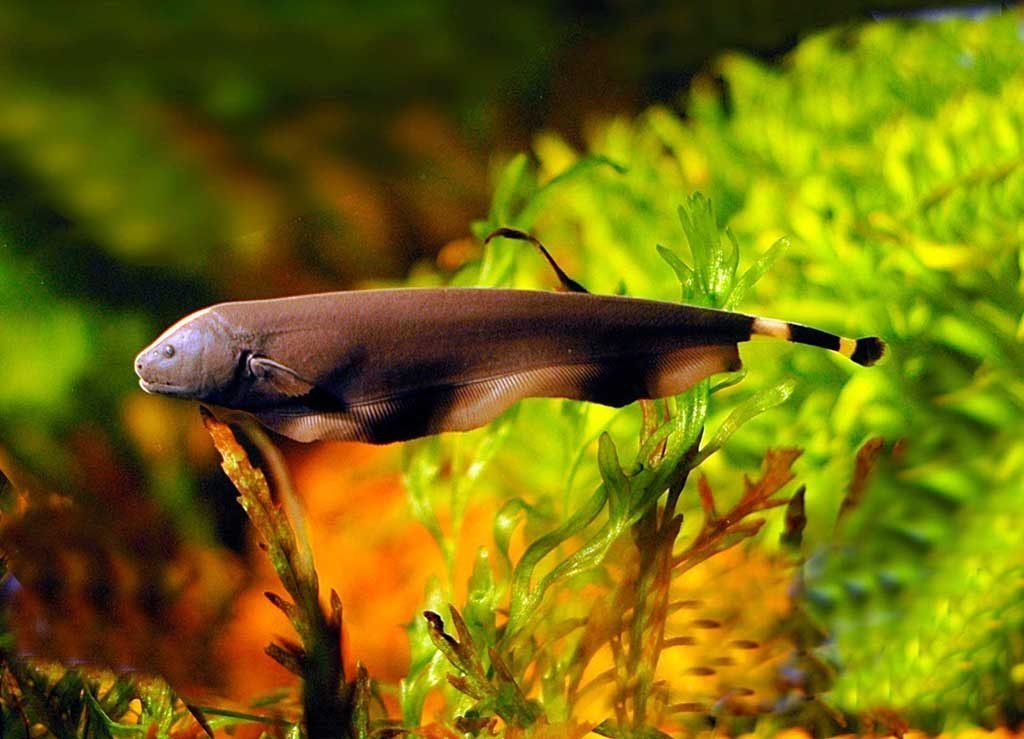
- Other catfish of similar size
Choose active fish that won’t be intimidated by the nocturnal activity of mystus and can defend themselves. Swordtails work only if the catfish are still young and relatively small.
Breeding Mystus in Home Aquariums
Mystus catfish reach sexual maturity at 10–12 cm length, typically around one year of age. Home aquarium breeding is nearly impossible without hormonal injections, as natural spawning is triggered by monsoon seasons and changing water chemistry.
For breeding attempts, prepare a spawning tank of at least 100 liters. Set temperature to 26–28°C, hardness below 10 dH, and pH around 7.0. Perform daily partial water changes to simulate rainy season conditions—this may stimulate spawning behavior.
Females deposit 500–800 yellowish eggs approximately 1 mm in diameter on plant roots. Remove parents after spawning, as they may consume eggs. Start fry on rotifers, then transition to baby brine shrimp.
I recommend beginners not count on breeding mystus catfish at home. This complex process requires experience and specialized equipment. Better to focus on creating comfortable conditions for adult fish.
Health and Lifespan
Mystus catfish live 5–8 years in aquariums with proper care, with some species reaching 10–12 years. These fish possess the ability to breathe atmospheric air in addition to gill respiration, helping them survive in warm, oxygen-depleted water.
Their scaleless skin makes mystus catfish sensitive to certain medications. Copper-based treatments are contraindicated, and malachite green doses should be halved compared to recommendations for scaled fish.
Main health problems arise from:
- Sudden water parameter changes
- Poor filtration and organic waste accumulation
- Inappropriate diet or overfeeding
- Injuries from sharp decorations or aggressive tankmates
Monitor fish behavior closely. Healthy mystus catfish are active during twilight hours, eagerly accept food, and display bright, contrasting coloration. Lethargy, food refusal, darkened coloration, or white film on the body indicate illness requiring immediate intervention.
Mystus catfish make fascinating aquarium inhabitants for experienced fishkeepers prepared to provide spacious tanks and appropriate tankmates. With proper care, these nocturnal predators become aquarium highlights and reward owners with unique behaviors for many years.