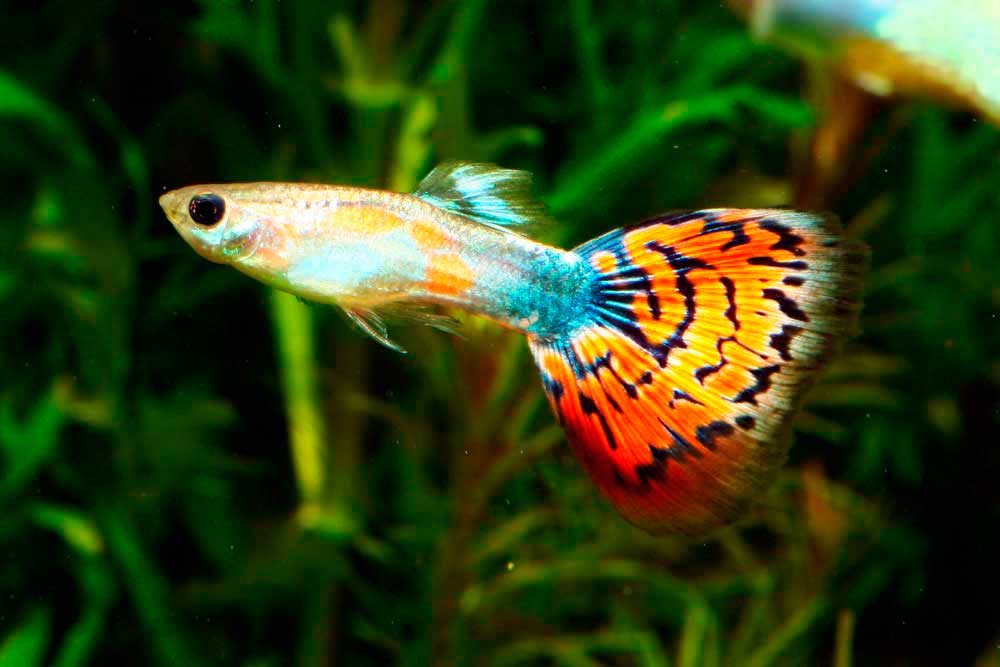
Guppy fish (Poecilia reticulata) are among the hardiest and most beginner-friendly aquarium inhabitants you’ll encounter. In my experience, these colorful livebearers represent the ideal starting point for anyone new to fishkeeping. Their resilience, ease of care, and spectacular coloration make them suitable even for children learning aquarium basics. These fish forgive most beginner mistakes while providing constant activity and vibrant displays.
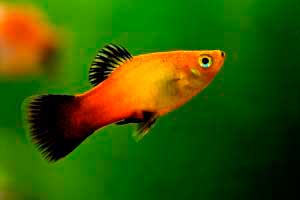
Platy Fish Care: Complete Guide for Beginners
Description and Origin
Platy fish belong to the family Poeciliidae, a group of livebearing toothcarps. Their natural habitat spans Central America, particularly the Atlantic basin waters of eastern Mexico and Guatemala. In the wild, these fish thrive in warm, organically rich waters with gravel substrates and abundant vegetation—conditions that have shaped their adaptable nature.
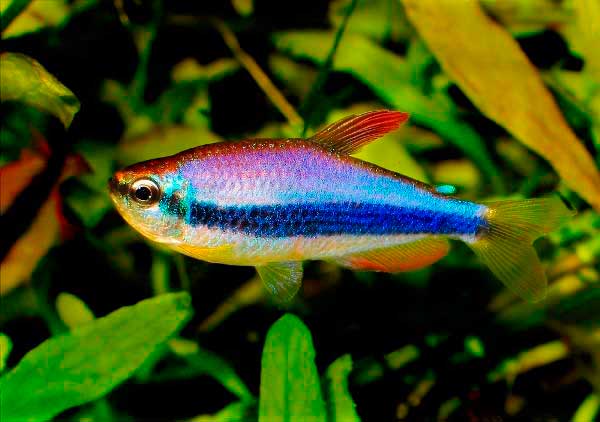
Kerry Tetra: Care Guide for Purple Emperor Tetra
Kerry Tetra: Description and Characteristics
The Kerry tetra, also known as the purple emperor tetra (Inpaichthys kerri), is a small aquarium fish native to Brazil. It originates from the upper Madeira River basin—the largest tributary of the Amazon—inhabiting numerous streams and channels flowing through tropical forests. Thanks to its compact size, this species is perfectly suited for nano aquariums.
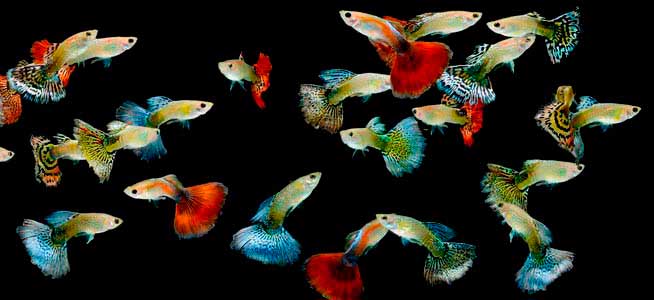
Guppy Fish Care: Complete Guide to Keeping Guppies
Introduction to Guppy Fish
Guppy fish (Poecilia reticulata) are members of the Poeciliidae family that have captured the hearts of aquarists worldwide. Native to Central and South America, these fish inhabit freshwater and brackish environments in Venezuela, Brazil, Guyana, and Trinidad. Thanks to their remarkable adaptability, guppies have successfully established populations on nearly every continent.
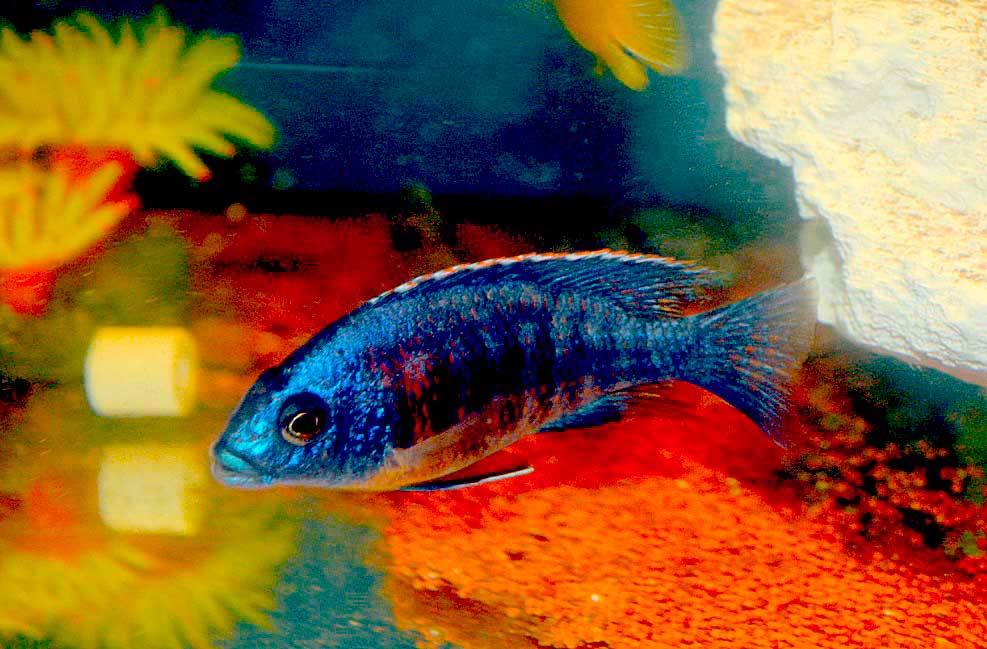
Electric Blue Hap: Care Guide and Tank Setup
Electric Blue Hap: Description and Origin
The Electric Blue Hap, also known as Ahli or Haplochromis ahli (Sciaenochromis fryeri), is a freshwater ray-finned fish from the Cichlidae family. This species is endemic to Lake Malawi in Africa, a lake renowned for its remarkable diversity of cichlid species. In nature, it typically inhabits depths of 10-40 meters, forming loosely distributed but quite numerous populations.
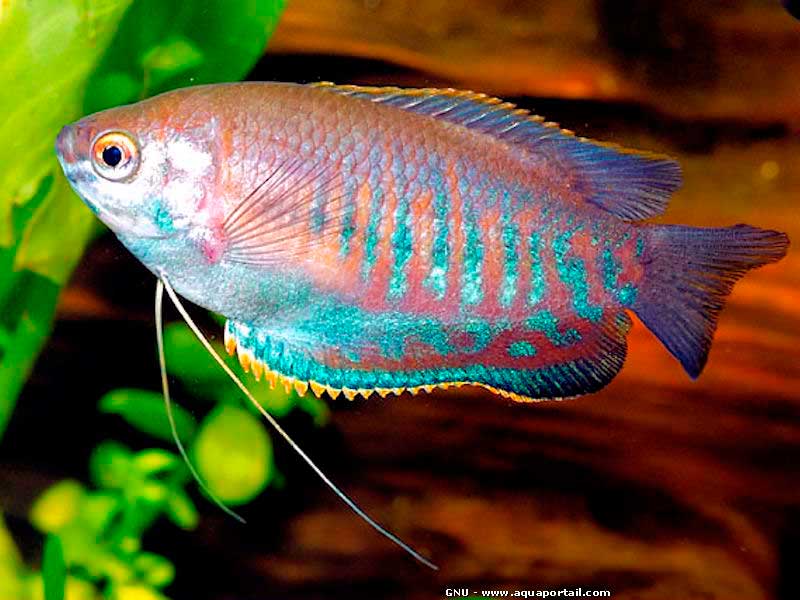
Thick-lipped Gourami (Trichogaster labiosus) Care Guide
Introduction
The thick-lipped gourami (Trichogaster labiosus) is a graceful labyrinth fish that has captivated aquarists worldwide for over a century. As the largest of the former Colisa species, this gourami displays coloration reminiscent of the dwarf gourami but with a notably peaceful temperament despite its impressive size. In my experience, this combination of beauty and gentle nature makes it an excellent choice for community aquariums.
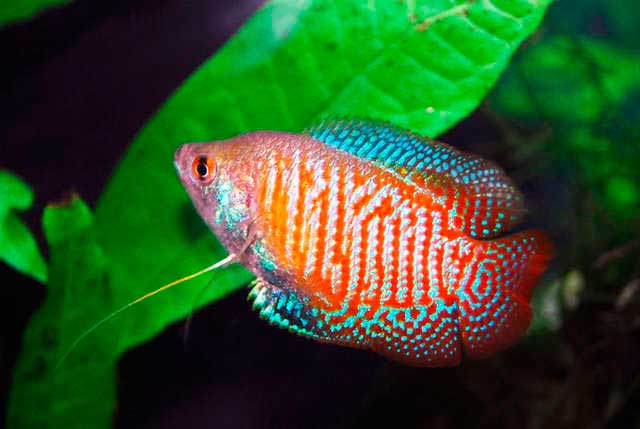
Breeding Dwarf Gourami: Complete Guide for Success
Preparing for Dwarf Gourami Spawning
Breeding dwarf gourami (Trichogaster lalius) at home is a rewarding process that requires careful preparation and attention to detail. Dwarf gouramis reach sexual maturity at 5-6 months of age. In my experience, spawning is best planned for spring or early summer—these periods make it easier to obtain live foods from natural ponds, which are ideal for raising fry.
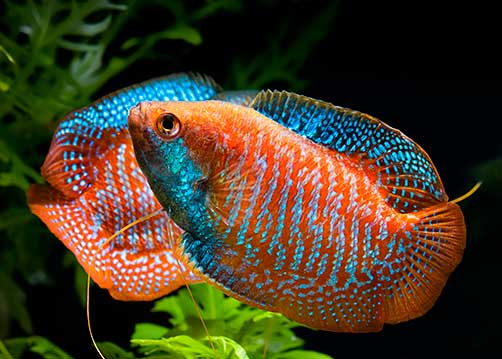
Dwarf Gourami Care: Complete Guide for Aquarium Keepers
Scientific Classification and Origin
The dwarf gourami (Trichogaster lalius, formerly Colisa lalia) belongs to the family Osphronemidae, order Perciformes. First described by Hamilton-Buchanan in 1822, this species originates from the river systems of India, including Bengal and Assam, spanning the basins of the Ganges, Brahmaputra, and Indus rivers.

Breeding Apteronotus: Complete Guide to Black Ghost Knifefish
Understanding Apteronotus Sexual Maturity
Breeding Apteronotus is a manageable endeavor, though it requires attention to specific details. These fascinating fish reach sexual maturity at approximately 18 months of age. In aquarium conditions, adult specimens typically grow to 35-40 centimeters, while wild individuals can reach up to 50 cm. For housing and breeding a pair of Apteronotus, you’ll need an aquarium of at least 150-200 liters.