Introduction to Corydoras Panda
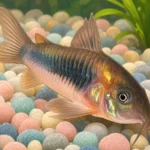
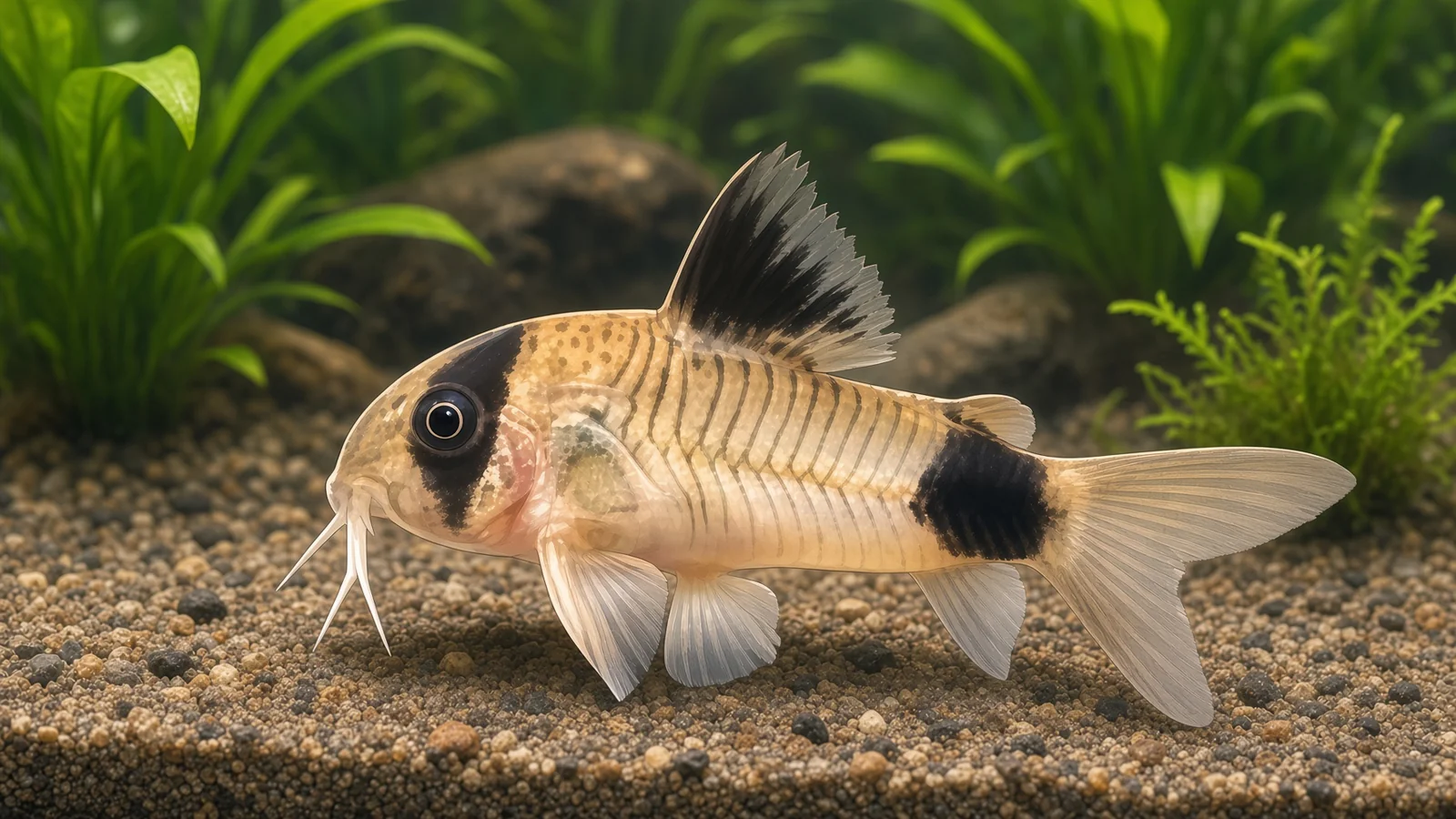
The panda cory (Corydoras panda) stands out as one of the most charming armored catfish species in the aquarium hobby. This small bottom-dweller earned its name from distinctive markings resembling a giant panda: a black patch across the eyes like a mask, a dark spot at the tail base, and contrasting dorsal fin against a light pink or cream body. In nature, Corydoras panda inhabits the upper Amazon basin, primarily in rivers of Peru and Ecuador, especially the Ucayali River system, where it favors areas with soft acidic water, sandy substrate, and gentle current.
These miniature catfish make excellent choices for beginners when basic care requirements are met. Adults reach only 4-6 centimeters in length, making them perfect for medium-sized aquariums. The body is compact, slightly laterally compressed and deep in the front section. Like all corydoras, they feature two rows of bony plates along the sides forming protective armor, and a downturned mouth with three pairs of sensitive barbels used for locating food and navigating the substrate.
Tank Requirements for Panda Cory Care
Panda corys are schooling fish that must be kept in groups of at least 5-6 individuals, with 6-10 being optimal. Such a group requires a minimum 40-liter aquarium. An important characteristic of this species is their preference for cooler water compared to many tropical fish. Optimal temperature ranges from 20-25 degrees Celsius, which should be considered when selecting tankmates.
Water parameters should be maintained as follows: pH 6.0-7.5, hardness 4-15 GH. Panda corys are sensitive to water quality, so efficient filtration without strong current and proper aeration are essential. Weekly water changes of 20-30% are mandatory, not optional, for maintaining fish health.
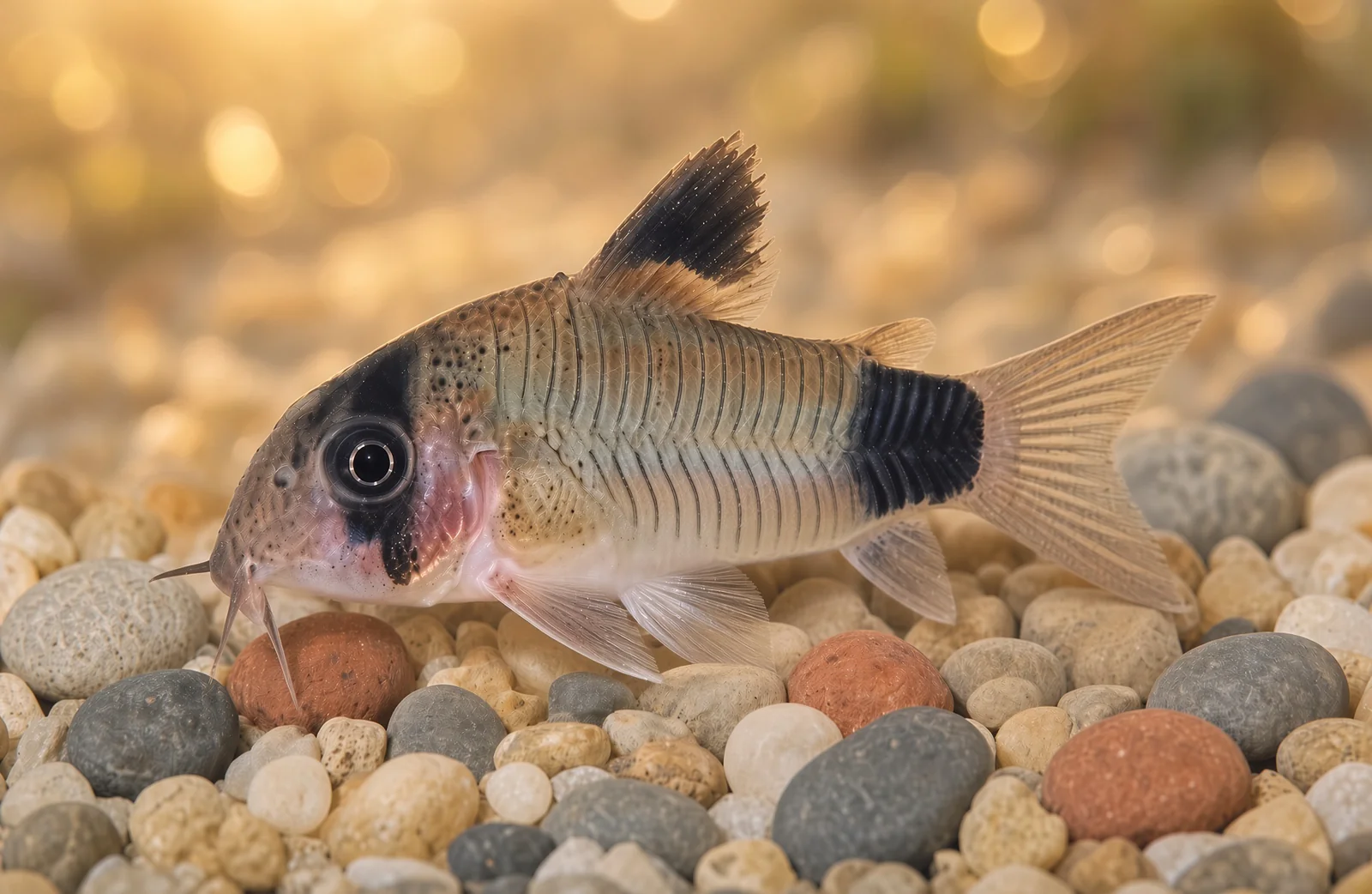
Substrate selection deserves special attention. Since panda corys constantly sift through substrate searching for food, it must be soft—sand or small rounded gravel without sharp edges. Coarse substrate damages sensitive barbels, potentially leading to infections. The aquarium should include hiding spots created with driftwood, stones, and caves, with dense plant growth along the walls. Lighting should be subdued—adding floating plants creates shaded areas appreciated by these primarily crepuscular and nocturnal fish.
An interesting feature: besides gill respiration, corydoras possess intestinal breathing and periodically surface for atmospheric air. This is completely normal behavior and doesn’t indicate oxygen deficiency in the water.
Compatible Tankmates
Thanks to their peaceful nature, panda corys coexist well with most non-aggressive aquarium fish. Ideal companions include neons, danios, rasboras, tetras, as well as livebearers and other corydoras species. They can be housed with peaceful dwarf cichlids provided the aquarium is sufficiently spacious.
Avoid housing panda corys with large predatory cichlids and active barbs that may nip fins of bottom-dwellers or compete aggressively for food. Also avoid pairing them with aggressive species that might view peaceful corydoras as targets. In community tanks, ensure food actually reaches the corydoras—faster fish in upper water layers may intercept food before it sinks.
Feeding and Diet
Panda corys are omnivorous and undemanding eaters. The diet foundation consists of specialized sinking tablets and pellets for bottom-feeders that sink quickly without dissolving. However, for complete nutrition and vibrant coloration, regular supplementation with live and frozen foods is recommended: bloodworms, tubifex, daphnia, brine shrimp, and cyclops.
Feeding once daily during evening hours in small portions works best, when corydoras become most active. Avoid overfeeding—leftover food pollutes water and can deteriorate quality, which is especially dangerous for sensitive corydoras. Food quantity should allow fish to consume everything within 5-10 minutes.
In community tanks, ensure more active species don’t intercept all food before it reaches the bottom. You can feed corydoras separately after lights-out when diurnal fish are less active.
Breeding Corydoras Panda
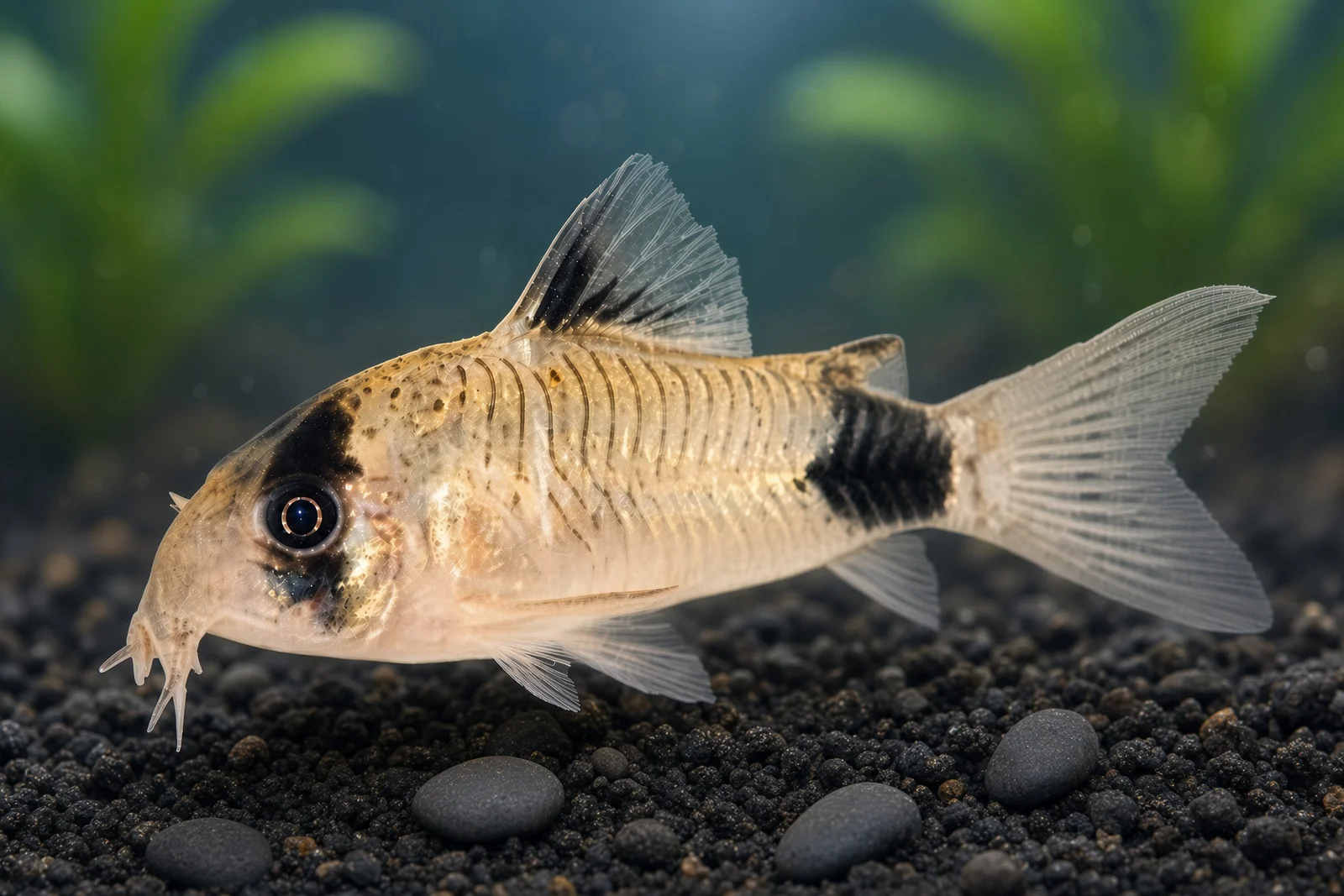
Breeding panda corys at home is quite accessible even for beginners. Fish reach sexual maturity at 8-10 months. Distinguishing females from males is straightforward: females are larger and fuller-bodied, especially noticeable during spawning season, while males have more pointed dorsal fins.
For breeding, use a separate spawning tank of at least 30 liters. Per female, add 2-3 males. Spawning triggers include lowering water temperature by 1-2 degrees and partial water change with fresh soft water. Females deposit 10 to 70 eggs on flat surfaces—plant leaves, aquarium glass, or decorations.
Incubation period lasts 3 to 10 days depending on water temperature. After spawning, remove adults as they may consume eggs. Fry begin feeding after absorbing the yolk sac—initially with infusoria, then specialized fry starter foods. By one month, juveniles reach approximately 1 centimeter, with characteristic panda markings appearing at 8-12 weeks.
Health and Lifespan
With proper panda cory care, these fish can live 5 to 10 years in aquariums, an excellent lifespan for fish this size. Key longevity factors include stable water parameters, quality nutrition, and stress-free environment.
Main health issues typically relate to poor water quality or barbel injuries from coarse substrate. Damaged barbels create entry points for bacterial infections. Corydoras may also suffer from ich (white spot disease) and bacterial diseases when water parameters fluctuate drastically.
In my experience, most commercially available fish today are captive-bred and adapt well to various conditions, making their care easier compared to wild-caught specimens. A longfin variety of panda cory exists with extended fins, requiring especially gentle handling and only peaceful tankmates.
I recommend panda corys to anyone seeking active, interesting bottom-dwelling fish with manageable care requirements. These charming creatures enhance aquarium aesthetics while helping maintain substrate cleanliness by scavenging leftover food. The key is providing suitable conditions, soft substrate, and company of their own kind—then panda corys will reward you for years with their activity and unique markings.