Cory Catfish Care: Essential Guide for Aquarium Owners
What Are Cory Catfish
Cory catfish belong to the genus Corydoras from the armored catfish family. These popular aquarium fish have earned widespread appreciation for their peaceful temperament, hardy nature, and useful habit of scavenging food from the substrate. The genus includes approximately 200 described species, with new ones regularly discovered. Undescribed species receive temporary designations with C or L codes followed by numbers.
The defining feature of cory catfish is their protective armor consisting of two rows of bony plates covering the body. These catfish have downward-facing mouths equipped with three pairs of sensitive barbels that help locate food in the substrate and navigate murky water. A fascinating adaptation is their ability to breathe intestinally — the fish periodically surface to gulp air.
In nature, cory catfish inhabit freshwater systems throughout South America, particularly the Amazon, Paraguay, and Orinoco river basins. They prefer silted areas with slow-moving or still water where vegetation is abundant.
Size and Appearance
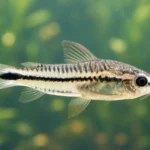
Most cory catfish species remain compact, growing between 3 to 7 cm in length. Some representatives reach 9-12 cm, though this is relatively uncommon. The pygmy cory holds the record as the smallest species at just 2.5-3 cm. The popular peppered cory grows to approximately 6-7 cm.
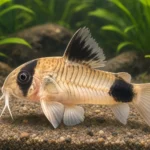
Females are noticeably larger and rounder than males, especially when ready to spawn. Coloration varies significantly by species: you’ll find spotted patterns, striped varieties, solid colors, and metallic sheens. In my experience, this diversity makes cory catfish excellent for collectors — assembling a group of different species brings wonderful variety to the lower tank levels.
Cory Catfish Care Requirements
Water Parameters and Tank Size
Cory catfish are schooling fish and should be kept in groups of 4-6 individuals minimum, preferably 6-10. A small school requires at least 30-50 liters of aquarium space. Optimal water temperature ranges from 20-25°C, though some species prefer 22-26°C. Maintain pH between 6.0-7.5, while hardness can vary from 1 to 17°dH — cory catfish adapt well to different conditions.
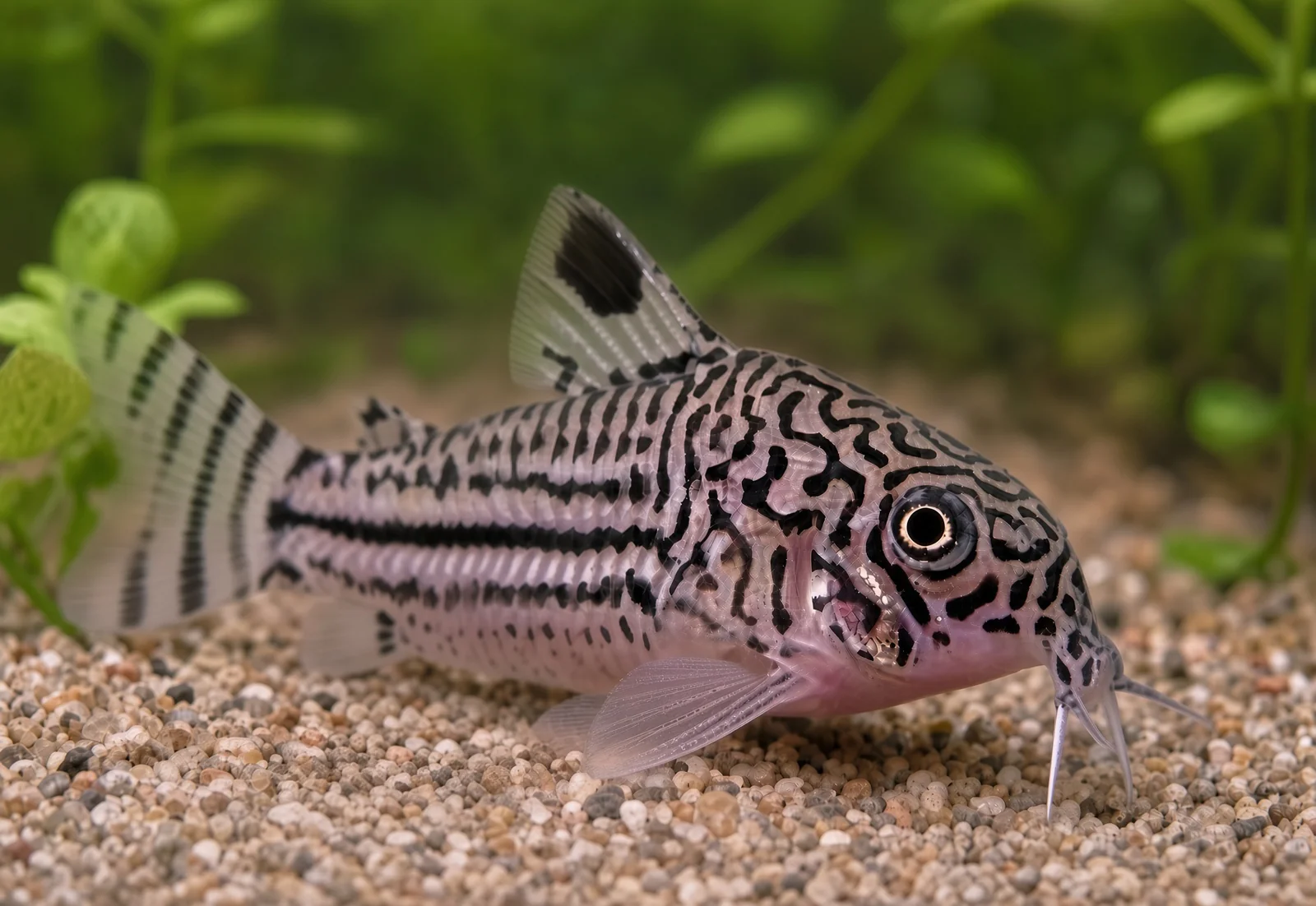
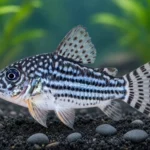
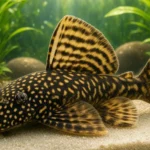
Cory catfish displaying characteristic contrasting pattern of dark lines and spots on light body, clearly visible against sandy substrate.
Provide quality filtration and aeration, but keep water flow gentle to moderate. Weekly water changes of 20-30% are essential. Cory catfish are sensitive to elevated nitrogen compounds — ammonia and nitrites can cause barbel deterioration, signaling poor water quality.
Substrate and Decoration
Substrate choice is critical for proper cory catfish care. Coarse sand or small rounded gravel without sharp edges works best. Sharp-edged gravel damages the sensitive barbels that catfish constantly use to explore the bottom. Large gravel is equally problematic — food falls between stones where it decomposes and degrades water quality.
Lighting should be subdued or diffused. Cory catfish are most active during twilight and nighttime hours, so bright illumination doesn’t appeal to them. The aquarium needs hiding spots: driftwood, caves, rocks, and plant thickets. Live plants create a comfortable environment, and cory catfish won’t damage them — unlike some bottom-dwellers, they don’t excavate substrate aggressively.
Feeding and Compatibility
Cory Catfish Diet
Cory catfish are omnivorous and unfussy eaters. They readily accept live and frozen foods like bloodworms, tubifex, brine shrimp, along with quality dry foods. Specialized sinking tablets and pellets for bottom-feeders work particularly well — they drop to the substrate where catfish easily locate them.
Feed once daily, preferably during evening hours when the fish become more active. Ensure cory catfish receive adequate nutrition, especially if the tank houses active tankmates that intercept food in mid-water levels. While cory catfish scavenge leftover food from the bottom, helping maintain tank cleanliness, this doesn’t mean they can survive without targeted feeding.
Compatibility with Other Fish
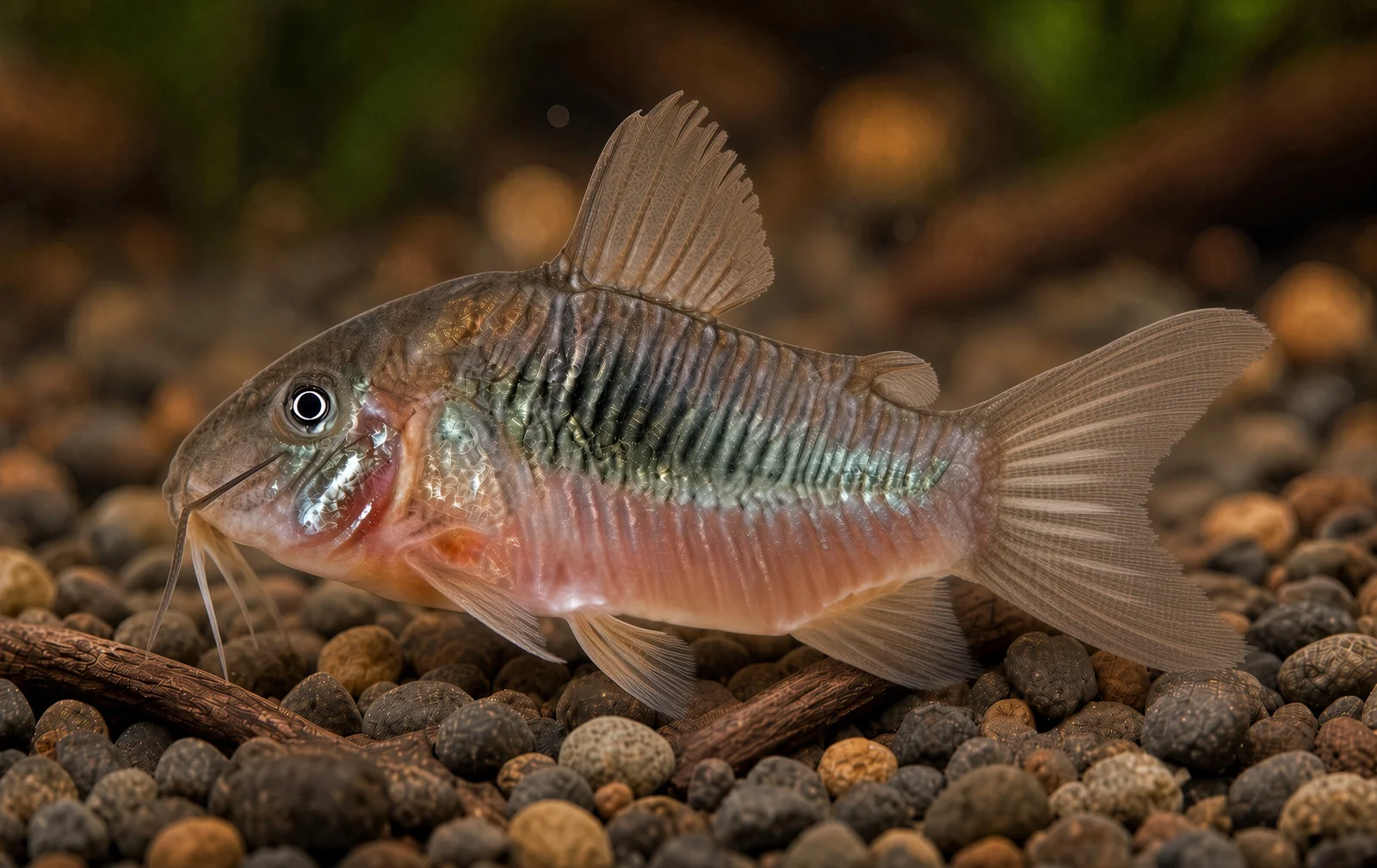
Cory catfish actively explore the bottom searching for food, using sensitive barbels to locate food particles among the substrate
Cory catfish are peaceful and coexist well with most small, non-aggressive species. They make excellent companions for swordtails, betta fish in sufficiently large tanks, tetras, rasboras, and other calm fish. Avoid housing cory catfish with large aggressive species or predators that might view small catfish as prey.
With proper cory catfish care, lifespan reaches 5-10 years, making them long-term aquarium residents.
Breeding Cory Catfish
Breeding cory catfish presents no particular challenges even for beginners. To trigger spawning, add fresh cool water, lowering temperature by 2-5°C. This mimics the rainy season in their natural habitat.
Spawning occurs in community tanks or separate breeding setups. Females deposit eggs on glass, plant leaves, or other surfaces. The incubation period lasts 3-5 days depending on water temperature. Fry begin swimming 1-4 days after hatching and immediately accept fine foods — infusoria, baby brine shrimp, or specialized fry foods.
By one month, juveniles reach approximately 1-1.5 cm and already resemble miniature adults. I recommend separating eggs or fry from adult fish if you want maximum offspring survival — in community tanks, some eggs and fry may be consumed.
Practical Care Tips
When selecting cory catfish for your aquarium, consider adult size — species vary in dimensions, which matters for stocking calculations. Always check barbel condition when purchasing — they should be intact without damage or shortening.
Regularly vacuum substrate in areas where organic matter accumulates, but work carefully to avoid damaging barbels of resting fish. Monitor cory catfish behavior: healthy individuals actively explore the bottom and periodically surface for air. If catfish constantly hover near the surface or lie motionless, this signals water quality problems or health issues.
Cory catfish make excellent choices for beginning aquarists and experienced hobbyists alike. These hardy bottom-dwellers animate the lower tank levels, help maintain cleanliness, and require straightforward maintenance. By providing suitable conditions for cory catfish care, you’ll enjoy active, long-lived residents that remain fascinating to observe throughout the day.